Penn Relays to host Philadelphia Metropolitan Collegiate Invitational
The local-only, collegiate-only, invitation-only track competition will be held on April 24 at Franklin Field.
Collegiate relay runners race around the track during pre-pandemic times at Franklin Field.
Image: Eric Sucar
Set…(starter pistol sound)!
The Penn Relays has announced that the Philadelphia Metropolitan Collegiate Invitational will take place on Saturday, April 24, at Franklin Field. The collegiate-only track competition will combine traditional Penn Relays events and individual events for qualification purposes. Events will include the 4x100, 4x400, 4x800, both medleys, all field events, hurdles, the 1500m, 3000m steeplechase, 5000m, and 10000m.
Due to geographic restrictions regarding the “local competition” boundary radius of 40 miles, the event is by invitation only. Colleges and universities who have not received an invitation from the office of the Penn Relays and would like to discuss entry should email Josh Seeherman at jseeher2@upenn.edu.
Spectators will not be permitted at the competition, but video streaming will be available.
In early March, Penn Athletics announced that the 2021 Penn Relays are cancelled, the second consecutive year the meet has been scrubbed because of the coronavirus and local restrictions on large gatherings. On March 25, Penn and the Philadelphia Department of Public Health gave approval for Penn Athletics to move into Ivy Phase Four, which allows for local competition.
Nanoparticle blueprints reveal path to smarter medicines
New research involving Penn Engineering shows detailed variation in lipid nanoparticle size, shape, and internal structure, and finds that such factors correlate with how well they deliver therapeutic cargo to a particular destination.
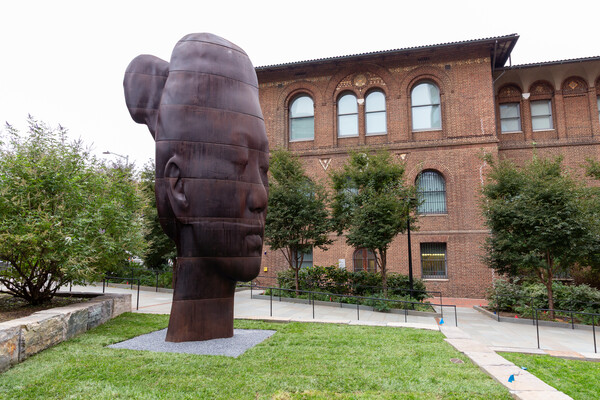
A generous gift from alumni Glenn and Amanda Fuhrman brings the work of internationally acclaimed artist Jaume Plensa to the University of Pennsylvania. The latest addition to the Penn Art Collection expands Philadelphia's public art.
A massive chunk of ice, a new laser, and new information on sea-level rise
For nearly a decade, Leigh Stearns and collaborators aimed a laser scanner system at Greenland’s Helheim Glacier. Their long-running survey reveals that Helheim’s massive calving events don’t behave the way scientists once thought, reframing how ice loss contributes to sea-level rise.