New faculty explore how individual minds influence group behavior
Linguist Marlyse Baptista, neuroscientist Nacho Sanguinetti, and humanities scholar Fritz Breithaupt were hired through MindCORE for research that fits into the theme of "interconnected minds."
Shujie Yang harnesses sound to build the next generation of microrobotic medicine
Yang’s lab at Penn Engineering uses precisely-controlled ultrasound waves to develop microscale tools that can manipulate cells, viruses, and soft materials without physical contact.
How estrogen in the brain impacts stress and trauma response
New research from Penn Medicine reveals how estrogen levels in the brain influence vulnerability to stress-related memory problems, helping explain sex differences in PTSD risk.
A cohort of 18 Perry World House undergraduate student fellows traveled to Geneva to learn from diplomats, technical experts, and activists working to advance global security, economic growth, and well-being.
Penn researchers in the Mitchell Lab are modifying lipid nanoparticles, the delivery vehicles for mRNA therapies, to make them more potent, precise, and better tolerated.
Working with the team at the Center for Living Donation, Penn Medicine’s benefits director Jen Brady felt confident enough to donate a kidney to her mother and run the Boston Marathon several months post-surgery.
Three questions to guide thoughtful, human-centered AI use in the classroom
Ahead of an AI Month panel showcasing AI use in the classroom at Penn, Catherine Turner of the Center for Teaching, Learning, and Innovation poses three questions instructors can consider while planning AI-informed assignments and activities.
Reflecting on 100 years of television, Christopher Yoo of Penn Carey Law provides an overview of TV’s shifting legal landscape, and Barbara Kahn of the Wharton School shares how branding has evolved.
As investor withdrawals and liquidity concerns rattle a $1.8 trillion market, Wharton’s Itay Goldstein explains how private credit works, why experts are uneasy, and what it could mean for your finances.
The AI Arts & Sciences Showcase features fast-paced lightning talks from Penn Arts & Sciences graduate students and postdoctoral researchers highlighting how they use AI, and the new directions it is opening-across the sciences and humanities. The showcase offers a snapshot of emerging approaches and collaborations shaping the future of research at Penn, including how AI is changing how knowledge is produced across disciplines. Free and open to the Penn community.
Penn Climate Seminar: Climate Change & Veterinarians
Andrew Hoffman, Gilbert S. Kahn Dean of Veterinary Medicine at Penn Vet, will discuss the links between climate change and veterinary medicine while highlighting opportunities to engage across schools through a One Health framework. He will also talk about Penn Climate Insights, a new platform originating from Penn Vet that aims to drive climate education, interdisciplinary collaborations, and knowledge-sharing across Penn. Free and open to the Penn community. Register to attend.
Penn’s guiding principles are the University’s enduring values and distinctive strengths: anchored, inventive, interwoven, and engaged. The practices support and strengthen Penn’s core educational mission.
At Penn Today, we focus on some of the ways the University is putting this framework into action. From student, faculty, and staff profiles to research updates and event coverage, Penn Today highlights the latest examples of the University’s principled approach to excellence.
Students test one way to combat extreme heat in Philadelphia
Third-year students Nafisa Bangura and Angelica Dadda expanded upon a multidisciplinary research endeavor to evaluate a reflective pavement coating as a tool to mitigate extreme heat. Their work may inform policy efforts to improve urban heat resilience.
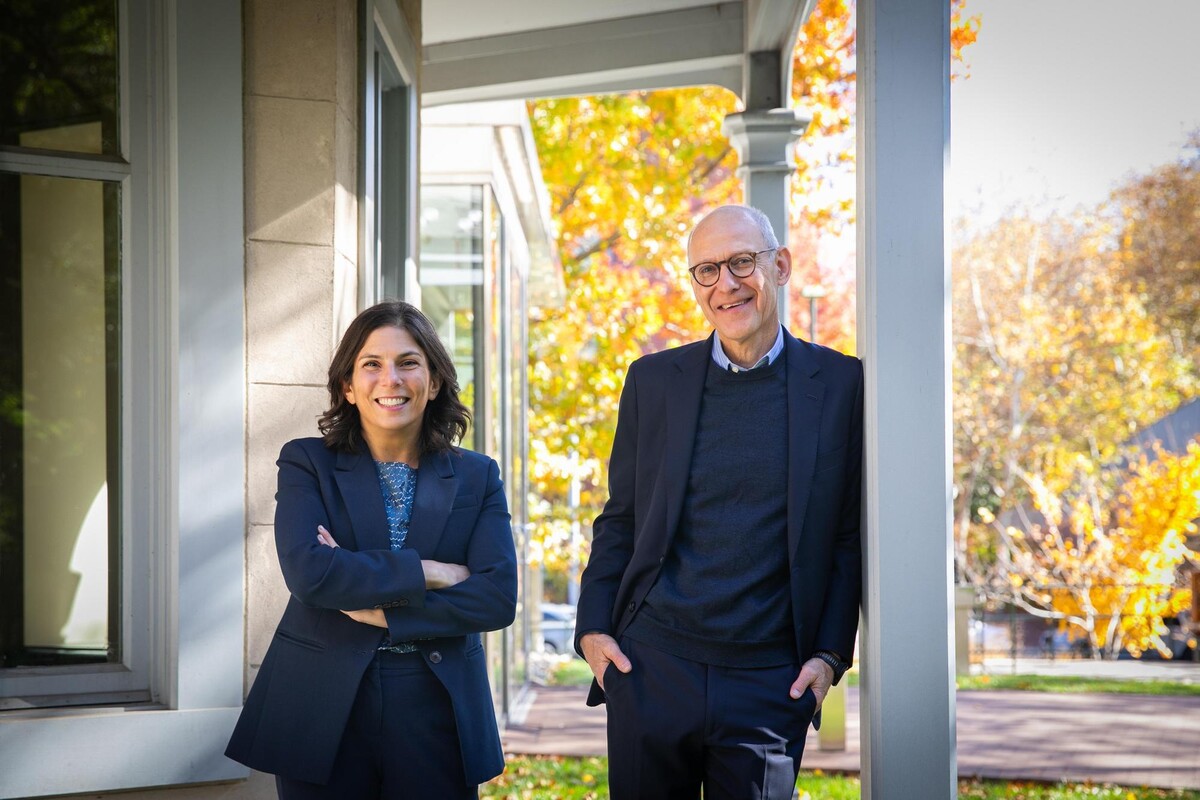
Penn Forward’s Access, Affordability, and Value co-chairs on creating opportunity
As co-chairs of Penn Forward’s Access, Affordability, and Value working group, Sara Bachman, dean of the School of Social Policy & Practice, and Patrick Harker, a professor and dean emeritus of the Wharton School, discuss breaking down barriers and opening pathways.
A conversation with Penn Forward’s Global Opportunity and New Markets co-chairs
In a Q&A with Ezekiel Emanuel and Megan Ryerson, co-chairs of the Global Opportunity and New Markets working group for Penn Forward, the duo discuss the charge of their group, where they are in the process, and leaning into global engagement.
In an opinion essay, Chris Hughes, a doctoral candidate in the Wharton School, argues that the Federal Home Loan Bank System should be rechartered to help make housing more affordable.