Athletes from across the globe will descend on Franklin Field from April 28 through 30 for the running of the 2016 Penn Relays, the oldest and largest track and field competition in the United States. High school, college, and olympic hopefuls will compete in various track and field events, including hurdles, dashes, and the decathalon. High school girls, college women, and nighttime distance races will take place from 10 a.m. to 11:30 p.m. on April 28; high school boys and girls, college men and women, and olympic development events will take place from 9 a.m. to 7 p.m. on April 29; and college men and women, high school boys, and USA vs. the World events will take place from 9 a.m. to 6 p.m. on April 30.
For more information, including how to purchase tickets for any or all of the days, go to www.thepennrelays.com.
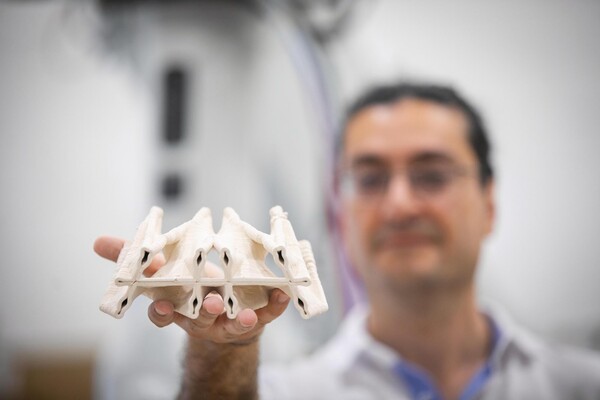
The Polyhedral Structures Laboratory is housed at the Pennovation Center and brings together designers, engineers, and computer scientists to reimagine the built world. Using graphic statics, a method where forces are mapped as lines, they design forms that balance compression and tension. These result in structures that use far fewer materials while remaining strong and efficient.
From ancient tombs and tiny robots to personalized gene editing and AI weather models, Penn’s 2025 research portfolio showed how curiosity—paired with collaboration—moves knowledge into impact and stretches across disciplines and continents.
Centering joy in AI development and implementation
PIK Professor Desmond Upton Patton—of Annenberg and SP2—and collaborators introduce a joy-informed framework designed to initiate conversations among engineers, designers, and researchers.
Reflecting on Jane Austen, 250 years after her birth
English professors Michael Gamer and Barri Joyce Gold have been teaching courses specifically dedicated to Jane Austen for years. They spoke with Penn Today about their approach to teaching her novels, how they challenge common readings and myths, and what makes Austen’s work so enduring—and adaptable to the screen—more than two centuries later.
Electronic medical records help save lives of HIV patients
Wharton’s Leandro “Leo” Pongeluppe and colleagues found that HIV clinics in Malawi that switched from paper to electronic medical records saw an estimated 28% reduction in deaths in five years.