Breastfeeding Advocates Help Communities Latch onto A Good Idea
PHILADELPHIA -- In a city where barely 20 % of impoverished women breastfeed, changing attitudes toward breastfeeding has become a matter of course for students from the University of Pennsylvania School of Nursing. Since 1995, Nursing 361 has required students to take part in a community advocacy program of their own design. This month in the Journal of Human Lactation, the course's instructor offers guidelines for others to conduct such projects, as well as a model to demonstrate how advocacy can change communities.
"Many problems women have with breastfeeding stem from a lack of knowledge and support in their environment," said Diane Spatz, associate professor at the School of Nursing. "Our student programs not only reach out to expectant mothers, but also to those who need to support them whether the audience is comprised of the children, the fathers and the rest of the community."
When Spatz created the course just ten years ago, few nursing schools held in-depth breastfeeding classes. Indeed, surveys have shown that less than a quarter of the nation's nursing students had, as part of their maternity rotation, a significant opportunity to teach or counsel new mothers about breastfeeding. Almost 200 students have taken the course since then and, through their efforts, have affected the breastfeeding experience of thousands of people.
"Despite the scientifically demonstrated evidence for benefits of breastfeeding, physicians, nurses or health care providers of any type lack sufficient training," Spatz said. "As a result new mothers especially those who have limited financial resources don't get the assistance or advice that they need and are more likely to abandon breastfeeding."
In challenging students to create a breastfeeding advocacy, the course has made a lasting impact in the Philadelphia area. According to Spatz, there are five areas where breastfeeding advocacy has been particularly effective:
Fathers. The role of fathers in the success of breastfeeding has been well documented. For example, a support group for fathers of breastfeeding infants begun at Pennsylvania Hospital in Philadelphia by a Penn Nursing student has continued for more than five years after the project begun.
Immigrant Populations. Many newcomers to the United States have adopted bottle-feeding as a more "American" practice. Student progams have been effective in reaching out to local immigrant groups. In one example, a Vietnamese student began a sucessful program at a local Vietnamese church, working with families and translating educational materials.
Community Hospitals. Some community hospitals do not routinely employ lactation consultants to help new mothers through problems in breastfeeding. A number of Penn students have helped community hospitals, such Albert Einstein Medical Center in Philadelphia, and clinics provide information to new mothers as well as help train staff members.
Perceptions on Public Breastfeeding. Many women are wary of breastfeeding in public due to both real and imagined stigmas attached to the practice. One Penn student came up with a novel solution by encouraging area restuarants to display a "Breastfeeding Welcome Here" decal in their front windows.
Children. Studies have shown women most often make their breastfeeding decisions well before they choose to bear children. According to Spatz, daycare centers offer an ideal place to begin educating men and women. In fact, one student created a life-size mother and child doll to appropriately demonstrate how babies can be breastfed.
"Students are great agents of change because they are enthusiastic and creative," Spatz said. "Through their work they've made a lasting contribution to women's health and child welfare."
Nanoparticle blueprints reveal path to smarter medicines
New research involving Penn Engineering shows detailed variation in lipid nanoparticle size, shape, and internal structure, and finds that such factors correlate with how well they deliver therapeutic cargo to a particular destination.
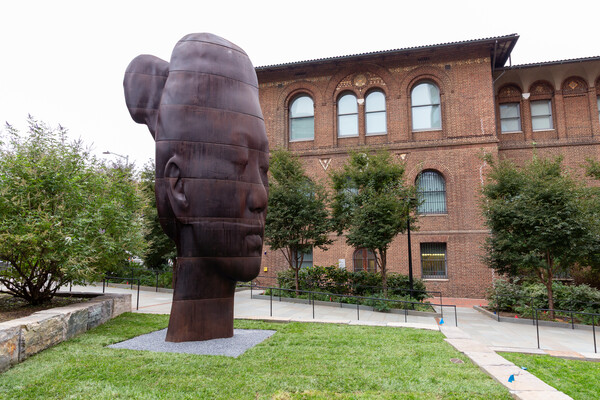
A generous gift from alumni Glenn and Amanda Fuhrman brings the work of internationally acclaimed artist Jaume Plensa to the University of Pennsylvania. The latest addition to the Penn Art Collection expands Philadelphia's public art.
A massive chunk of ice, a new laser, and new information on sea-level rise
For nearly a decade, Leigh Stearns and collaborators aimed a laser scanner system at Greenland’s Helheim Glacier. Their long-running survey reveals that Helheim’s massive calving events don’t behave the way scientists once thought, reframing how ice loss contributes to sea-level rise.