A quarter-century of supporting Asian Pacific Islander students
The Pan-Asian American Community House is marking 25 years of fostering community, inspiring leaders, and providing a home away from home.
4 min. read
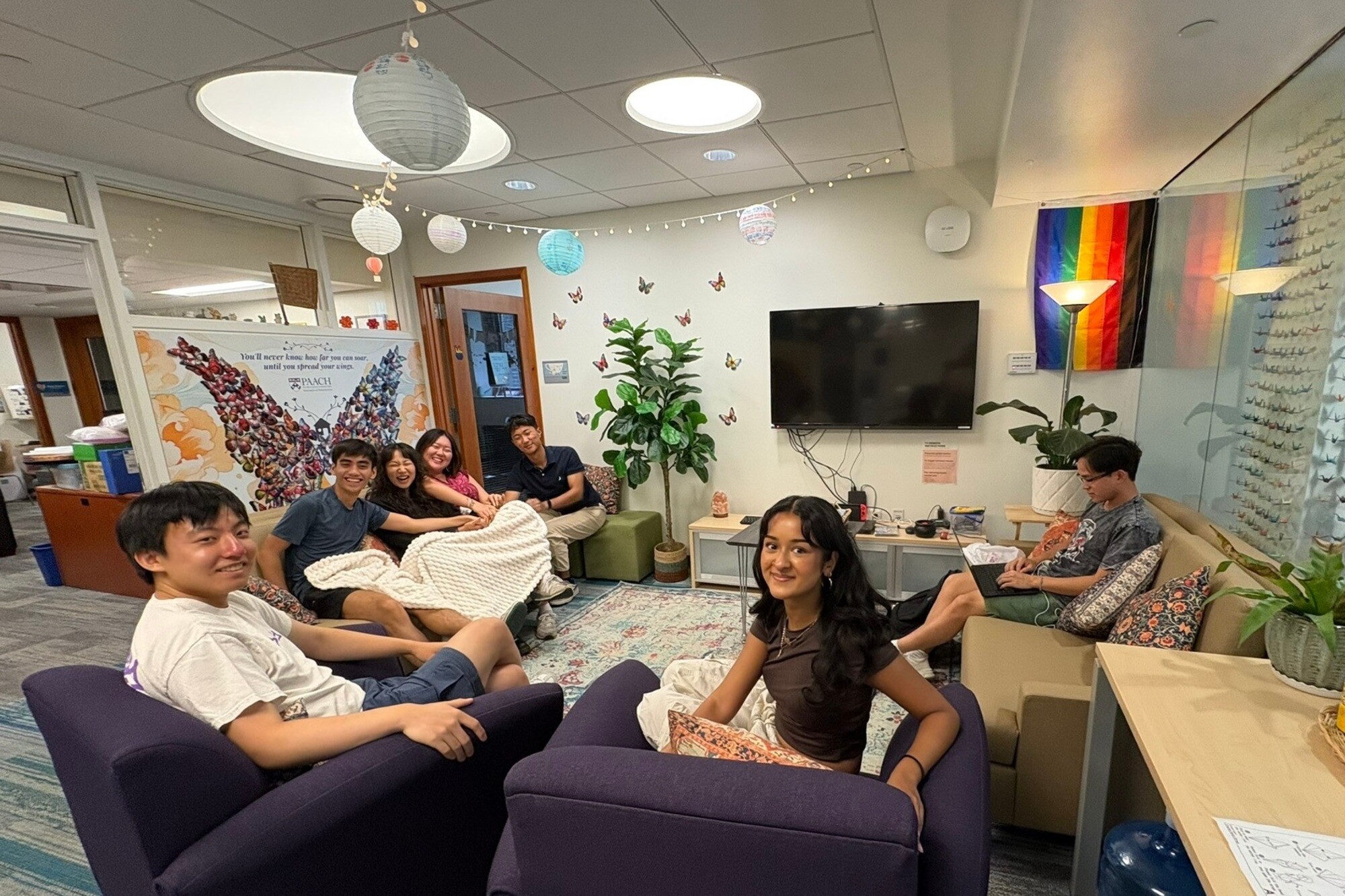
Penn students relax in the PAACH space recently. Alumni and students say PAACH is a "home away from home" for many from the Asian Pacific Islander community.
(Image: Courtesy of PAACH)
Twenty-five years ago, the Pan-Asian American Community House (PAACH) opened its doors as a space to support Penn’s Asian Pacific Islander student communities and anyone interested in their diverse cultures and experiences.
Since then, it has provided both a physical space and a support network for students from Asia and of Asian descent, offering comfort, advice, counseling, food, and just a place to relax.
PAACH is also a place for cultural events and community celebrations, including student mixers, local trips, and workshops covering food, festivals and art. The center also supports events such as Asian Pacific American Heritage Week and groups highlighting music, dance, theatre, and spirituality.
“I think all of the students would agree with me when I say that PAACH is almost like a second home,” says fourth-year Megan Chan, chair of the Asian Pacific Student Coalition. “It’s more than just a cultural center.”
Alumnus Franklin Shen, an early PAACH founder who graduated in 2003, says he welcomed the community atmosphere and support. “I could find food, community, advice, mentorship,” Shen says. “My parents never went to college, so there was information about financial aid, how to navigate university life, how to study. PAACH really helped fill the gaps.”
Today, a significant focus of PAACH is to help cultivate the next generation of Asian Pacific Islander leaders, says PAACH Director Mei Long. “One of the major challenges facing the API community is that you rarely see us in senior leadership positions across all industries,” she says.
The center’s Asian Pacific American Leadership Initiative (APALI), which began in 2001, is one of the center’s longest-standing programs. Through a weekend retreat and facilitator-led sessions, APALI empowers students to explore their identities and strengthen leadership skills.
25th-anniversary event
At its anniversary celebration earlier this month, with the support of alumnus Chris Davies, PAACH announced a new API Leadership Series, to connect alumni and students through dialogue and mentorship. It features a fall fireside chat and a spring panel highlighting API leaders across industries, fostering inspiration and growth.
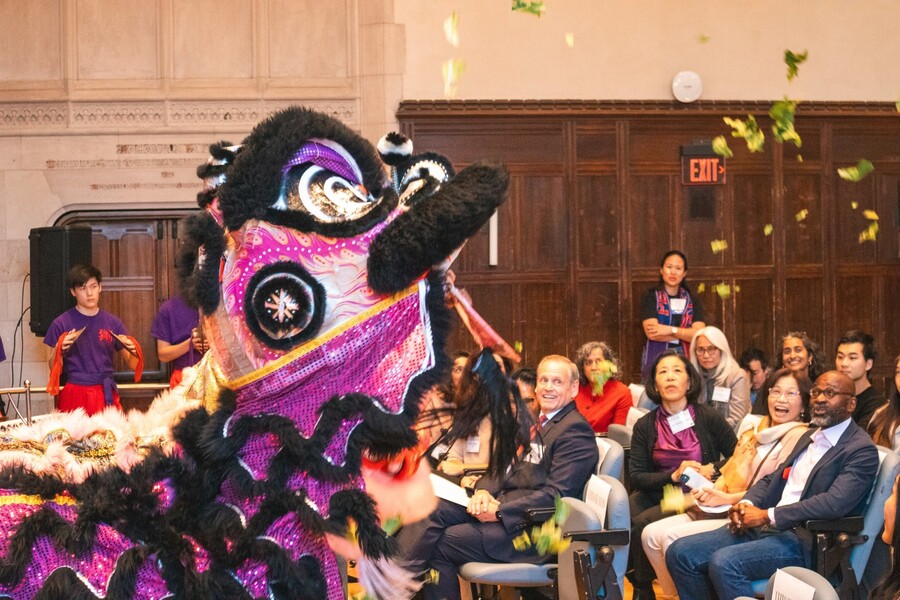
Nearly 200 guests came to the event, with remarks from Provost John L. Jackson Jr., Vice Provost for University Life Hikaru Kozuma, and Long. There was also an alumni panel and performances by the Penn Lions and Penn Atma.
In recent years, PAACH has also put significantly more resources and attention into supporting the graduate student population so that they see PAACH as a space for them as well, Long says. “We should support students at all degree levels,” she says.
Chan finds herself at PAACH almost daily. “It’s not just the support they’ve given through events and programming and just being there,” says the business analytics and marketing major in the Wharton School from Philadelphia. “I can feel the care for all of us as students.”
Growing diversity: ‘A fantastic job’
Shen remembers visiting PAACH for the first time, then located on the first floor of the ARCH building. “The thing that stood out to me was free food,” he says, laughing.
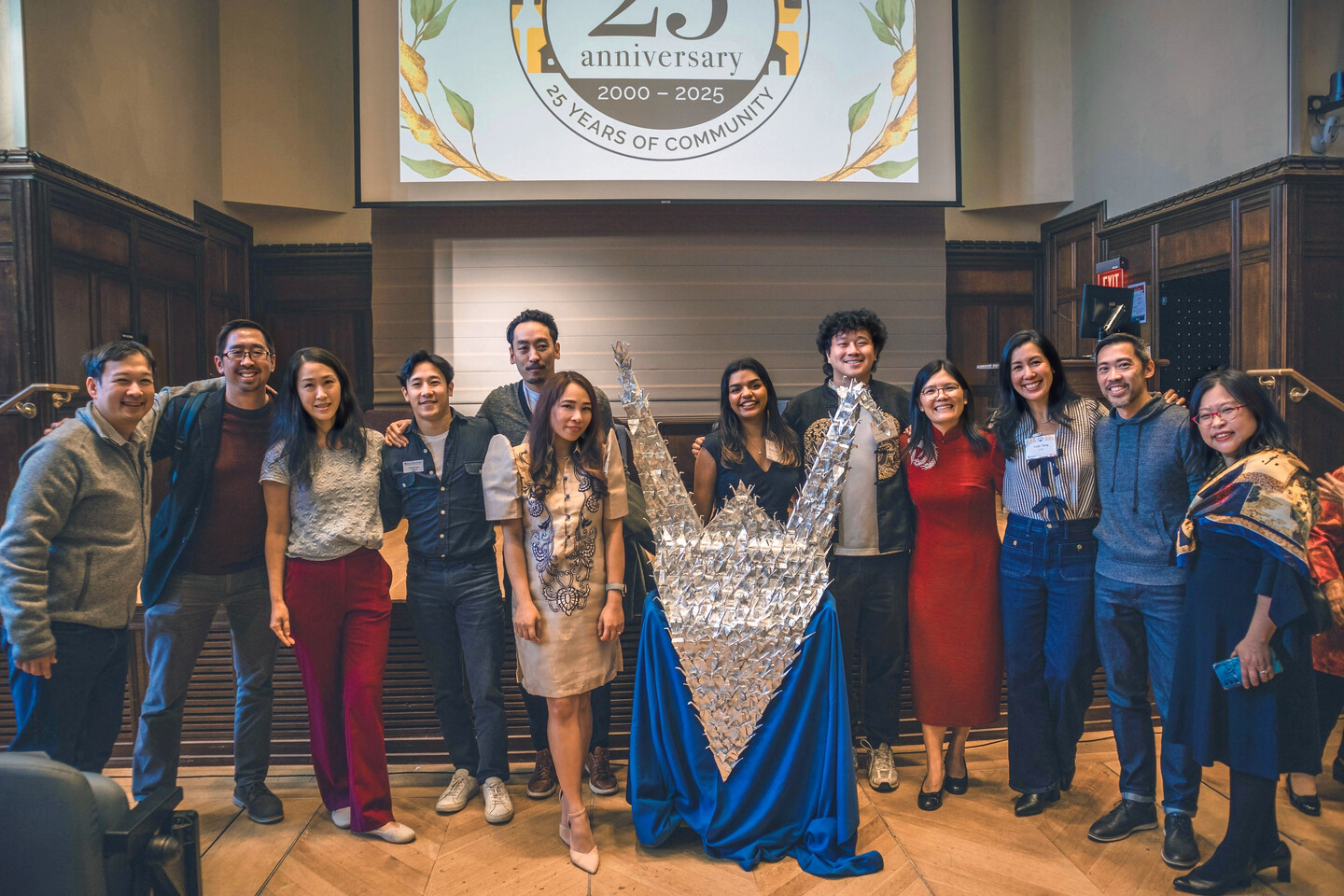
The current PAACH team, founding PAACH student leaders and alumni gather at the anniversary event.
(Image: Courtesy of PAACH)
Before PAACH was founded, Shen says, the Asian Pacific community didn’t have a unified network or even a place to gather. After it came about, for many individual students, including himself, it became a “living room away from home,” he remembers. “That’s where I spent time, entertained, met people, arranged meetings. Any free time I had, I spent at PAACH.” He went on to participate in APALI and lead the Chinese Student Association.
The Asian-Pacific Islander community is very diverse, both at Penn and in the broader world. Second-year Simon Thomas, a vice-chair of the Asian Pacific Student Coalition who grew up in Kigali, Rwanda, as a “third-culture kid,” says he “really enjoyed that diversity” when he came to Penn.
“We are such a broad range of cultures that it’s very impressive and honestly quite daunting,” he says. “When you think about how many cultures PAACH represents, they do a fantastic job with trying to encompass students from all regions of the API community,” says Thomas, a business economics and public policy and finance major from the Wharton School.
Several student groups affiliated with PAACH are engaged in service efforts, both close to campus and abroad, further spreading the community’s reach. These include Asian Students Promoting Identity, Reflection, and Education, or ASPIRE, a PAACH student-led outreach program for local high school students, and an undergraduate mentoring program, Promoting Enriching Experiences & Relationships, as well as APALI and others. “It’s great to welcome new people into the space and just get to show them what it’s all about,” Chan says.
Thomas praises the PAACH leadership and staff for their enthusiasm and warm welcomes. “Every single person who walks into that living room and goes to a PAACH event really feels at home, and really feel like they are home,” he says. “The love that the PAACH staff have for the API community, as well as the love that API students have for PAACH, really have allowed it to flourish.”
Novel plant-based approach to a better, cheaper GLP-1 delivery system
Research led by Penn Dental’s Henry Daniell investigates the use of a lettuce-based, plant-encapsulated delivery platform as a new oral delivery of two GLP-1 drugs previously approved by the FDA in injectable form.
No brain, no gain: Neuronal activity enhances benefits of exercise
Research led by Penn neuroscientist J. Nicholas Betley and collaborators finds that hypothalamic neurons are essential for translating physical exertion into endurance, potentially opening the door to exercise-mimicking therapies.
In honor of Valentine's Day, and as a way of fostering community in her Shakespeare in Love course, Becky Friedman took her students to the University Club for lunch one class period. They talked about the movie "Shakespeare in Love," as part of a broader conversation on how Shakespeare's works are adapted.
In Becky Friedman’s English course Shakespeare in Love, undergraduate students analyze language, genre, and adaptation in the Bard’s plays through the lens of love.
Beating the heat: Designing cooling for bodies in motion
Dorit Aviv, director of Weitzman’s Thermal Architecture Lab, studies how humans, technology, and design intersect, paving the way for the development of novel approaches to cooling people efficiently.