Katz Center Fellow Rivka Neriya-Ben Shahar trains her anthropologist’s lens on ultra-Orthodox and Amish communities
2 min. read
Rivka Neriya-Ben Shahar is a senior lecturer at Sapir Academic College in Sderot, Israel, where she teaches courses on research methods, communication, religion, and gender. She is one of 18 current Fellows at Penn’s Herbert D. Katz Center for Advanced Judaic Studies. This year’s 2024–25 fellowship year is devoted to the study of Jews and health, exploring health through the intersection between bodies and systems, language and physicality, religion, and science.
Neriya-Ben Shahar finds women’s voices in deeply religious communities; her research centers on the interconnection between religion, gender, and media.
“My research specifically examines women from two of the Western world's most conservative religious groups—the Amish and ultra-Orthodox Jews—as they illuminate the complex relationships between religion, gender, and technology. Recently, health has emerged as a fourth dimension in my work,” she says. “My upcoming project will investigate Amish and ultra-Orthodox women’s perspectives on family size.”
In Senegal, the ambitious Dakar Greenbelt project seeks to create an extensive network of ecological infrastructure in and around the city to sustainably address environmental concerns and enhance urban life. With support from David Gouverneur and Ellen Neises, Ph.D. candidate Rob Levinthal in the Weitzman School of Design led two courses that included a field trip to Dakar, that culminated in students presenting their visions for parts of the Greenbelt.
From a desert to an oasis: Penn engages in ambitious greening effort in the Sahel
Students from the Weitzman School of Design journeyed to Senegal to help with a massive ecological and infrastructural greening effort as part of their coursework. The Dakar Greenbelt aims to combat desertification and promote sustainable urban growth.
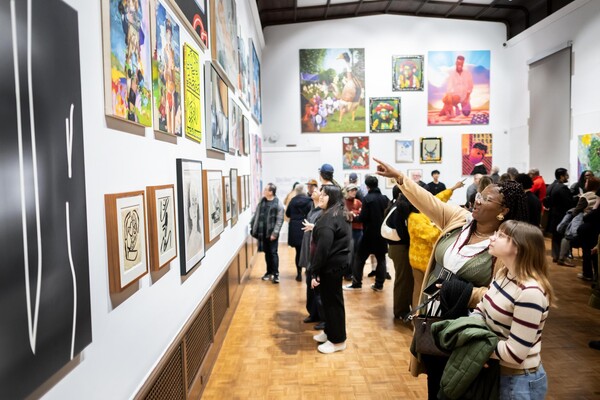
As part of an undergraduate course, Penn faculty and students curated an Arthur Ross Gallery exhibition of works from the Neumann family’s extensive collection of modern and contemporary art.
The University’s nexus for technology transfer supports researchers in their innovative efforts, from CAR T to mRNA advancements that have dramatically reshaped the world.