With the latest update to a global clinical trial, encompassing 10 institutions on four continents, the personalized T cell therapy Kymriah® has been shown to lead to long-lasting remission in patients with lymphoma that hadn’t responded well to other treatments.
The trial, known as JULIET, is led by the Perelman School of Medicine’s Stephen J. Schuster. Presenting the results at the American Society of Hematology Annual Meeting, Schuster noted that the findings “are consistent with what we’ve shown in our single-site studies here at Penn, which is that the majority of patients who go into remission stay in remission.”
As part of the JULIET trial, 115 patients with relapsed or refractory diffuse large B-cell lymphoma, a type of non-Hodgkin lymphoma, received an infusion of CAR T cells. More than half responded, with 40 percent achieving a complete response. Kymriah has already been approved by the U.S. Food and Drug Administration, as well as by the European Commission, Health Canada, and Swissmedic.
Nanoparticle blueprints reveal path to smarter medicines
New research involving Penn Engineering shows detailed variation in lipid nanoparticle size, shape, and internal structure, and finds that such factors correlate with how well they deliver therapeutic cargo to a particular destination.
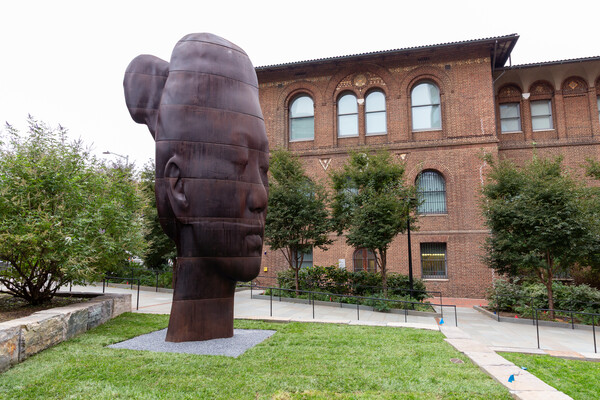
A generous gift from alumni Glenn and Amanda Fuhrman brings the work of internationally acclaimed artist Jaume Plensa to the University of Pennsylvania. The latest addition to the Penn Art Collection expands Philadelphia's public art.
A massive chunk of ice, a new laser, and new information on sea-level rise
For nearly a decade, Leigh Stearns and collaborators aimed a laser scanner system at Greenland’s Helheim Glacier. Their long-running survey reveals that Helheim’s massive calving events don’t behave the way scientists once thought, reframing how ice loss contributes to sea-level rise.