Civics knowledge predicts willingness to protect Supreme Court
The annual Annenberg Constitution Day Civics Survey, conducted in August among more than a thousand U.S. adults, found that Americans are familiar with constitutional provisions involving impeachment and pardons, issues that are in the news.
But they know less about fundamentals like the three branches of government.
This year, 32 percent of Americans were able to correctly name all three branches, an increase from last year’s 26 percent and the highest since 2014, when it was 36 percent. The rise may reflect greater awareness after a year of nonstop political news about the president, Congress, and the Supreme Court—the executive, legislative, and judicial branches. The portion of respondents who couldn’t name any of the three branches was unchanged, at 33 percent.
“It is a sad commentary on the well-being of the body politic that the ability of a third of the public to name the three branches is worthy of a headline,” says Kathleen Hall Jamieson, director of the Annenberg Public Policy Center (APPC). “Let’s hope that this year’s increase will be followed by steady increases in the following years.”
Low knowledge of essential facts
The 2018 Annenberg civics knowledge survey, released for Constitution Day (Sept. 17), found that many people do not know how the branches of government work:
A quarter (27 percent) incorrectly said the Constitution allows the president to ignore a Supreme Court ruling if the president believes the ruling is wrong;
A plurality (41 percent) incorrectly said that both the House and Senate must approve before a nominee becomes a justice on the Supreme Court (30 percent correctly know that the Senate alone confirms);
But a slim majority (55 percent) knows that a 5-4 Supreme Court decision is the law and must be followed, about the same as last year.
Higher knowledge about impeachment and pardons
The survey found that a substantial majority of Americans is knowledgeable about some issues, including impeachment and pardons:
82 percent know that the Constitution allows the president to be removed from office if the president is impeached for and convicted of high crimes and misdemeanors;
75 percent know that the Constitution requires the federal government to count the number of people in the United States every 10 years, also known as the census;
73 percent know that when the president vetoes a bill, it still can become law if two-thirds of the members in each house of Congress vote to override the president’s veto;
And 68 percent know that the Constitution gives the president the power to grant pardons for offenses against the United States.
Protecting the Supreme Court
Respondents were asked if they agreed or disagreed with two statements on the Supreme Court:
Three-quarters (73 percent) strongly or somewhat disagreed with the statement: If the Supreme Court started making a lot of rulings that most Americans disagreed with, it might be better to do away with the Court altogether. (21 percent strongly or somewhat agreed.)
Two-thirds (65 percent) strongly or somewhat disagreed with the statement: When Congress disagrees with the Supreme Court’s decisions, Congress should pass legislation saying the Supreme Court can no longer rule on that issue or topic. (28 percent strongly or somewhat agreed.)
The survey found a significant relationship between constitutional knowledge and protecting the Supreme Court. An analysis of responses to four of the key knowledge questions found that people who correctly answered all four strongly opposed weakening or getting rid of the court. Those items concerned the names of the three branches; what it takes for Congress to override a veto; who confirms a Supreme Court justice; and what a 5-4 Supreme Court ruling means.
“We found a direct relationship between basic knowledge about the three branches of government and wanting to protect the independence of the courts,” said APPC distinguished research fellow Bruce Hardy, an assistant professor of communication and social influence at Temple University.
Jamieson said, “The survey shows the important role that understanding of the Constitution plays in the public’s support for an independent judiciary. But it is worrisome both that 1 in 5 would consider doing away with the Supreme Court if it were to issue a lot of unpopular decisions, and that 1 in 4 think it would be OK for Congress to strip jurisdiction from the court in instances in which it disagrees with the court’s ruling.
“High-quality civics education is not a luxury,” Jamieson added. “One is unlikely to appreciate or defend constitutional prerogatives or rights one does not understand.”
Methodology
The civics knowledge survey for the Annenberg Public Policy Center was conducted by phone from August 8-12, 2018, among 1,008 U.S. adults by SSRS, an independent research company. The margin of error is ±3.8 percent. (See the accompanying Appendix for the details and questions.)
Constitution Day and the Civics Renewal Network
APPC’s Annenberg Classroom is one of more than 30 nonpartisan partners in the Civics Renewal Network (CRN), which seeks to raise the visibility of civics education by providing free, high-quality resources for teachers of all grade levels. Many of the organizations sponsor activities for Constitution Day, which celebrates the signing of the Constitution in 1787, including:
CRN and its members sponsor the Preamble Challenge, in which teachers, classes and citizens recite, perform, and celebrate the 52-word Preamble to the Constitution.
Federal courts celebrate Constitution Day with educational outreach events, including naturalization ceremonies. In keeping with the judiciary’s 2018 theme, “Federal Courts: Guardians of the Constitution,” the courts are staging group recitations of the Preamble in courthouses, schools, and public events. (Watch: Students reflect on it.)
Annenberg Classroom has released the short video “The Supremacy Clause: McCulloch v. Maryland” exploring the tension between states and the federal government through this landmark Supreme Court case.
See CRN’s partners for more about Constitution Day. Follow the Civics Renewal Network on Twitter at @CivicsRenewal.
Nanoparticle blueprints reveal path to smarter medicines
New research involving Penn Engineering shows detailed variation in lipid nanoparticle size, shape, and internal structure, and finds that such factors correlate with how well they deliver therapeutic cargo to a particular destination.
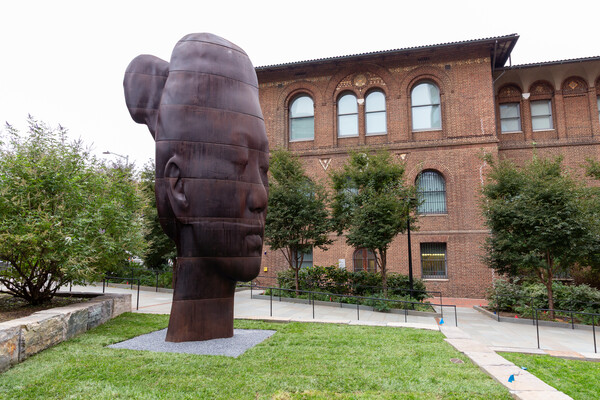
A generous gift from alumni Glenn and Amanda Fuhrman brings the work of internationally acclaimed artist Jaume Plensa to the University of Pennsylvania. The latest addition to the Penn Art Collection expands Philadelphia's public art.
A massive chunk of ice, a new laser, and new information on sea-level rise
For nearly a decade, Leigh Stearns and collaborators aimed a laser scanner system at Greenland’s Helheim Glacier. Their long-running survey reveals that Helheim’s massive calving events don’t behave the way scientists once thought, reframing how ice loss contributes to sea-level rise.