A key brain circuit in the fight against cocaine use disorder
A new study published in Science Advances by Penn Nursing’s Heath Schmidt has identified a critical brain circuit that plays a pivotal role in regulating cocaine-seeking behavior.
A new study published in Science Advances, led by School of Nursing Professor Heath D. Schmidt, has identified a critical brain circuit that plays a pivotal role in regulating cocaine-seeking behavior.
At the heart of this discovery lies the role of glucagon-like peptide-1 (GLP-1), a hormone known for its involvement in regulating food intake and blood sugar. The study revealed that chronic cocaine use is associated with reduced GLP-1 levels, effects that suggest that increasing central GLP-1 signaling could reduce cocaine-seeking behavior.
Further investigation pinpointed a key brain region involved in reward and motivation. By manipulating this neural circuit, researchers were able to significantly reduce cocaine-seeking behavior in animal models.
“This research provides exciting new insights into the brain mechanisms underlying cocaine seeking,” says Schmidt. “By understanding how GLP-1 signaling influences brain activity in this context, we can potentially develop new GLP-1-based treatments to treat cocaine use disorder.”
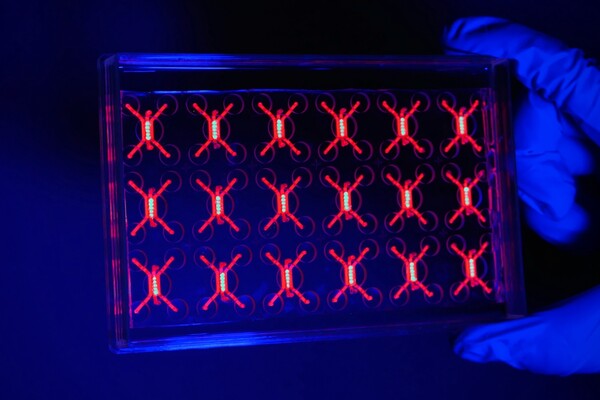
Penn engineers and collaborators have developed a transparent, micro-engineered device that houses a living, vascularized model of human lung cancer—a “tumor on a chip”—and show that the diabetes drug vildagliptin helps more CAR T cells break through the tumor’s defenses and attack it effectively.
Tumor-on-a-chip offers insight into cancer-fighting cells in immunotherapy
Penn engineers and collaborators have built a living tumor on a chip to expose how cancers block immune attacks, and how one existing drug could make immunotherapy like CAR T more effective against solid tumors.
Professor of city and regional planning Erick Guerra recently published a book exploring the economic and societal impacts of American highways. He explains some of the pitfalls associated with an ever-expansive highway system, arguing that spending more on highways might not be the solution to the country’s transportation issues.
Penn urban planner Erick Guerra’s new book, “Overbuilt,” argues that additional spending on building more highways might not be the solution to the country’s transportation issues. In a Q&A, Guerra shares his insights.
Xin Sun prepares samples collected from the Eastern Tropical North Pacific aboard a research vessel. By adding stable isotope tracers to these vials, Sun and her team can track how different microbial groups convert nitrogen compounds into nitrous oxide, revealing how subtle shifts in oxygen and organic matter change the ocean’s chemistry.
Can tiny ocean organisms offer the key to better climate modeling?
In the shadowy layers of the Pacific, microbes decide how much nitrous oxide—a potent greenhouse gas—rises skyward. New research from Penn’s Xin Sun offers an improved understanding of microbial ecology and geochemistry—key to forecasting global emissions in response to natural and man-made climate change.
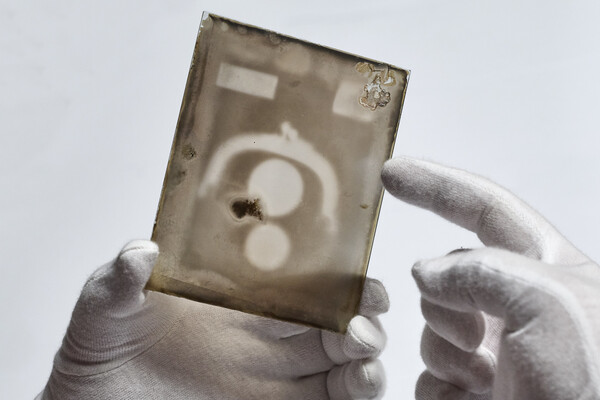
Two X-ray plates from Arthur Goodspeed, believed to have created the world’s first X-ray image, were donated by his family to Penn’s University Archives.