Informing Pennsylvania public health and safety on deer ticks
A study of deer and ticks at the Penn’s School of Veterinary Medicine could shape public health and safety across the Commonwealth.
2 min. read
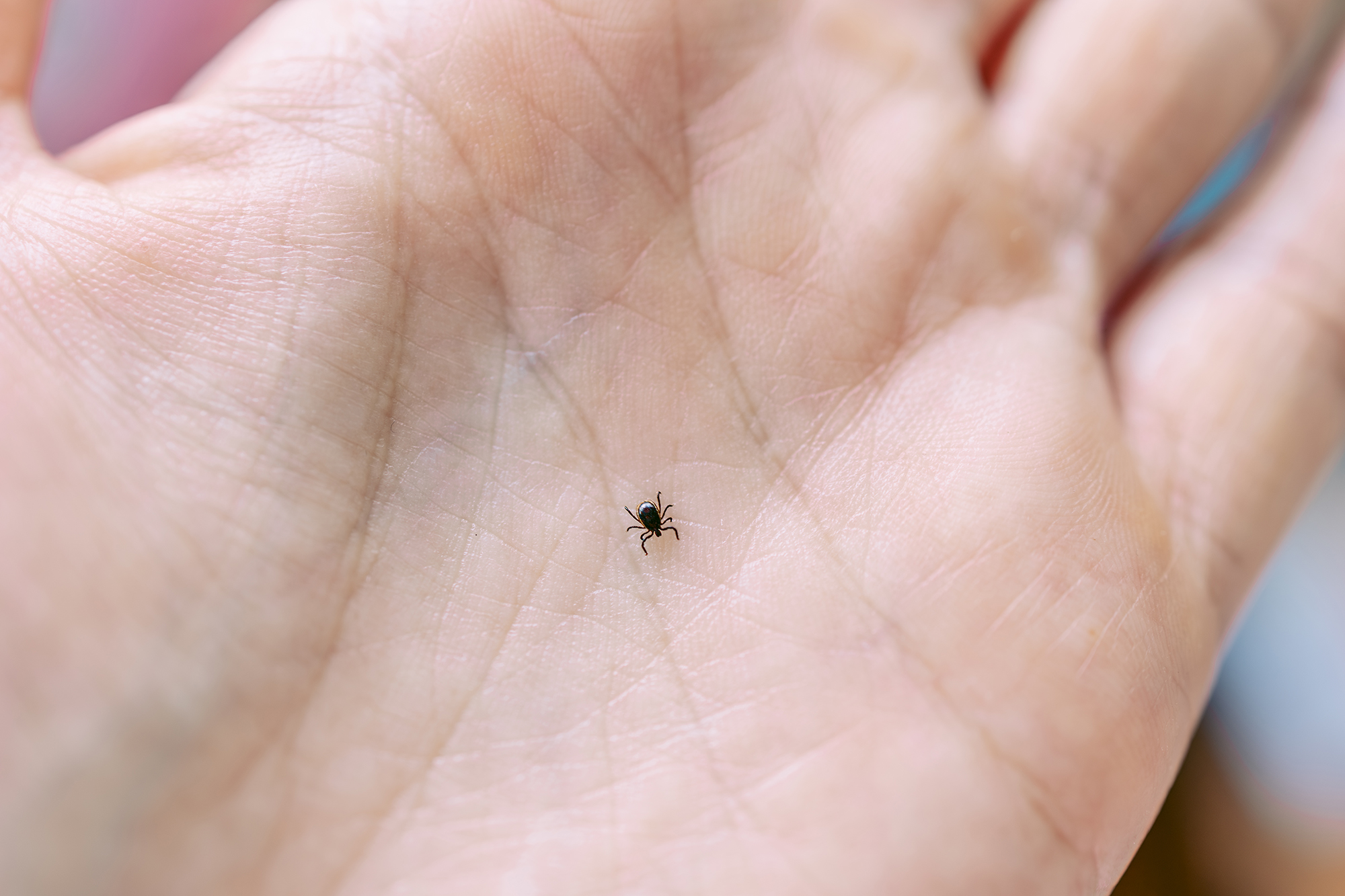
Despite their small size, ticks are among the most dangerous animals encountered in the wild due to their ability to transmit zoonotic infections to humans, domestic animals, and wildlife. In the U.S., nine tick species carry pathogenic viruses, bacteria, and parasites, with the blacklegged deer tick (Ixodes scapularis) being the primary vector of infection. Lyme disease, the most prevalent tick-borne disease in the U.S., has been on the rise over the past two decades. Pennsylvania faces a disproportionate burden, with over 60,000 lab-confirmed canine cases and more than 11,000 human cases reported in 2024.
Ticks are active when the temperature is above freezing, but their activity intensifies during the warmer months. Late-spring and summer are peak Lyme season, with the highest transmission occurring between May and August.
(Image: Olga Pankova)
A multiyear research initiative to identify pathogens in Pennsylvania’s white-tailed deer and their associated ticks could shape public health and safety across the Commonwealth. Researchers at Penn’s School of Veterinary Medicine (Penn Vet), in collaboration with the Pennsylvania Game Commission, are studying the complex interactions between ticks, pathogens, hosts, and their environment. Led by adjunct associate professor of pathobiology Julie Ellis of the Wildlife Futures Program (WFP) along with investigators from the Institute for Infectious and Zoonotic Diseases (IIZD) and the Center for Host-Microbial Interactions (CHMI), the study aims to survey the presence and distribution of pathogens, and to understand the dynamics of tick-borne disease transmission in wildlife.
The surge in tickborne diseases over the past two decades, partly attributed to human activities, underscores the need for innovative mitigation strategies. By spatially mapping ticks and associated pathogens across Pennsylvania, this study offers a foundation for understanding where geographic risk is concentrated within the Commonwealth. The intent is to guide targeted interventions, public health messaging, and land and wildlife management practices to reduce exposure and transmission of tickborne diseases.
This story is by Lisa Mattei and Nicole Hurd. Read more at Penn Vet.
In Senegal, the ambitious Dakar Greenbelt project seeks to create an extensive network of ecological infrastructure in and around the city to sustainably address environmental concerns and enhance urban life. With support from David Gouverneur and Ellen Neises, Ph.D. candidate Rob Levinthal in the Weitzman School of Design led two courses that included a field trip to Dakar, that culminated in students presenting their visions for parts of the Greenbelt.
From a desert to an oasis: Penn engages in ambitious greening effort in the Sahel
Students from the Weitzman School of Design journeyed to Senegal to help with a massive ecological and infrastructural greening effort as part of their coursework. The Dakar Greenbelt aims to combat desertification and promote sustainable urban growth.
As part of an undergraduate course, Penn faculty and students curated an Arthur Ross Gallery exhibition of works from the Neumann family’s extensive collection of modern and contemporary art.
The University’s nexus for technology transfer supports researchers in their innovative efforts, from CAR T to mRNA advancements that have dramatically reshaped the world.