The men’s soccer team shut out Princeton 3-0 on Saturday in New Jersey and clinched its first Ivy League title in nine years.
Image: Penn Athletics
Entering Saturday’s match against archrival Princeton at Roberts Stadium in New Jersey, the 23rd-ranked men’s soccer team needed a tie to clinch a share of the Ivy League championship, and a win to claim it outright.
The Quakers outshot, outscored, and outplayed the Tigers in a 3-0 rout, securing the undisputed conference title in dominating fashion. The victory marked Penn’s first win over Princeton since 2013 and first win at Princeton since 2006.
Fourth-year midfielder Isaac McGinnis scored the Red & Blue’s first goal on a penalty kick in the 23rd minute.
Fourth-year goalkeeper Nick Christofferson, fourth-year midfielder Ben Stitz, and second-year forward Charlie Gaffney linked up for the Quakers’ second goal. Stitz fielded a goal kick from Christofferson just past midfield, and then forwarded it to a galloping Gaffney, who skyed the ball up over Princeton goalkeeper William Watson’s head for the score.
In the 64th minute, second-year defender Ben Do scored an unassisted goal—the first goal of his career. Do intercepted an attempted clear and fired the ball inside Watson’s corner pocket.
Penn outshot Princeton 9-7 and had four shots on goal to the Tigers’ one. Christofferson had one save. The Quakers wrapped up the regular season with a 6-1 conference record. Their only defeat was a 3-2 loss to Harvard on Oct. 29.
The Red & Blue are averaging 2.50 goals per game, eighth best in the country. Second-year forward Stas Korzeniowski leads the team with 10 goals; Stitz ranks second with nine.
With the win, Penn (12-2-2) punched one of 48 tickets to the 2022 NCAA Division I Men’s Soccer Tournament. On Thursday, Nov. 17., the Quakers host Rutgers (10-4-6) at 7 p.m. at Penn Park. The winner will take on No. 3-seed Syracuse on Sunday.
Nanoparticle blueprints reveal path to smarter medicines
New research involving Penn Engineering shows detailed variation in lipid nanoparticle size, shape, and internal structure, and finds that such factors correlate with how well they deliver therapeutic cargo to a particular destination.
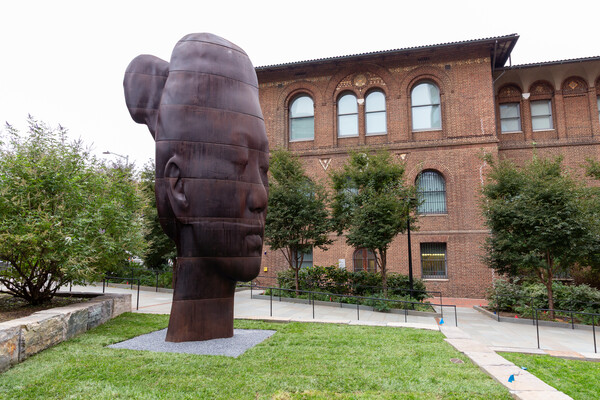
A generous gift from alumni Glenn and Amanda Fuhrman brings the work of internationally acclaimed artist Jaume Plensa to the University of Pennsylvania. The latest addition to the Penn Art Collection expands Philadelphia's public art.
A massive chunk of ice, a new laser, and new information on sea-level rise
For nearly a decade, Leigh Stearns and collaborators aimed a laser scanner system at Greenland’s Helheim Glacier. Their long-running survey reveals that Helheim’s massive calving events don’t behave the way scientists once thought, reframing how ice loss contributes to sea-level rise.