Barriers and facilitators in treating opioid addiction in the ER
Every day, news stories depict the staggering toll of the opioid overdose crisis. This is particularly salient in Philadelphia, which has one of the highest overdose death rates among major U.S. cities. Despite effective medications for opioid use disorder, such as buprenorphine and methadone, few people receive treatment. The ongoing challenge is to expand access to these lifesaving treatments to people who need them the most. Emergency departments, which treat patients 24/7 and provide an entry point into the health system, are a promising place to start.
One recent study showed that after a nonfatal overdose, methadone and buprenorphine treatment were associated with a 50 percent reduction in deaths in the following year. Starting buprenorphine in the emergency department works better than the typical practice of stabilizing and discharging a patient with a treatment referral, more than doubling the rate of treatment engagement at 30 days.
What is not known is how to apply these findings in real-world emergency departments, which are busy places navigating everything from the highest risk trauma patients to those with multiple chronic conditions and no primary care.
Margaret Lowenstein, a general internist and research fellow at Penn, and colleagues surveyed emergency medicine physicians in two Penn Medicine hospitals to understand the barriers and facilitators to starting buprenorphine in the emergency department.
In Senegal, the ambitious Dakar Greenbelt project seeks to create an extensive network of ecological infrastructure in and around the city to sustainably address environmental concerns and enhance urban life. With support from David Gouverneur and Ellen Neises, Ph.D. candidate Rob Levinthal in the Weitzman School of Design led two courses that included a field trip to Dakar, that culminated in students presenting their visions for parts of the Greenbelt.
From a desert to an oasis: Penn engages in ambitious greening effort in the Sahel
Students from the Weitzman School of Design journeyed to Senegal to help with a massive ecological and infrastructural greening effort as part of their coursework. The Dakar Greenbelt aims to combat desertification and promote sustainable urban growth.
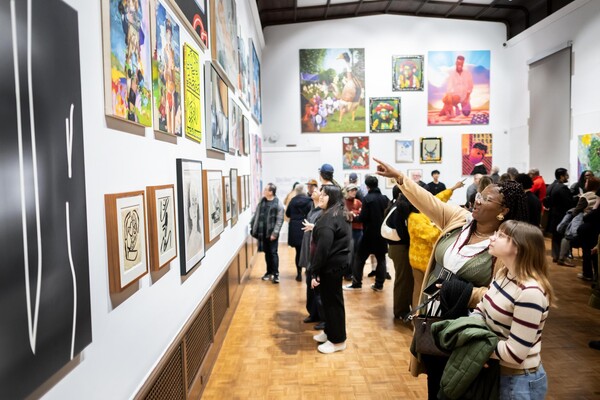
As part of an undergraduate course, Penn faculty and students curated an Arthur Ross Gallery exhibition of works from the Neumann family’s extensive collection of modern and contemporary art.
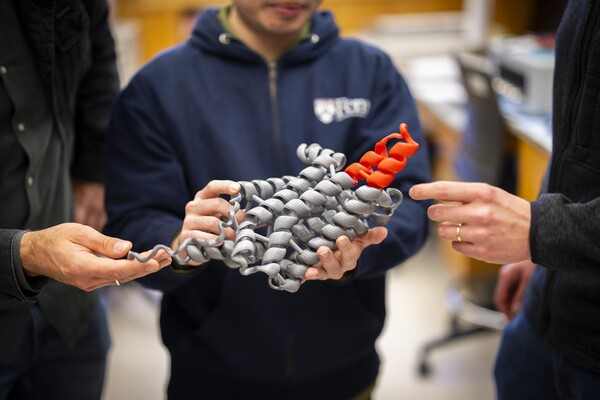
The University’s nexus for technology transfer supports researchers in their innovative efforts, from CAR T to mRNA advancements that have dramatically reshaped the world.