‘The most human gesture’ brings the gift of a hand transplant at Penn Medicine
Penn’s first bilateral hand transplant since the COVID pandemic gives a Swiss man new hands 16 years after childhood amputations.
7 min. read
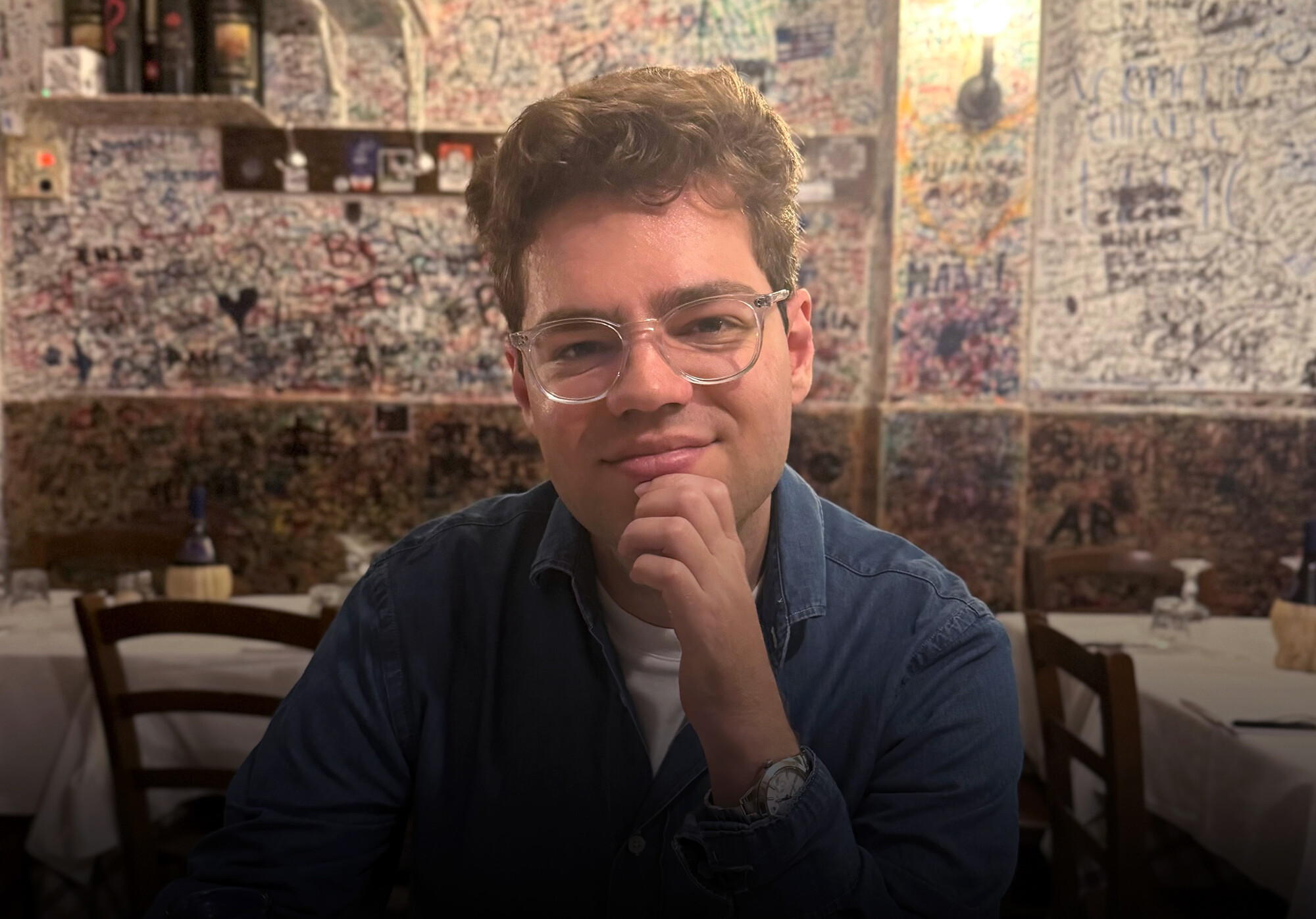
Six months after Luka Krizanac’s bilateral hand transplant at Penn Medicine, he is able to do tasks that were impossible before his transplant: typing on his iPhone, picking up food to eat, and holding a cup.
(Image: Courtesy of Luka Krizanac)
In a Penn Medicine medical marvel six years in the making, a 28-year-old Swiss man has hands of his own for the first time since he lost his arms and legs to major infection at age 12. His bilateral hand transplant marked the first surgery of its kind at the Hospital of the University of Pennsylvania since 2019. The yearslong journey and transatlantic relationship with the Penn Medicine team leading up to the surgery endured amidst the hand transplant program’s pause during the COVID-19 pandemic.
In fall 2024, Luka Krizanac became Penn Medicine’s fifth hand transplant recipient, a milestone in the program’s international leadership in the highly specialized field of vascularized composite allotransplantation, which involves a carefully choreographed symphony of experts from transplant, plastic, and orthopaedic surgery.
Penn Medicine leads in bilateral hand transplants
L. Scott Levin, Chair Emeritus of the Department of Orthopaedic Surgery and professor of plastic surgery, built the hand transplant program at Penn Medicine with Benjamin Chang, associate chief of plastic surgery, and Abraham Shaked, director of the Penn Transplant Institute and the Eldridge L. Eliason Professor of Surgery prior to the team’s first double hand transplant in 2011. Today, the team has completed the most bilateral transplants in the United States and has become a global leader in the field: the team performed the world’s first procedure of its kind on a child in partnership with Children’s Hospital of Philadelphia, and three of the five patients are European. All five patients continue thriving after their surgeries today.
“You do 1,001 activities every day with your hands. Prosthetics cannot simulate or replace that. Our team is very proud of the many things we’ve done as ‘firsts,’” Levin says. “The first child. The first transatlantic vascularized composite allotransplantation. The first in a patient who had osseointegrated below knee prosthetics. The first woman to have hand transplants who later gave birth to a baby.”
Preparation and practice
Levin and Chang began to evaluate if Krizanac was a good candidate for the procedure in 2018. About 10 years earlier, Krizanac contracted an infection that was treated incorrectly. It led to life-threatening sepsis and organ failure. To save his life, doctors ultimately had to amputate his arms and legs at 12 years old.
Preparing for each double hand transplant surgery takes about two years.
First, sustained good general health is essential. The patient must understand and accept the risks of such an intricate procedure—there is the potential for infection, rejection, or even death. A comprehensive psychiatric assessment is performed to ensure solid mental health and the ability to cope with the rigors of recovery. Years of intense physical therapy will follow the surgery, along with a lifetime of anti-rejection medications, and the patient must agree to comply with all of this. Finally, a double hand transplant patient cannot go it alone; they must be surrounded by people who serve as a committed support system. The Penn team determined that Krizanac was an optimal candidate.
At the same time, doctors preparing for each transplant hold more than a dozen multi-hour transplant rehearsal sessions in Penn’s Human Tissue Laboratory, first established by Levin in 2009. They walk through each step of the complicated procedure, visualizing what must happen with every nerve, every muscle, every blood vessel, and every bone to achieve success. Concurrently, the wait for the donor begins as Penn Medicine works with Gift of Life Donor Program to coordinate the donation.
A pandemic and a roadblock
Since hand and other transplants are considered elective “quality of life” transplants, those programs were put on hold during the COVID pandemic to ensure capacity for patients in need of lifesaving organ transplants. That work continued amidst the fear and uncertainty of the pandemic: Since March 2020, Penn Medicine teams have performed more than 2,800 transplants including hearts, lungs, livers, kidneys, uteruses, and pancreases. All the while, the hand transplant team continued to hone their skills during rehearsals in a specialized lab.
Krizanac faced another roadblock: leg wounds that wouldn't heal and could lead to infection. Without healthy legs, he couldn't get new hands. Levin and Stephen J. Kovach, III, co-director of the Penn Orthoplastic Limb Salvage Center and the Herndon B. Lehr M.D. Endowed Professor of Plastic Surgery, made a transatlantic visit to operate on his legs and bring him one step closer to the transplant surgery, using microsurgical tissue transfer to resurface his amputated legs.
Two concurrent, complex procedures
Finally, in the fall of 2024, the moment arrived. After six weeks on the waiting list. Gift of Life Donor Program was notified of a potential donor.
While most people in Philadelphia were sleeping, a ten-hour surgery began in the middle of the night and ended when most people were thinking about lunch.
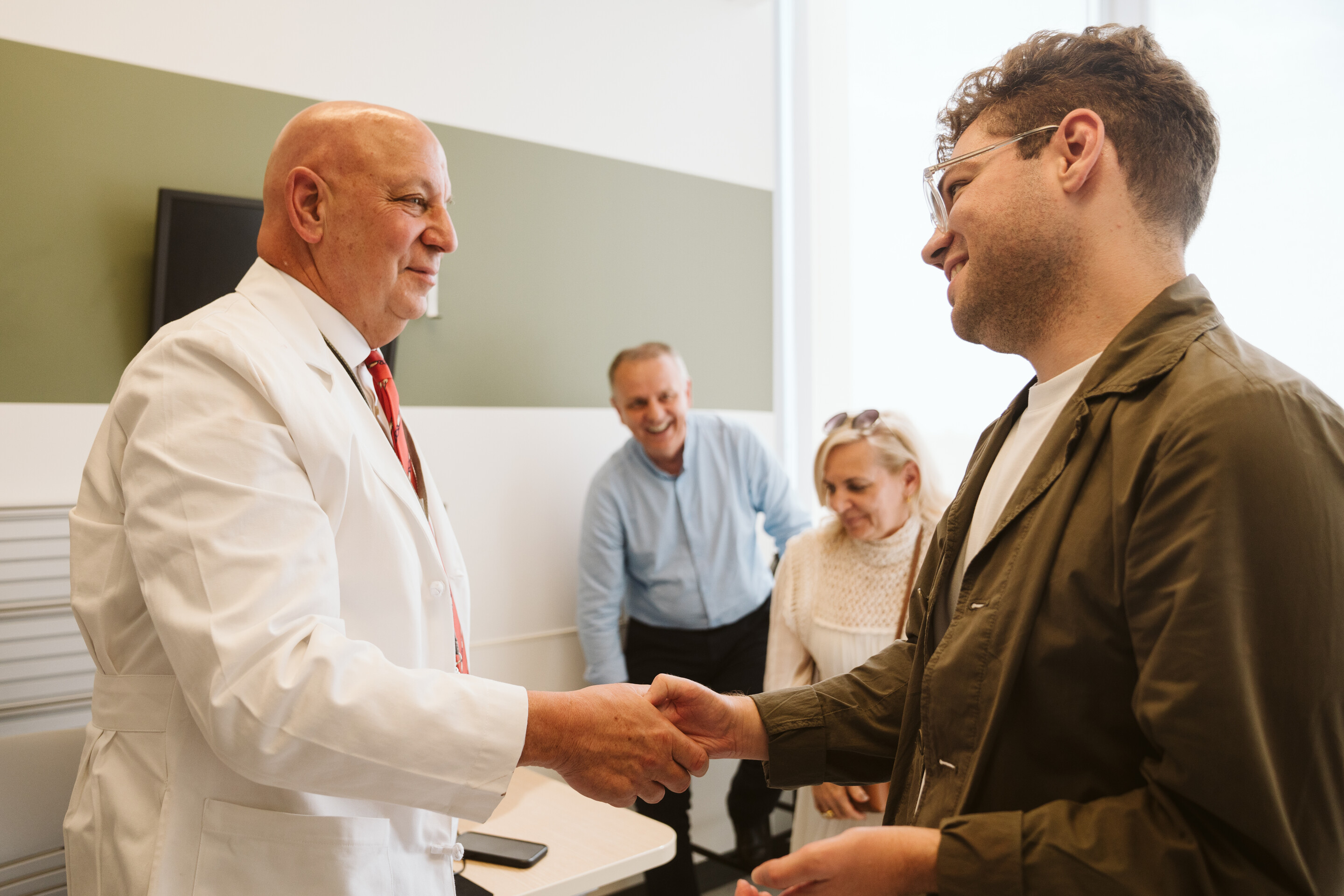
Scott Levin, director of the Penn Hand Transplant Program, greets Luka Krizanac at a reception in June 2025.
(Image: Margo Reed Studios)
A multidisciplinary team including plastic surgery, orthopaedic surgery, transplant specialists, anesthesia, and nursing all came together. More than 20 people worked simultaneously in one operating room. Two teams focused on Krizanac while two separate teams cared for the deceased donor who made these rare transplants possible through his generous gifts. The energy level and enthusiasm for the significance of the surgery remained high for the long procedure, which is technically called vascularized composite allotransplantation and medical transplantation. The mood in the operating room was intense, with each group in constant communication.
“We know in that operating room, we will be having a life-changing impact on someone’s life, and we all keep that in mind as we perform each careful step or stitch each suture over the course of ten hours,” Levin says, reflecting on all the functions the team must keep in mind while visualizing a patient’s future. “We work to make sure he’ll be able to hold someone’s hand, or touch someone’s face, touch his own face, and feel all of it.”
The incredible gift of a donor
Krizanac and his parents had moved to Philadelphia to be close to Penn in the final weeks leading up to his transplant.
Finding a donor match for bilateral hand transplant surgery is a very complex process. Many factors must be considered including blood type, skin tone, size, muscle bulk, and gender and age of the donor. This surgery is entirely dependent upon the generosity and kindness of a stranger saying yes to donation.
“It’s the most human gesture that I ever saw in life, that someone is helping you beyond their life,” Krizanac says. “And I don’t know how to express that in words, that gratitude.”
“For more than 50 years, Gift of Life Donor Program has proudly partnered with leading transplant centers to advance medical innovation to save and transform lives. We were proud to help coordinate the donation for Luka’s bilateral hand transplant, continuing our long partnership with Penn Medicine to advance vascular composite allograft donation and medical transplantation,” says Richard D. Hasz Jr., president and CEO, Gift of Life Donor Program. “Gift of Life extends our deep appreciation to the heroic donor and his selfless family who transformed Luka’s life with their generosity.”
Life with new hands
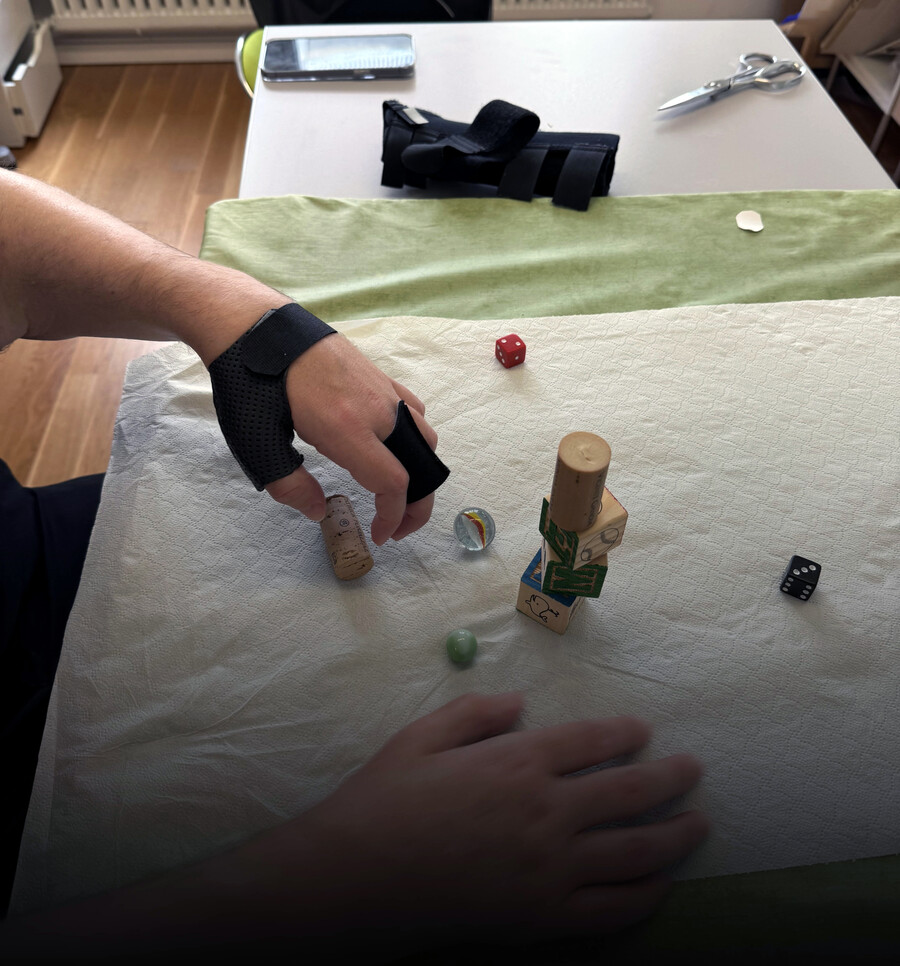
(Image: Courtesy of Lisa Burth)
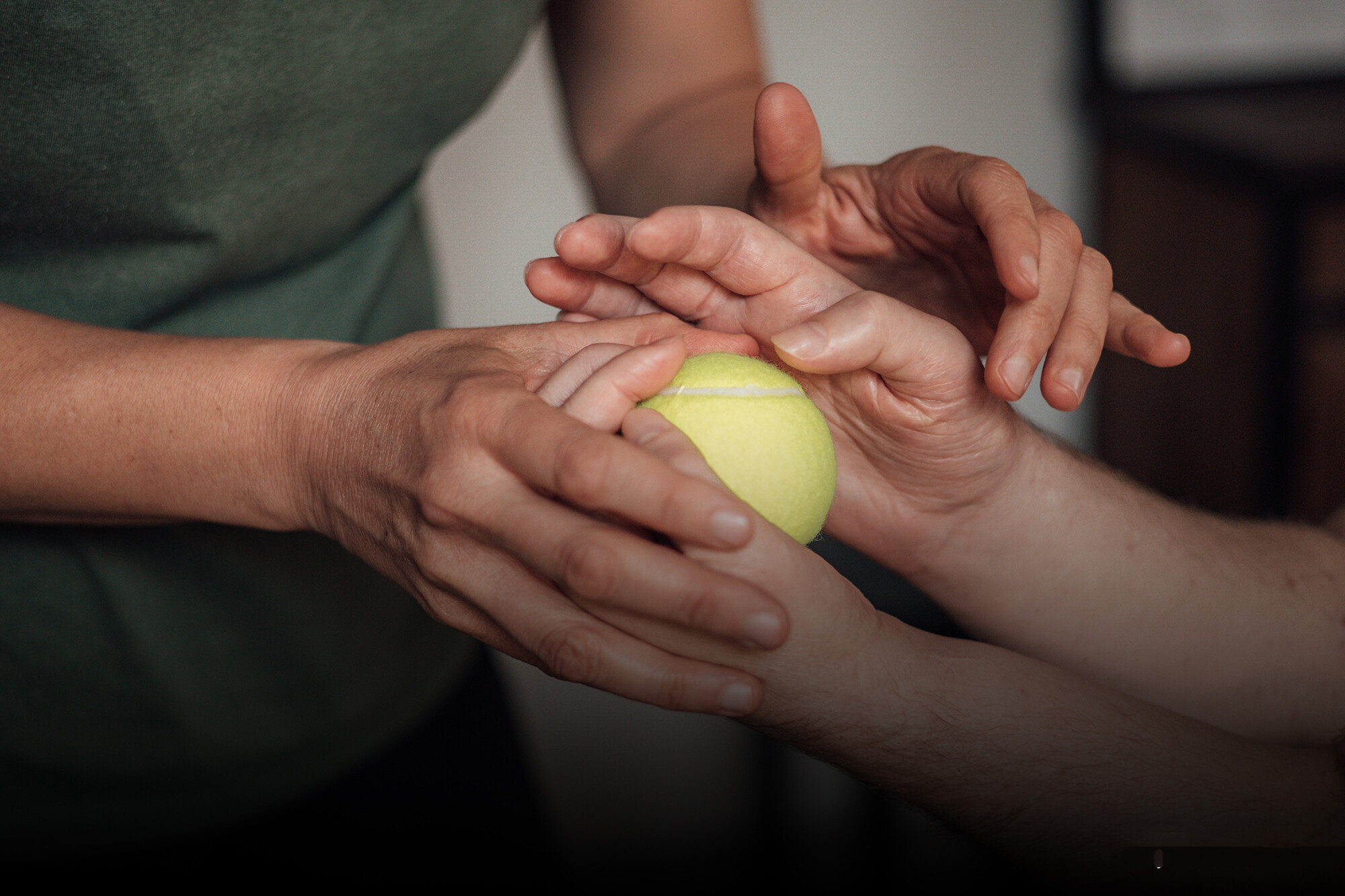
Krizanac, who works for a global bank, is now continuing his recovery at home in Switzerland. He will have several hours of physical therapy per week for the next two to three years. After only six months, he is able to do tasks that were impossible before his transplant: typing on his iPhone, picking up food to eat, and holding a cup. Even more mundane things like pushing his glasses up or resting his head in his hands are noteworthy milestones that inspire awe. His nerves are healing and he’s gaining sensation so he can actually feel if something is soft or hard, hot or cold.
“When we take this on, we are their doctors and caregivers forever,” says Levin, reflecting on the relationships the hand transplant team builds with their patients. “If they have a problem with rejection or another medical problem, we’re the first to hear about it, and we spring into action. And everybody on every team has that level of commitment, from transplant to nutrition, to coordinators to nurses and therapists.”
Nanoparticle blueprints reveal path to smarter medicines
New research involving Penn Engineering shows detailed variation in lipid nanoparticle size, shape, and internal structure, and finds that such factors correlate with how well they deliver therapeutic cargo to a particular destination.
A generous gift from alumni Glenn and Amanda Fuhrman brings the work of internationally acclaimed artist Jaume Plensa to the University of Pennsylvania. The latest addition to the Penn Art Collection expands Philadelphia's public art.
A massive chunk of ice, a new laser, and new information on sea-level rise
For nearly a decade, Leigh Stearns and collaborators aimed a laser scanner system at Greenland’s Helheim Glacier. Their long-running survey reveals that Helheim’s massive calving events don’t behave the way scientists once thought, reframing how ice loss contributes to sea-level rise.