A new study in Sciences Advances, co-authored by Penn Carey Law’s Michael Morse, introduces the concept of vote revelation, or the potential for a vote on an anonymous ballot to be linked to the voter’s name in the public voter file.
2 min. read
After an election, should election officials release a copy of each anonymous ballot? Some policymakers have championed public disclosure to counter distrust, but others worry that it might undermine ballot secrecy.
A new study in Sciences Advances, co-authored by the University of Pennsylvania Carey Law School professor Michael Morse, along with Yale Law’s Shiro Kuriwaki and UCLA’s Jeffrey B. Lewis, informs the ongoing public debate. It introduces the concept of “vote revelation”—the potential for a vote on an anonymous ballot to be linked to the voter’s name in the public voter file. Using the 2020 election in Maricopa County, Arizona, as a case study, the authors evaluate the extent of potential revelation across multiple methods of election reporting—from aggregating results at the precinct-level to releasing individual ballots.
The authors find that the release of individual ballot records would lead to no revelation of any vote choice for 99.83% of voters as compared to 99.95% under Maricopa’s current practice of reporting results by precinct and method of voting. The study explores the tradeoffs between election transparency and voter privacy, offering insights into potential safeguards that could enhance public confidence while protecting the integrity of the secret ballot.
“There will always be some tension between transparency and privacy in reporting the results of an election,” says Morse. “We want transparency—no one would trust an announcement from above that a given candidate won with no other details—but the push to publish ballots online has led to concerns about privacy, even though ballots themselves are anonymous.”
Nanoparticle blueprints reveal path to smarter medicines
New research involving Penn Engineering shows detailed variation in lipid nanoparticle size, shape, and internal structure, and finds that such factors correlate with how well they deliver therapeutic cargo to a particular destination.
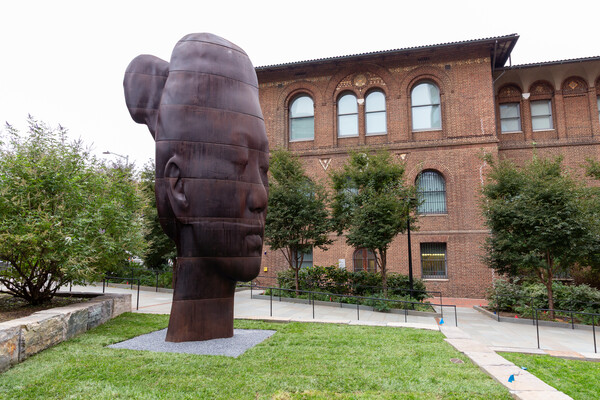
A generous gift from alumni Glenn and Amanda Fuhrman brings the work of internationally acclaimed artist Jaume Plensa to the University of Pennsylvania. The latest addition to the Penn Art Collection expands Philadelphia's public art.
A massive chunk of ice, a new laser, and new information on sea-level rise
For nearly a decade, Leigh Stearns and collaborators aimed a laser scanner system at Greenland’s Helheim Glacier. Their long-running survey reveals that Helheim’s massive calving events don’t behave the way scientists once thought, reframing how ice loss contributes to sea-level rise.