Robots in the reading room: GRASP Lab brings hands-on STEM to Roxborough
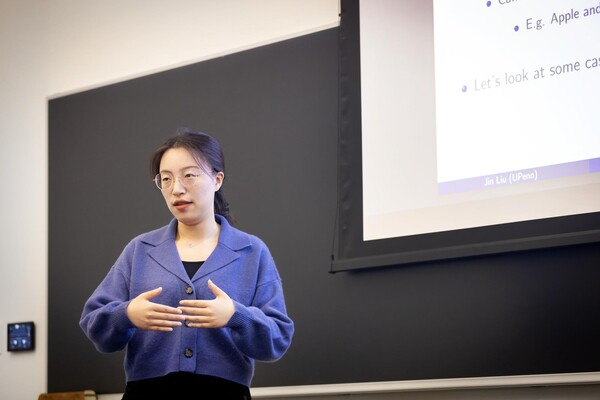
Now in its third year, a partnership between GRASP and the Roxborough Library called Fun with Robots introduces robotics to kids through workshops led by Penn Engineering graduate students.
A few years ago, Richard Torrance, the Children’s and Science Librarian at the Roxborough Branch of the Free Library of Philadelphia, stumbled across a TED Talk video on YouTube. In it, Katherine Kuchenbecher, then a faculty member at Penn Engineering in the General Robotics, Automation and Sensing (GRASP) Laboratory, describes some of the marvelous inventions that haptics make possible, from advanced dental training tools to rehabilitation therapies for stroke patients. “I thought, ‘That’s really cool,’” says Torrance.
Upon realizing that the GRASP Lab was just a short drive away, he reached out to Charity Payne, the lab’s director, and proposed a partnership. “Would it be possible for some graduate students to visit the library?” Torrance wondered. He figured that, if he found the robotics at GRASP fascinating, his patrons probably would, too.
Now in its third year, Fun With Robots, the partnership between GRASP and the Roxborough Library, continues to grow. The current cohort of GRASP graduate students is bringing their research to Roxborough throughout April, covering topics from the mechanics of the Roomba to flying robot swarms and origami-inspired designs.
“We are delighted to have this opportunity to give young Philadelphians a chance to experience the incredible research happening at GRASP,” says GRASP staff member Jillian Mallon, who manages the program. “We are so grateful to our graduate students for sharing their work and knowledge with the community.”
The events also inspire future engineers. “One girl said she wanted to go to college in the future and study engineering,” says Long. “I am happy to see there is a seed planted in her heart.”
Nanoparticle blueprints reveal path to smarter medicines
New research involving Penn Engineering shows detailed variation in lipid nanoparticle size, shape, and internal structure, and finds that such factors correlate with how well they deliver therapeutic cargo to a particular destination.
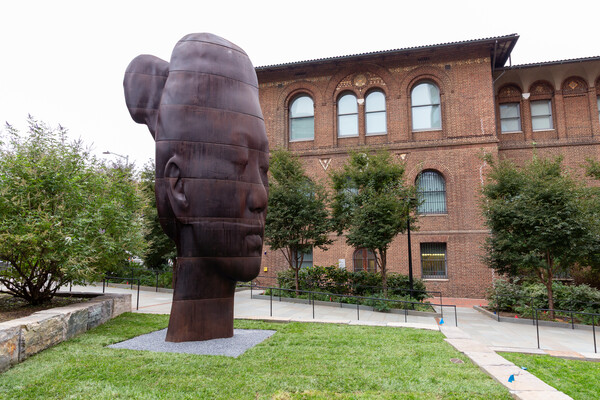
A generous gift from alumni Glenn and Amanda Fuhrman brings the work of internationally acclaimed artist Jaume Plensa to the University of Pennsylvania. The latest addition to the Penn Art Collection expands Philadelphia's public art.
A massive chunk of ice, a new laser, and new information on sea-level rise
For nearly a decade, Leigh Stearns and collaborators aimed a laser scanner system at Greenland’s Helheim Glacier. Their long-running survey reveals that Helheim’s massive calving events don’t behave the way scientists once thought, reframing how ice loss contributes to sea-level rise.