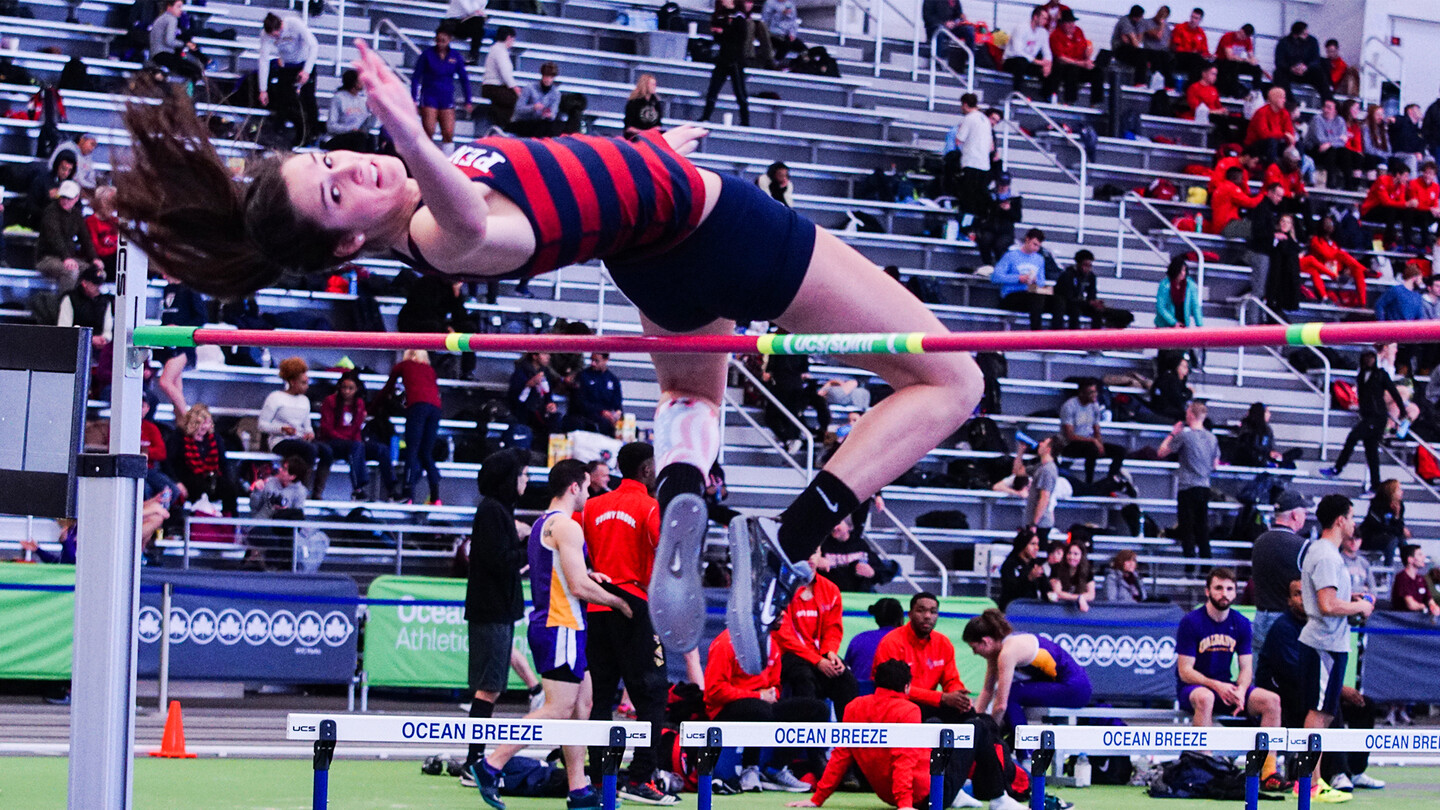
The record-setting senior discusses how to be a successful high jumper, her training schedule, how her ballet training has helped her jumping, and her plans after Commencement.
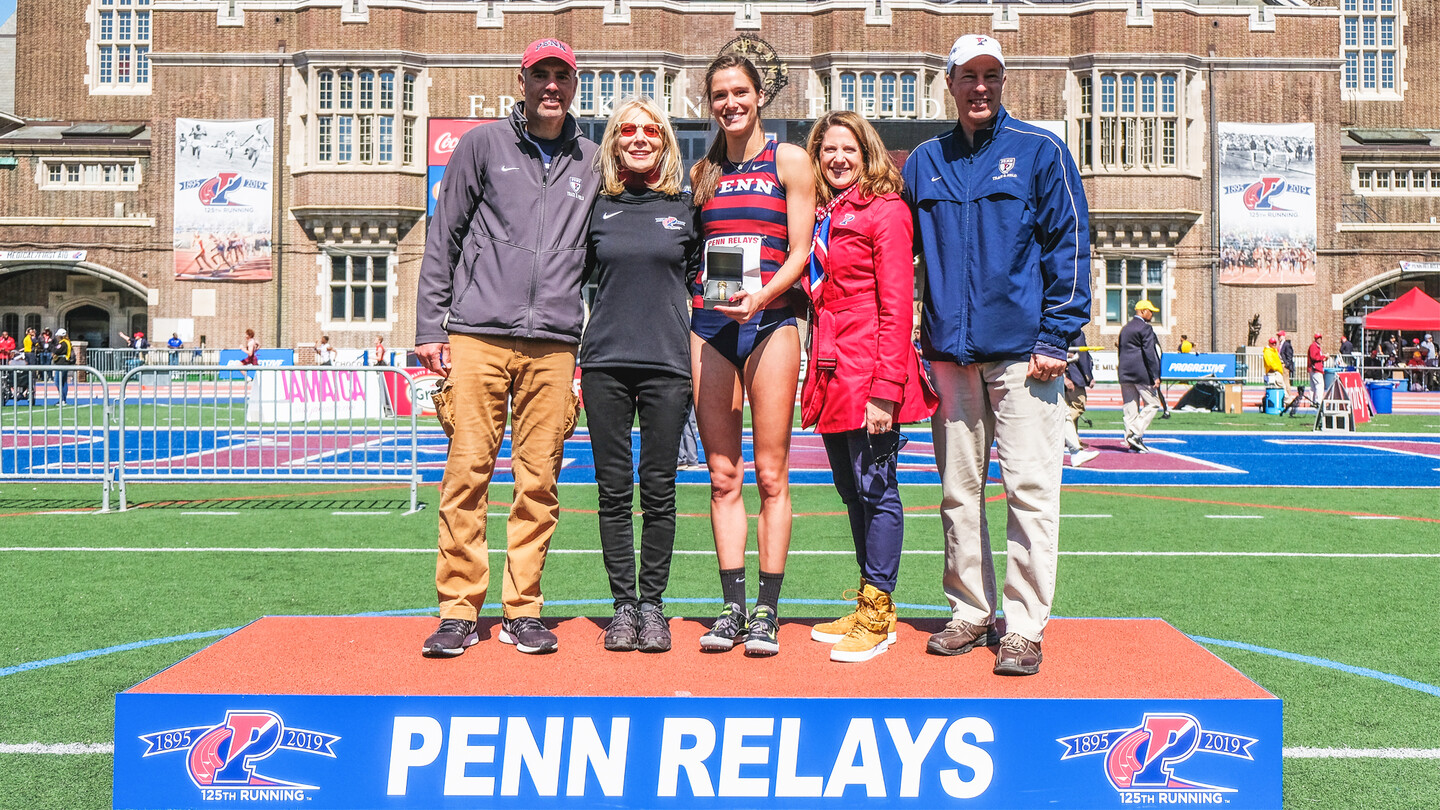
On the meet’s third day, in front of tens of thousands of raucous track fans, Malizia became the first woman in school history to win the high jump championship, clearing 1.82 meters.
“I always do the best when I can hear people watching me or cheering for me,” Malizia says. “That’s a big thing for me.”
From Tampa, Florida, Malizia has been a high jumper since she was a freshman in high school. She is the two-time defending Ivy League champion in the high jump—indoor and outdoor—and she has also earned two consecutive First-Team All-Ivy honors.
This season, Malizia set the indoor and outdoor school record in the high jump. At the PSU National Open on Jan. 26, she broke the indoor mark, clearing 1.81 meters. In late March at the Texas Relays, she broke the outdoor record, clearing 1.82 meters.
Penn Today got together with Malizia at Franklin Field to discuss her two first names, how to be a successful high jumper, her training schedule, how her ballet training has helped her high jumping, and her plans after Commencement.
You have two first names, Anna Peyton or AP for short. Did you ever ask your parents why they gave you two first names?
One of them liked Anna, one of them liked Peyton, so they tried them both. They tried Anna one week, and Peyton the other week, and then tried them together. They liked it together better.
What do you enjoy about doing the high jump?
I think for me it’s been fun just because I started out not really having a coach in high school, so then coming here, it’s been like a constant improvement and things to work on that I didn’t really know about before.
To what do you credit your improvement since you got to Penn?
When I first came in, my coach kind of broke down everything and retaught me how to jump, so it was really hard because I was messing up certain things that he was teaching me, but then it started to come together sophomore year. Since then, it’s been tweaking little things and working on coming in faster to the bar.
What are some of the keys to being a successful high jumper?
One of the big things that’s helped me get better since freshman year is my speed. I worked a lot on my sprinting so I’m able to have a lot more speed coming into the bar, which just translates to a lot more momentum, which makes the jump a little bit more effortless.
Speed is an important quality in performing the high jump?
It kind of depends on the jumper. Some girls who are top in the country are pretty slow coming into the bar, but for me, the speed has been the most helpful thing.
Do you jump off your right leg or left leg?
I come from the right side, so when you come from the right side of the pit, that means that you take off of your left leg.
You’re right-handed. Was it difficult learning to jump off your left leg?
People can jump from their left or their right leg, but I grew up dancing since I was really young until I came to college. My left leg was always a better turning leg and balancing leg so it was just a lot stronger.
Has your ballet and dance training helped with your jumping?
Definitely. I think that’s what helped me at the beginning because there is a lot of jumping and explosive movements, but also strength, in ballet and dance. And I also did acrobatics a couple times a week [in my youth], so the motion of going back and throwing my head back and bringing my knees up was pretty natural for high jump.
In the fall, Monday, Wednesday, Friday are all primarily running days, so we’ll do a lot of sprinting, or bleachers, or weight training—running with the weight on you. And we lift on Mondays, Wednesdays, and Fridays as well. And then Tuesday and Thursday are more of recovery days, stretch days. In season, it’s pretty similar but the volume is cut down a lot. We are still running, but we wouldn’t be doing like two hours of bleachers; it would be more like five to 10 100-meter sprints or something like that. We also jump a lot more outdoor. In the preseason in the fall, we’ll only jump on Fridays for about an hour, and then in-season I’m jumping on Mondays and Wednesdays for about one to two hours. It’s less running, more jumping in-season.
Did you say two hours of bleachers?
Yes, an hour or two of doing all that sort of stuff.
Part of your training is running bleachers? I thought that was just for punishment.
They’ll have us do like four sets of up and down, and then a 100 meter, and then a 10-minute break. And then do it again. We’ll do that like six times. It’s good, it makes our calves pretty strong, which is important for high jump.
You are in the Biological Basis of Behavior Program. Why did you choose BBB as a major?
I was just really interested in neuroscience. My family has a history of brain ailments so I’ve always been interested in understanding why those sorts of things happen and how it affects your body.
Do you know what you’re going to do when you graduate?
I’m actually going to be moving to Houston, Texas, and working in investment banking there.
What drew you to investment banking?
I learned sophomore year-ish that I didn’t want to be a doctor so I explored a couple of the things that Penn pushes most, and investment banking is one of them. And my dad does business so he told me try it out. I did it last summer. I interned at that office and then I got a return offer.
Materials in the Annenberg School for Communication Library Archives include thousands of TV scripts, the first issue of TV Guide, and interviews about the early days of HBO—which help to chronicle TV’s 100-year story.
Centering joy in AI development and implementation
PIK Professor Desmond Upton Patton—of Annenberg and SP2—and collaborators introduce a joy-informed framework designed to initiate conversations among engineers, designers, and researchers.
Winter Storm Fern brought icy and snowy conditions to the Northeast and other parts of the country over the weekend. Penn Today asks physicist Robert Carpick about the unique properties of ice, the science of curling, and how close we are to ‘nonslip’ ice.
Organizations like Penn’s Netter Center for Community Partnerships foster collaborations between Penn and public schools in the West Philadelphia community.
Penn receives national distinction for community engagement
The recognition by the American Council on Education and Carnegie Foundation for the Advancement of Teaching acknowledges Penn’s long-standing commitment to community-engaged scholarship and partnerships in West Philadelphia and beyond.