Food waste: Recycling, not discarding, offers huge environmental benefits
Researchers at Penn Vet examine how common food waste recycling methods, including composting, could have a big impact on greenhouse gas emissions and the use of natural resources.
5 min. read
Findings from a study by Zhengxia Dou, a professor of agricultural systems at Penn’s School of Veterinary Medicine provide “a benchmark for countries developing food waste management strategies for a circular agrifood system,” the authors write.
(Image: Courtesy of Zhengxia Dou)
Pressures such as population growth, urbanization, and land degradation are straining the global agrifood system, the network connecting all steps of the food supply chain from growing crops in the field to waste elimination or disposal. In turn, the system is a major contributor to greenhouse gas (GHG) emissions, highlighting an urgent need for a transformative change.
“Everyone is involved in the global agrifood system since everyone eats food,” says Zhengxia Dou, a professor of agricultural systems at Penn’s School of Veterinary Medicine. “Everyone is a stakeholder.”
Food loss and waste, in particular, Dou says, are “a big deal.” Almost a third of the food produced for human consumption, she explains, is never eaten but lost or wasted, which not only impacts food security but also wastes resources such as land, water, and energy.
RELATED
“When finished eating, people tend to just toss what’s left: out of sight, out of mind,” Dou says. “But from the resource and environmental perspective, what happens after actually matters a lot.”
Penn Today sat down with Dou to discuss how food waste can be managed differently from current landfill-dominated disposal to reduce GHG emissions and help make better use of resources, including the results of a study she led that was published in Nature Food earlier this year.
The findings, from an analysis of data from 91 field-based studies conducted under diverse conditions in 29 countries, provide “abenchmark for countries developing food waste management strategies fora circular agrifood system,” Dou and her co-authors write.
Compositing, anaerobic digestion, and refeed
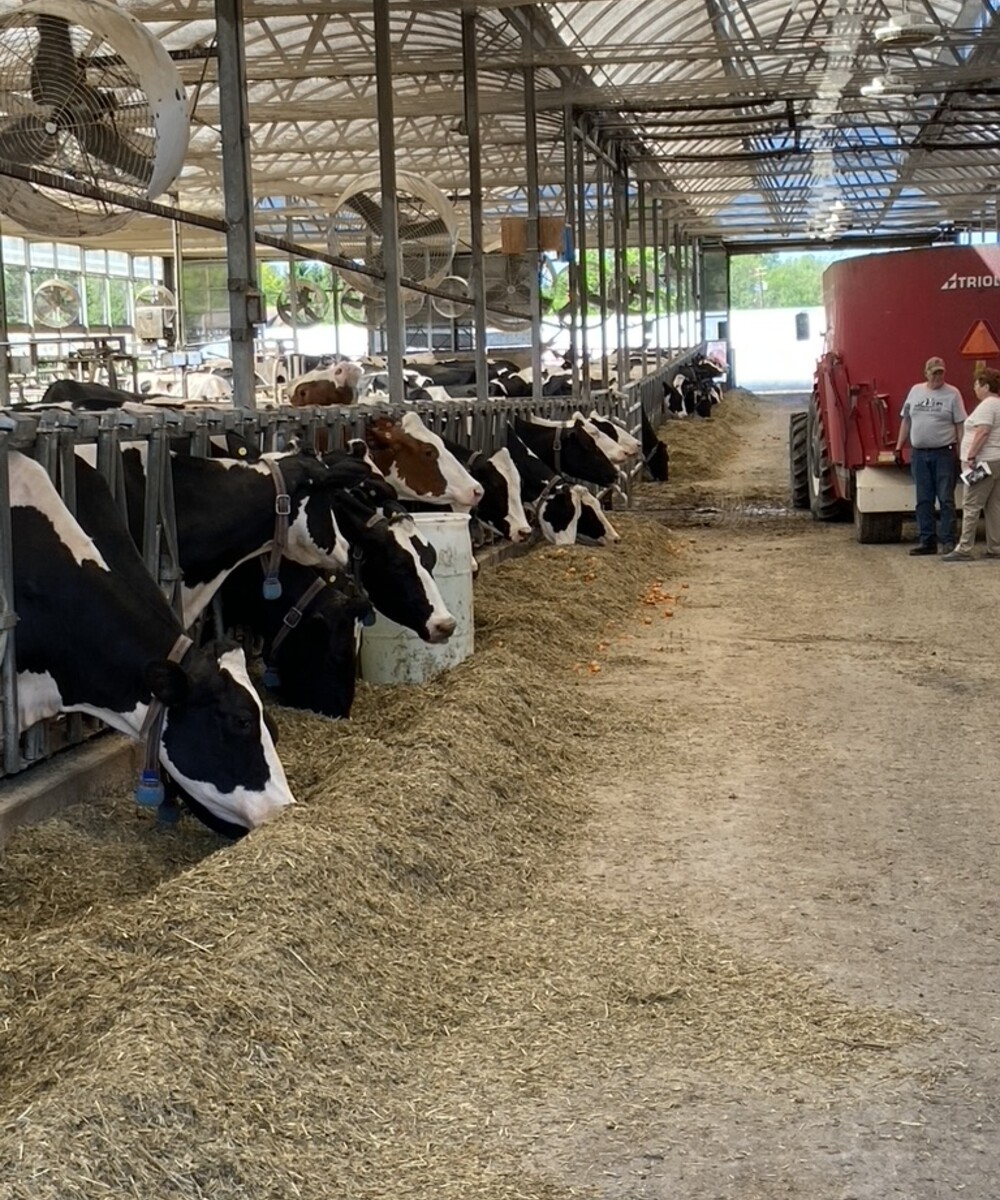
The study focuses on three food waste recycling methods that have been used historically to manage organic waste: composting, which breaks down organic waste while conserving valuable nutrients; anaerobic digestion, which is the process by which organic material is broken down and produces a mixture of methane and carbon dioxide known as biogas that can be used as a renewable energy source; and refeed, which repurposes suitable food waste into animal feed. The goal was to determine their lifecycle-based effect on GHG emissions.
The results provide compelling evidence that recycling food waste using these methods can dramatically reduce GHG emissions compared with landfill disposal.
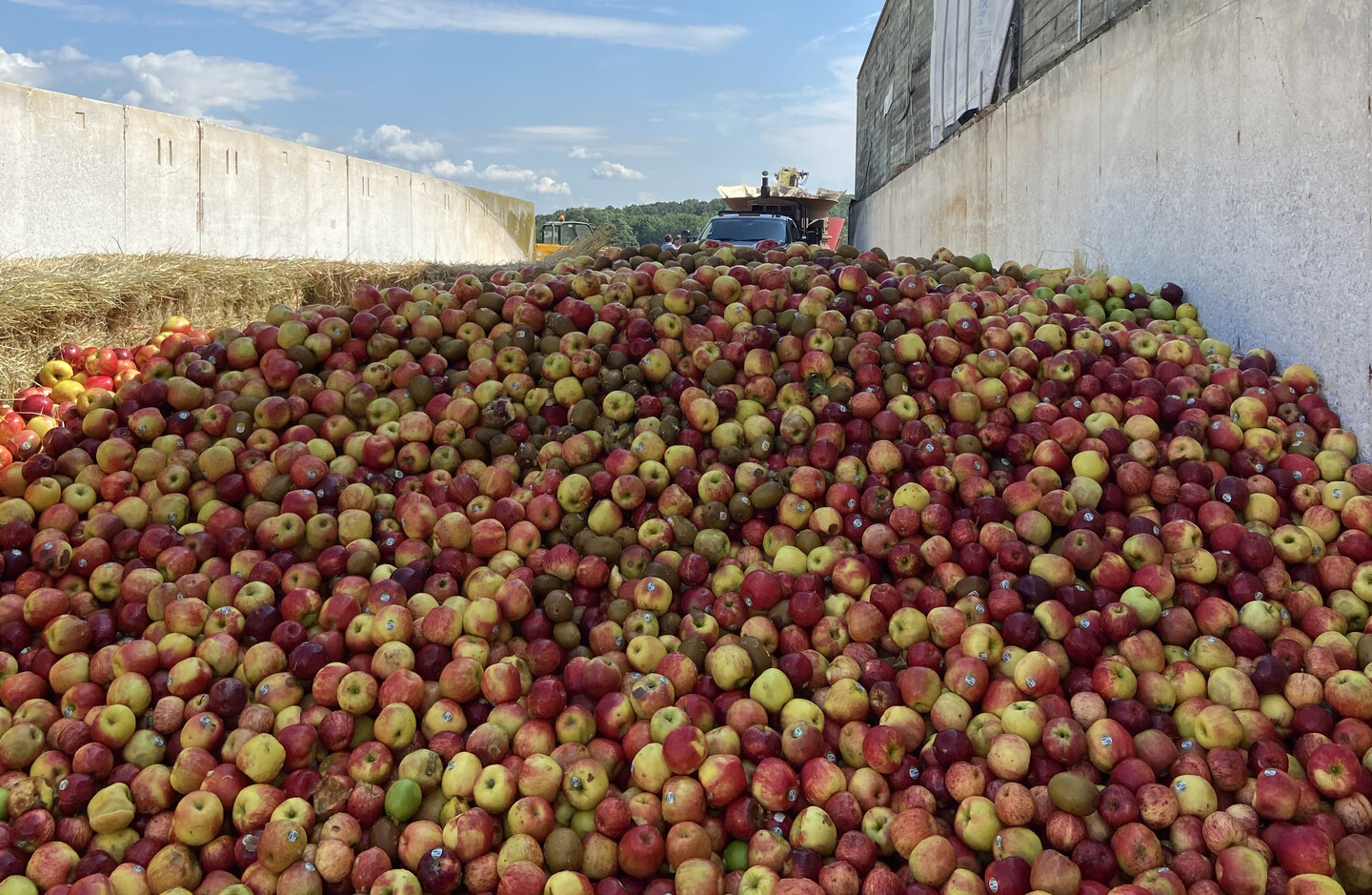
“You can think of a landfill as a ‘biological amplifier,’” Dou says. Food waste contains carbohydrates and other organic compounds, and so, when it is buried in a landfill, it decomposes anaerobically to produce methane, a greenhouse gas that has a warming effect more than 80 times that of carbon dioxide on a 20-year timespan. “Anything you can do with food waste recycling is better than sending it to a landfill,” she says.
Eliminating food waste in landfills in three systems
The United States, the European Union, and China “have large agrifood systems, produce enormous amounts of food waste, are major contributors to GHG emissions and use of natural resources, and have substantial amounts of data available,” write the authors.
“They are what I would call methane ‘super emitters’ from food waste disposal,” Dou says.
“Everyone is involved in the global agrifood system since everyone eats food,” says Dou. “Everyone is a stakeholder.”
(Image: Courtesy of Zhengxia Dou)
In this study, the food waste destined for landfills in these three regions was hypothetically diverted to composting, anaerobic digestion, and refeed recycling in a ratio of 1:1:1 to determine the effects on GHG emissions mitigation.
These calculations showed that eliminating landfill disposal completely in the U.S., the EU, and China could have a notable impact on GHG emissions reduction. For example, Dou says, the estimated reduction in GHG emissions in the U.S. is equivalent to offsetting the methane produced by nearly 9 million dairy cows, or more than 90% of the entire dairy cow population in the country.
Sparing land, water, fuel, and fertilizer use
Most important to Dou are the study’s findings regarding the benefits of refeed as a food waste recycling option. “I am a big advocate for converting suitable food waste streams to animal feed because it has the additional benefit of reducing conventional feed usage, therefore sparing the use of natural resources and fertilizer.”
For example, the study finds that more than 5% of China’s total crop land currently devoted to maize and soybean production could be spared when suitable food waste destined for the landfill is recycled through refeeding. “This spared land could be used for producing human food to enhance food security or for taking land out of production for conservation purposes,” the authors write.
The study also finds that recycling food waste materials through refeeding could replace a meaningful amount of maize and soybeans in animal feed, which, Dou says, is particularly important for countries such as China and certain EU nations that rely heavily on imported feeds.
The study concludes that “food waste composting, anaerobic digestion, and repurposing to animal feed are all practical and viable options that are field proven, low cost, and highly effective in mitigating emissions with multiple resource conservation benefits.”
To Dou, reducing food waste starts at home. “We are part of the equation. So, to solve the problem, we need to be aware of the food loss and waste issue and try to cut down our own footprint by reducing our own food loss and waste.”
Zhengxia Dou is a professor of agricultural systems at in the School of Veterinary Medicine.
Other authors are the University of Pennsylvania’s Darko Stefanovski and Yingcheng Wang, also of the China Agricultural University; Zhenling Cui, Ji Li, Zihan Wang, Yulong Yin, and Hao Ying of China Agricultural University; Ting Chen of Zhejiang Gongshang University; Tomoaki Nakaishi of Kyushu University; Gerald C. Shurson of the University of Minnesota; and Huifang Zheng of China Agricultural University and Henan Institute of Science and Technology
This work was supported by the National Key Research and Development Program of China (2022YFD1901501, 2021YFD1901001, H.Y.), the Major Science and Technology Project of Yunnan Province (202202AE090034, H.Y.), the Major Science and Technology Project of Shandong Province (2023TZXD088, 2024CXPT075, Z.C.), and Natural Science Foundation of Zhejiang Province, China (number LY22E080009, T.C.). This study also received funding from University of Pennsylvania Global Engagement (Z.D.), the Pennsylvania Department of Agriculture (Z.D.), and the USDA-NIFA IDEAS Program (number 2022-68014-36664, project accession number 1028184; Z.D.)
Almost a third of the food produced for human consumption is never eaten but lost or wasted, which not only impacts food security but also wastes resources such as land, water, and energy.
Nanoparticle blueprints reveal path to smarter medicines
New research involving Penn Engineering shows detailed variation in lipid nanoparticle size, shape, and internal structure, and finds that such factors correlate with how well they deliver therapeutic cargo to a particular destination.
A generous gift from alumni Glenn and Amanda Fuhrman brings the work of internationally acclaimed artist Jaume Plensa to the University of Pennsylvania. The latest addition to the Penn Art Collection expands Philadelphia's public art.
A massive chunk of ice, a new laser, and new information on sea-level rise
For nearly a decade, Leigh Stearns and collaborators aimed a laser scanner system at Greenland’s Helheim Glacier. Their long-running survey reveals that Helheim’s massive calving events don’t behave the way scientists once thought, reframing how ice loss contributes to sea-level rise.