A Lauder Institute intercultural venture in Oman and the UAE
Graduate students in the Lauder Intercultural Ventures program traveled from Oman to Dubai to learn about urban growth, trade, tourism, and development in areas entrenched in cultural history and with deep religious roots.
2 min. read
Over the October fall break, Lauder Institute students embarked on an immersive journey through Oman and the United Arab Emirates (UAE) to examine how migration, innovation, and cultural memory shape urbanism in the Middle East and Gulf region. Guided by Sudev Sheth, a senior lecturer in international studies at the Lauder Institute, the Lauder Intercultural Venture (LIV) explored specifically how cities in Oman and the UAE navigate rapid modernization while preserving aspects of their history and heritage.
Lauder Institute students observing at a scale model of a city during the Dubai leg of their international trip.
(Image: Mili Lozada-Cerna)
“This LIV was designed to help students see beyond skylines and infrastructure,” says Sheth. “It’s about understanding how local communities and migrants from around the world transform spaces and spectacular architecture into meaningful, lived environments where technology, tradition, and aspiration meet.”
The journey began in Muscat, Oman, where participants met government and business leaders driving the nation’s growth strategy. At the Ministry of Housing and Urban Planning, officials outlined Oman’s model of measured urbanism—an approach that emphasizes cultural continuity, long-term planning, and community cohesion, and includes efforts to replace expatriate labor with trained Omani personnel.
The group also visited Nizwa, once the capital of Oman, and Sur, the ancient port known for its traditional dhow shipyards, as well as journeyed across the desert toward Dubai. The contrast between cities in Oman and Dubai offered a compelling lens through which to examine how two of the Lauder Institute’s key academic themes—data-driven societies and economic inclusion and development—are reflected in the region.
The LIV program is a component of the Institute’s Master’s in International Studies degree that combines academic insights from faculty with immersive, on-the-ground experiences abroad. This was the Lauder Institute’s first LIV trip to Oman and the UAE.
This story is by Lauren Treutler. Read more at the Lauder Institute.
Nanoparticle blueprints reveal path to smarter medicines
New research involving Penn Engineering shows detailed variation in lipid nanoparticle size, shape, and internal structure, and finds that such factors correlate with how well they deliver therapeutic cargo to a particular destination.
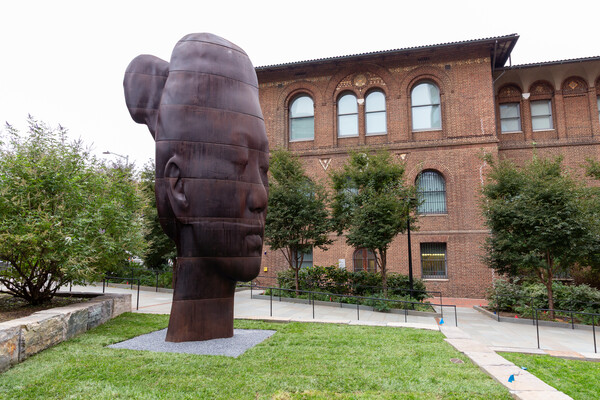
A generous gift from alumni Glenn and Amanda Fuhrman brings the work of internationally acclaimed artist Jaume Plensa to the University of Pennsylvania. The latest addition to the Penn Art Collection expands Philadelphia's public art.
A massive chunk of ice, a new laser, and new information on sea-level rise
For nearly a decade, Leigh Stearns and collaborators aimed a laser scanner system at Greenland’s Helheim Glacier. Their long-running survey reveals that Helheim’s massive calving events don’t behave the way scientists once thought, reframing how ice loss contributes to sea-level rise.