Where does charcoal come from—and is it sustainable?
Charcoal energizes everything from backyard barbecues to industrial metallurgy, but its environmental impact is worse than once thought. Research from the School of Arts & Sciences finds that policy changes could make charcoal more sustainable.
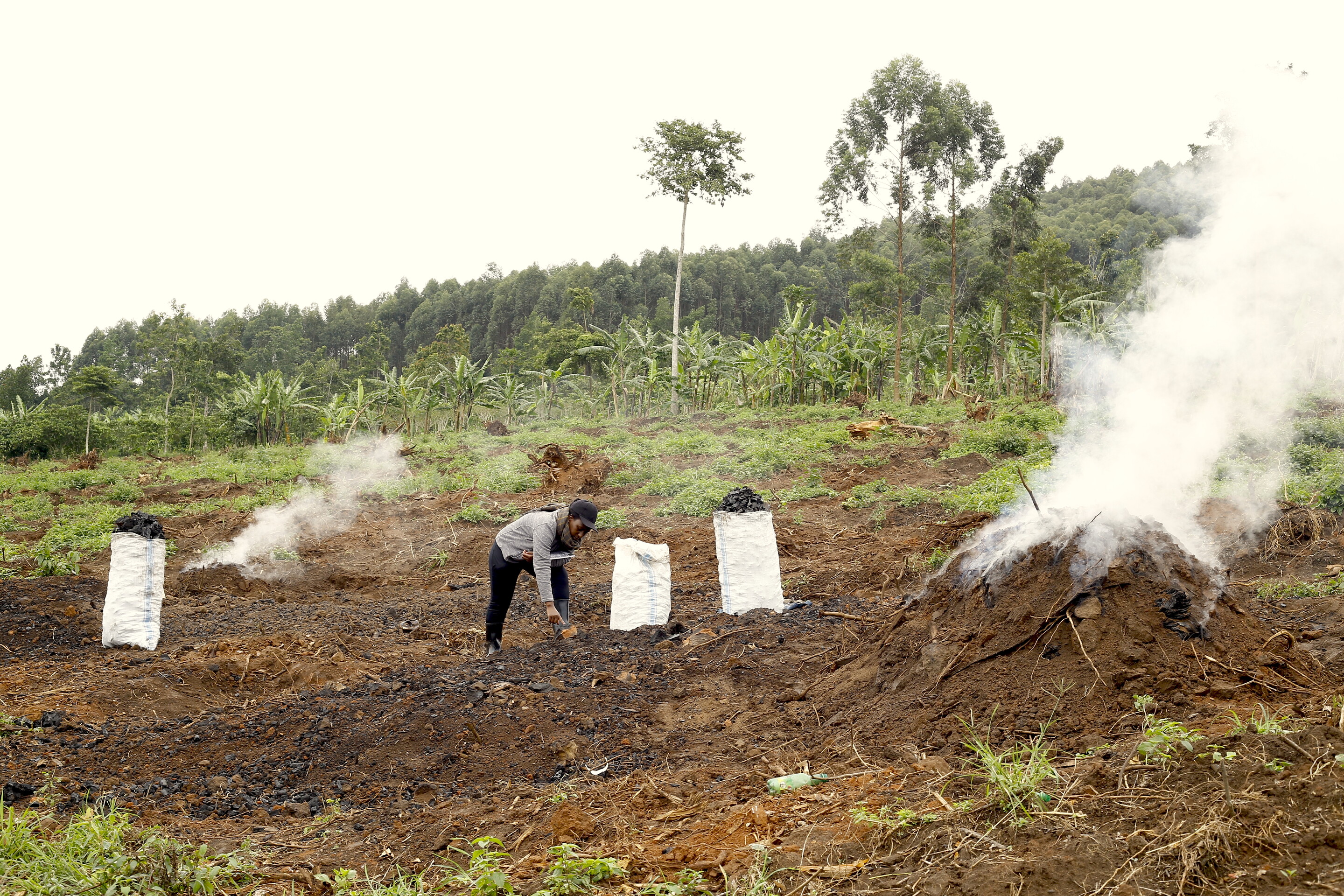
Penn researchers say that there are more sustainable alternatives to eucalyptus plantation and charcoal production sites like this one in Kyegaliro, Uganda. (Image: Courtesy of Catherine Nabukalu).
Eclipsed by energy sources such as gas and electricity, charcoal is often left out of contemporary discussions about the global energy transition. It’s a resource that some manufacturing processes, such as steel and silicon production, are switching to, and one that people worldwide continue to use by choice. Charcoal production grew from 36 million tons in 1995 to 54 million tons in 2019.
Part of that rise is due to the fact that charcoal is—in theory, at least—a renewable resource. Charcoal is most often made from trees, which can technically be replanted. But with a notoriously decentralized and informal supply chain, charcoal’s environmental impact is hard to measure, and it’s unclear whether charcoal producers are truly replacing the trees they cut down.
In reality, the current state of global charcoal production does little to live up to its “renewable” reputation, according to a UN Environment Programme brief authored by Penn researcher Reto Gieré and alumna Catherine Nabukalu. Gieré, a professor of Earth and Environmental Science in the School of Arts & Sciences, and Nabukalu, Gieré’s former student in the Master of Environmental Studies program, traced charcoal’s supply chain and examined the rudimentary ways in which it is produced and the implications of its growing demand around the world.
Penn alumna Catherine Nabukalu (left) and professor Reto Gieré (right) suggest producing charcoal from organic waste rather than fresh lumber (Images: Courtesy of Catherine Nabukalu and Reto Gieré).
While they found that charcoal production often goes hand-in-hand with air pollution, forest degradation, and poor replanting practices, they offer some recommendations to curb charcoal’s environmental impact. They propose introducing biodiversity when replanting trees and using existing organic waste rather than freshly cut trees as a source for charcoal whenever possible.
Charcoal is “both a problem and a solution,” says Nabukalu. Charcoal is typically made in earth-mound kilns from lumber and is produced by a low-oxygen, high-temperature chemical reaction called pyrolysis. Burning charcoal generates emissions, but some argue that the negative impact of those emissions is offset by replanting the trees used to make the charcoal.
The researchers note that the charcoal supply chain could be heavily influenced by carbon tax systems, which penalize fossil fuel emissions, as well as carbon credit systems, which reward eco-friendly actions like planting trees. While these systems are well-intentioned, Nabukalu and Gieré say, they can inadvertently encourage forest and biodiversity loss.
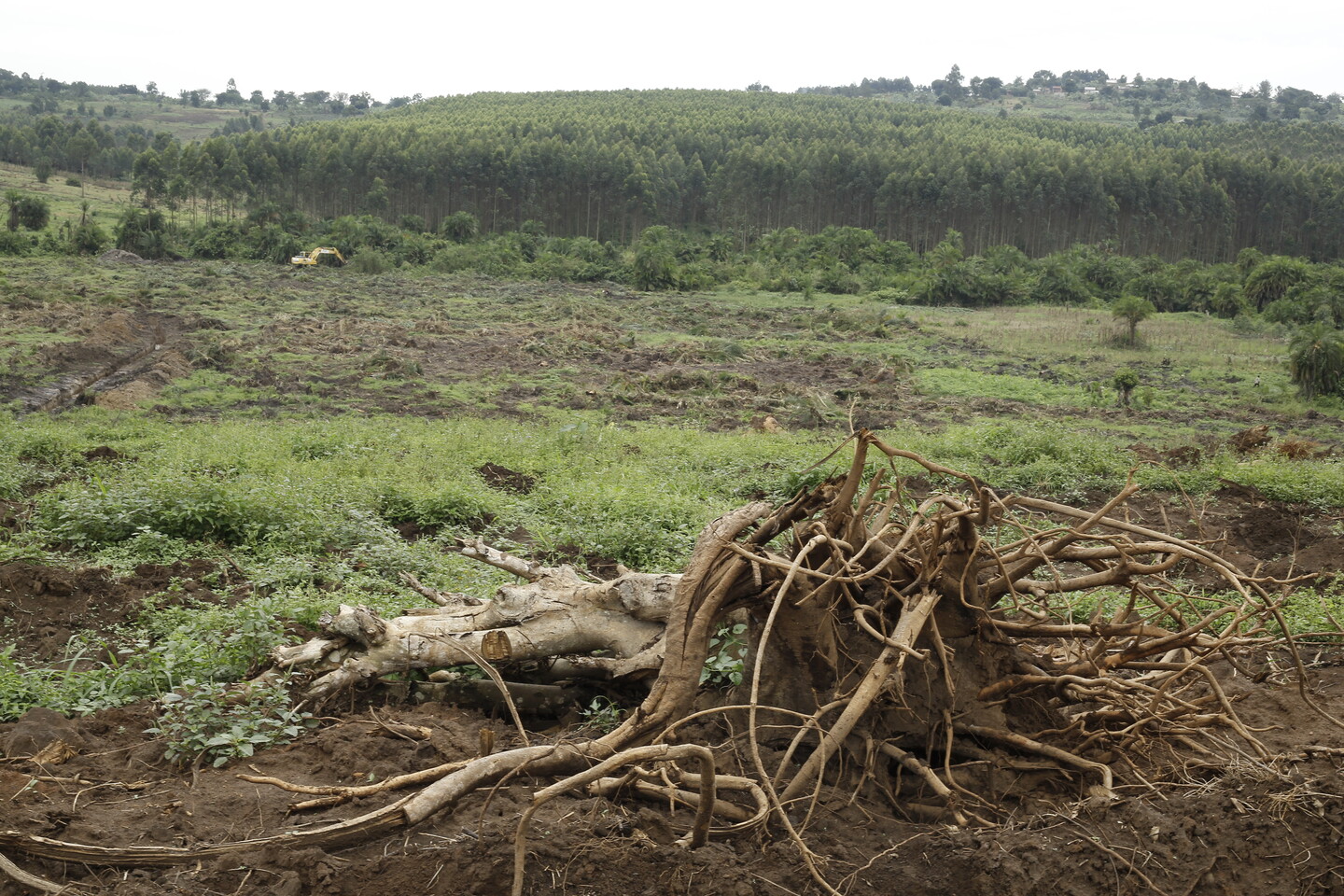
The steelmaking industry, for example, is increasingly turning to charcoal for this reason, particularly in Brazil, where the Amazon rainforest is being razed and replaced with plantations of fast-growing eucalyptus. Gieré says that charcoal from these fast-growing eucalyptus plantations, called “renewable charcoal,” is preferable to charcoal derived from virgin forest. However, eucalyptus plantations are a poor substitute for natural forest, lacking the biodiversity and resilience that makes forests ecologically valuable. “Monocultures are never good for the environment,” says Gieré. “When something goes wrong—like if a microorganism attacks—all the trees might die.”
In the brief, Gieré and Nabukalu emphasize that policy changes are needed to prevent deforestation and monoculture plantations and to promote biodiverse replanting efforts. The tropical forests of Nigeria, Brazil, India, Tanzania, Ghana, and the Democratic Republic of Congo are among the world’s primary sources of charcoal. The researchers also call attention to the vulnerability of forests in semi-arid African and Middle Eastern regions including Egypt, Somalia, Namibia, and Ethiopia. These countries are among the world’s top ten charcoal producers and exporters.
Eucalpytus plantations like this one in Kyegaliro, Uganda, are used for “renewable” charcoal production, but they’re a poor substitute for a natural forest (Image: Courtesy of Catherine Nabukalu).
While most large-scale charcoal production is driven by industry, charcoal is also widely used as an energy resource for cooking. Gieré and Nabukalu found that charcoal use was not necessarily associated with poverty or lack of access to other sources of energy; many households with access to electricity simply prefer to use charcoal regardless of other options. In addition, “energy-secure” countries such as Germany, Japan, the United Kingdom, and the United States are some of the of the world’s top ten charcoal importers. Charcoal is favored for the flavor it imparts on food, and even used recreationally for smoking in hookahs and similar water pipes.
To prevent these domestic and recreational uses for charcoal from further contributing to forest loss, Gieré and Nabukalu say that local organic waste should be used in lieu of trees. Many types of kitchen and agricultural waste can undergo the same process used to create charcoal from trees.
Some countries are making efforts to shift from relying on trees as the sole source for charcoal to utilizing local waste materials. In India, charcoal is being made from coconut shells, and in Uganda, Kenya, and Ethiopia, some residents collect their kitchen and agricultural waste for charcoal production. Gieré and Nabukalu say that communities can adapt based on waste specific to their region; sawdust, hay, olive pits, nut shells, and coffee bean husks are just some examples.
Gieré and Nabukalu’s research shows that charcoal made from freshly cut trees is not as “renewable” as once thought, but there are plenty of ways to make the popular resource more sustainable.
“If the charcoal production process is handled well,” says Nabukalu, “we can mitigate a significant amount of forest loss and emissions.”
Materials in the Annenberg School for Communication Library Archives include thousands of TV scripts, the first issue of TV Guide, and interviews about the early days of HBO—which help to chronicle TV’s 100-year story.
Centering joy in AI development and implementation
PIK Professor Desmond Upton Patton—of Annenberg and SP2—and collaborators introduce a joy-informed framework designed to initiate conversations among engineers, designers, and researchers.
Winter Storm Fern brought icy and snowy conditions to the Northeast and other parts of the country over the weekend. Penn Today asks physicist Robert Carpick about the unique properties of ice, the science of curling, and how close we are to ‘nonslip’ ice.
Organizations like Penn’s Netter Center for Community Partnerships foster collaborations between Penn and public schools in the West Philadelphia community.
Penn receives national distinction for community engagement
The recognition by the American Council on Education and Carnegie Foundation for the Advancement of Teaching acknowledges Penn’s long-standing commitment to community-engaged scholarship and partnerships in West Philadelphia and beyond.