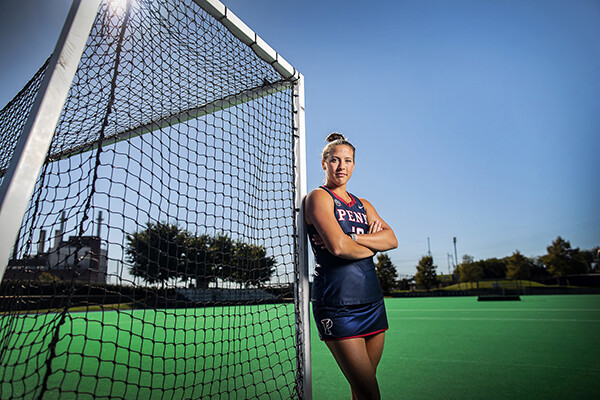
The senior captain discusses her role as a center back, the field hockey team’s brutal schedule, playing for USA Field hockey, her work as a field hockey coach and referee, and her plans for next year.
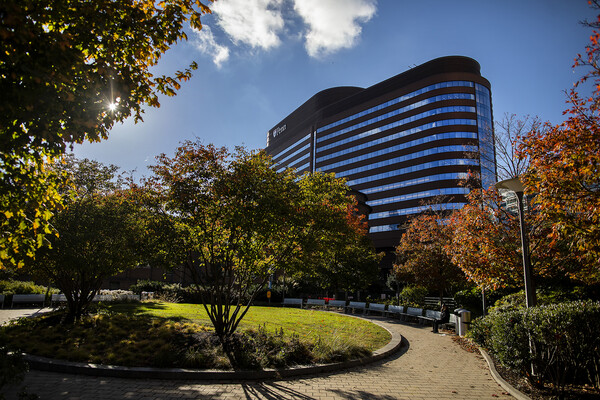
The opening of the Pavilion marks the completion of the University’s largest capital building project, and culmination of a planning and design process years in the making. (Image: Eric Sucar)
nocred
Historic move ushers in new era of care
Over eight hours, 310 patients moved to the Pavilion, a 17-story, 1.5-million-square-foot addition to the Hospital of the University of Pennsylvania campus.
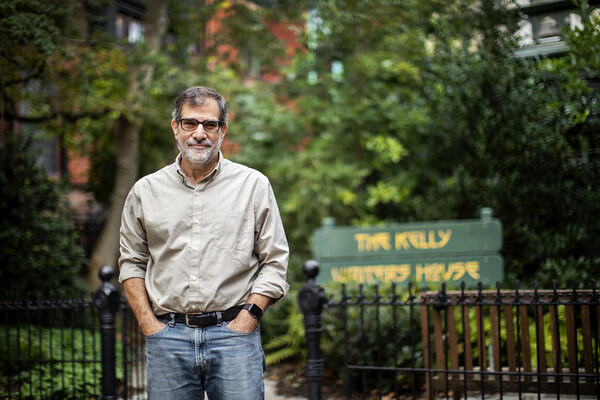
Al Filreis, an English professor at Penn since 1995, founded the Kelly Writers House on Locust Walk in 1995 and has since served as the faculty director.
nocred
Al Filreis dwells in possibility
Celebrating poetry and literature at Penn since 1985, Al Filreis continues to create community at the home for writers he founded in a Locust Walk house a quarter-century ago.
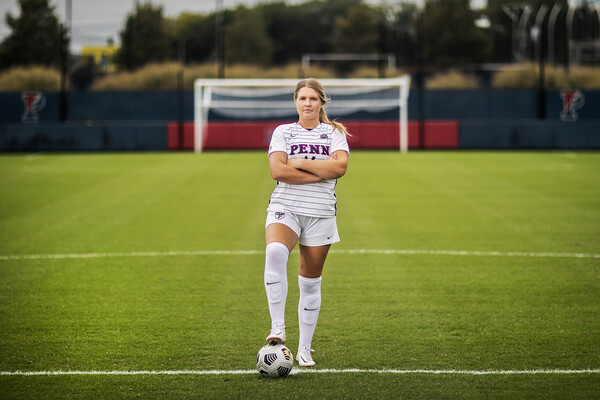
The senior on the women’s soccer team chats about what she enjoys about the game, her responsibilities as a forward, her young but talented team, how she has grown as a player, and her plans for the future.
Fully virtual again this year, the annual celebration returns with information sessions, student performances, and a live campus update from Penn President Amy Gutmann.
After earning a Ph.D. in Education, Krista Cortes returns to Locust Walk as the new director of La Casa Latina.
The new director of La Casa Latina creates ‘a sense of belonging'
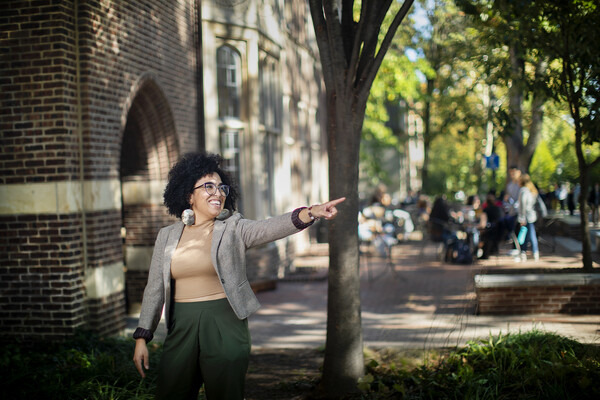
As the new director of La Casa Latina, Krista Cortes brings a sense of inclusivity to welcome different people, cultures, races, and languages to the cultural resources center.
Frederick “Fritz” Steiner, dean of the Stuart Weitzman School of Design at the University of Pennsylvania.
nocred
Steiner’s term as dean of Penn’s Weitzman School of Design is extended
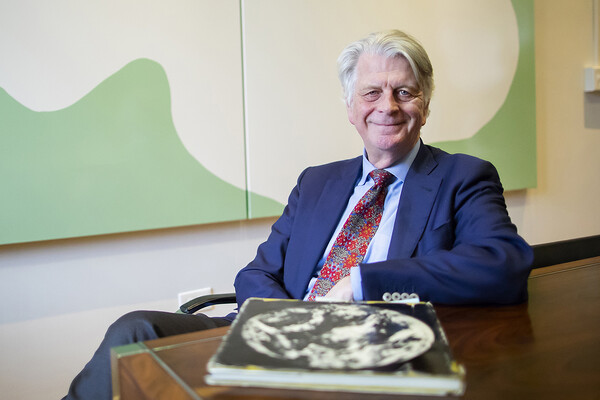
Frederick “Fritz” Steiner’s term as dean of the Stuart Weitzman School of Design has been extended two years to June 30, 2025. The announcement was made by Penn President Amy Gutmann and Interim Provost Beth A. Winkelstein.
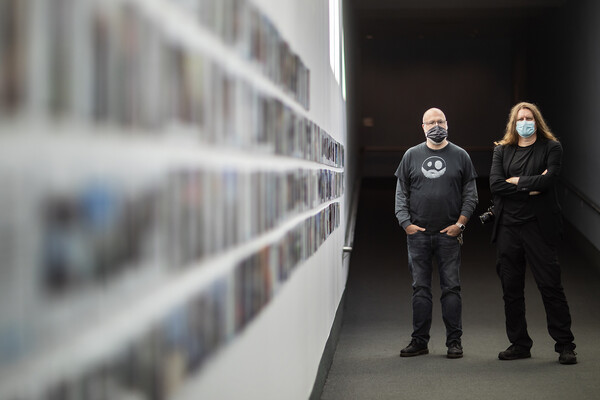
Annenberg’s Kyle Cassidy, with Pete Coyle, an art teacher at West Philadelphia High School. Together they came up with the idea for this exhibit, which Cassidy says can be adapted to almost any group and many kinds of spaces.
A pandemic year, in photos
‘Apart Together,’ a new photography exhibit at the Annenberg School, shows that despite not being physically in the same place the past 18 months, our shared experiences kept us connected.