Penn brings Philadelphia’s rare manuscripts to the world
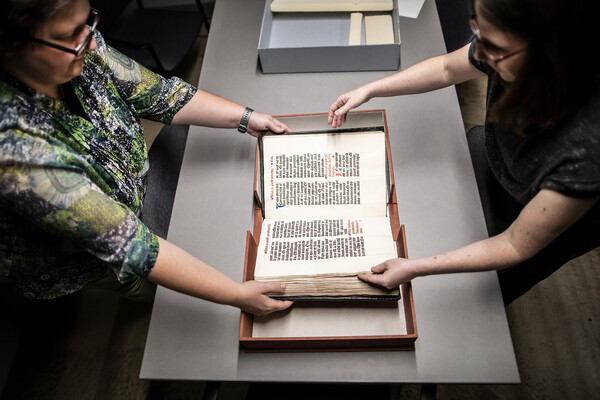
Leveraging the University’s expertise with technology and rare centuries-old manuscripts, Penn Libraries is digitizing and cataloging medieval and early modern texts from 15 Philadelphia-area institutions. The three-year project is known as BiblioPhilly.
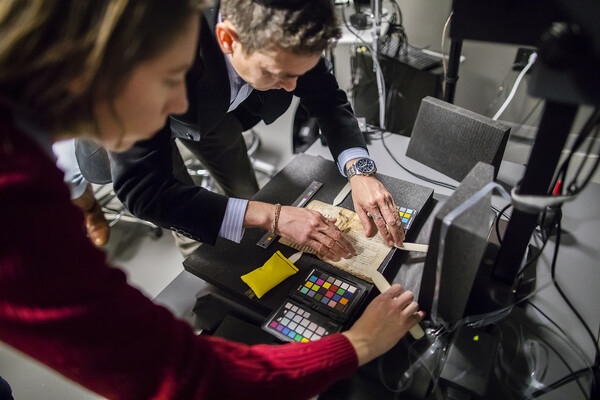
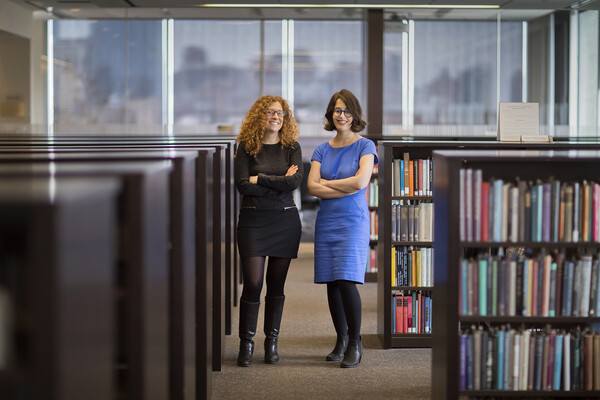
Penn Libraries fellow Erin Connelly (left) and colleague Alberto Campagnolo, of the Library of Congress, prepare a medieval manuscript for multispectral imaging at Penn as part of a national research project to analyze stains. (Photo by Eric Sucar)
Stains Alive
For Libraries fellow Erin Connelly, stains are some of the most exciting discoveries in her study of medieval manuscripts. She is part of a national team analyzing stains in medieval texts using modern multispectral imaging. An exhibition at Van Pelt-Dietrich Library displays the researchers’ discoveries.
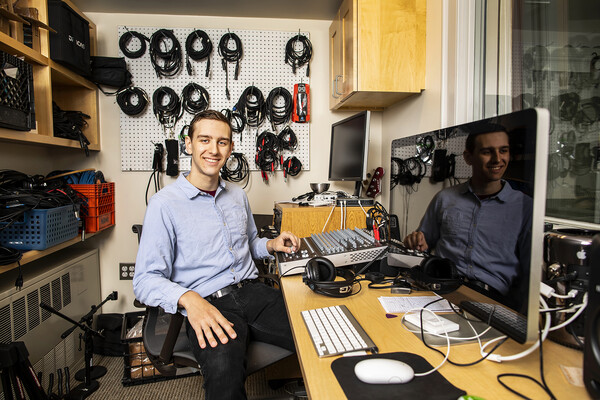
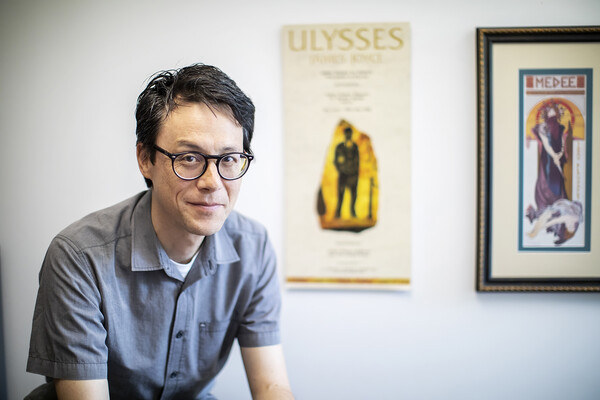
Penn student Nicholas Seymour, Class of 2020, pictured in the Kelly Writers House recording studio where he has a work-study job.
Behind the Scenes
Rising senior Nicholas Seymour is a summer intern at Philadelphia’s 1812 Productions, helping with all aspects of running a theater. The communications major has experience working on technical crews at Kelly Writers House and in student theater productions.
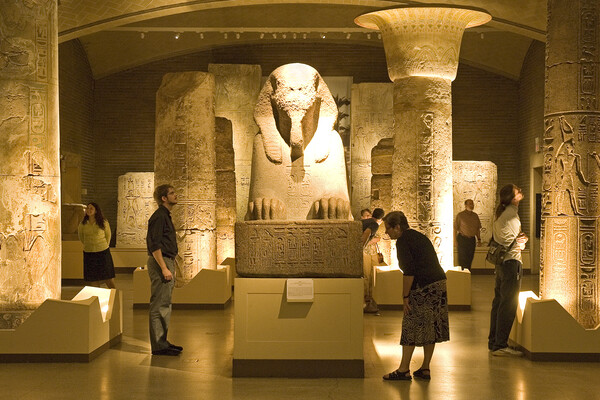
Visitors to the Penn Museum explore the Egypt Gallery and its centerpiece, the Sphinx of Rameses II, the sixth-largest granite sphinx in the world, and the largest in the Western Hemisphere. Photo by Lauren Hansen-Flaschen.
Penn Museum
See you later, sphinx
The Penn Museum's 3,000-year-old sphinx of Egyptian Pharaoh Ramses II will be stored under wraps and out of public view for several years for gallery renovations, starting July 9th.
Project grants and faculty awards from the Pew Center for Arts & Heritage
Artists, poets, centers and professors were awarded fellowships and grants to fund future projects, installations, and various works of art that will enrich cultural programs and public art.
An epic read: Paul Saint-Amour on “Ulysses,” James Joyce, and Bloomsday
English professor Paul Saint-Amour has spent a lifetime reading, studying, and teaching the work of James Joyce. On June 16, known as Bloomsday to Joyce historians around the world, the Rosenbach Museum and Library will host a day-long public reading of selected passages.
Digital humanities scholars are orchestrating an epic crowdsourcing effort to sort and transcribe handwriting on thousands of documents discarded hundreds of years ago, known as the Cairo Geniza.
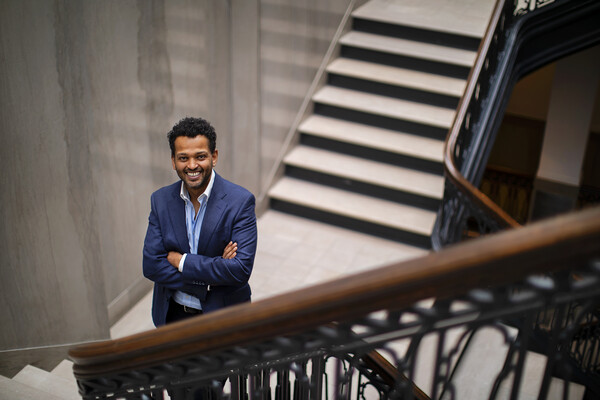
Dagmawi Woubshet is an associate professor of English, new to Penn this year.
A product of the 1980s: Q&A with English professor Dagmawi Woubshet
English professor Dagmawi Woubshet describes himself an “African-Americanist” in his literary pursuits. An immigrant from Ethiopia, he focuses on the 1980s in his research and his courses.
The School of Design professor and chair of the Fine Arts Department discusses the challenge of designing a war memorial, and shares which memorials he finds most compelling.
The 13 students in André Dombrowski’s history of art curatorial class researched and chose more than 100 objects from 14 institutions, including the Penn Museum Archives, to represent World’s Fairs from 1851 to 1915 in an Arthur Ross Gallery exhibition.
The world on view
The world is on view at the Arthur Ross Gallery, interpreted by 13 students in André Dombrowski’s history of art curatorial class. They chose more than 100 objects from 14 institutions to represent World’s Fairs from 1851 to 1915.