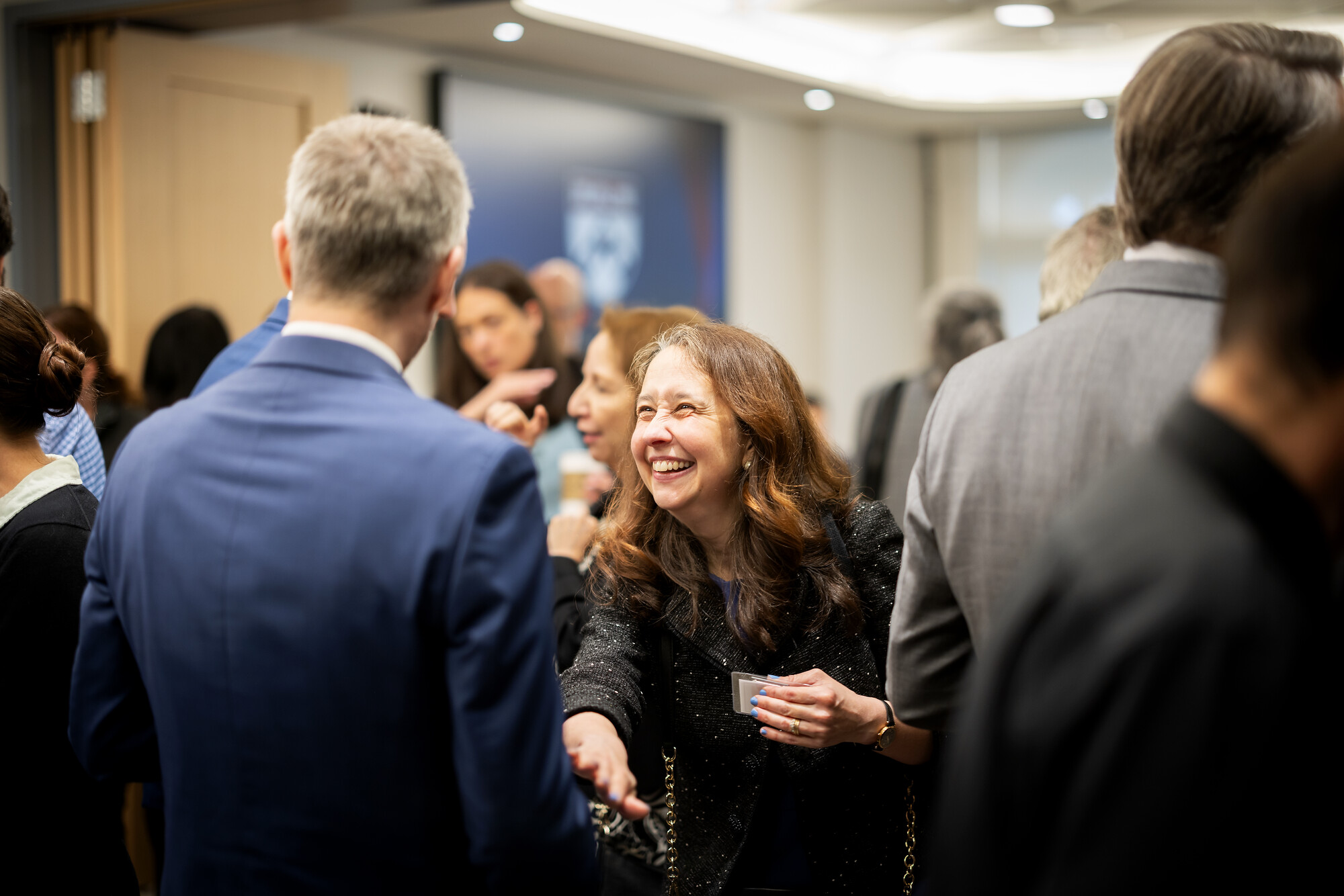
The 12 winning teams of the inaugural Draw Down the Lightning grants were celebrated by Penn leadership at a reception, bringing to life the vision of In Principle and Practice.
4 min. read
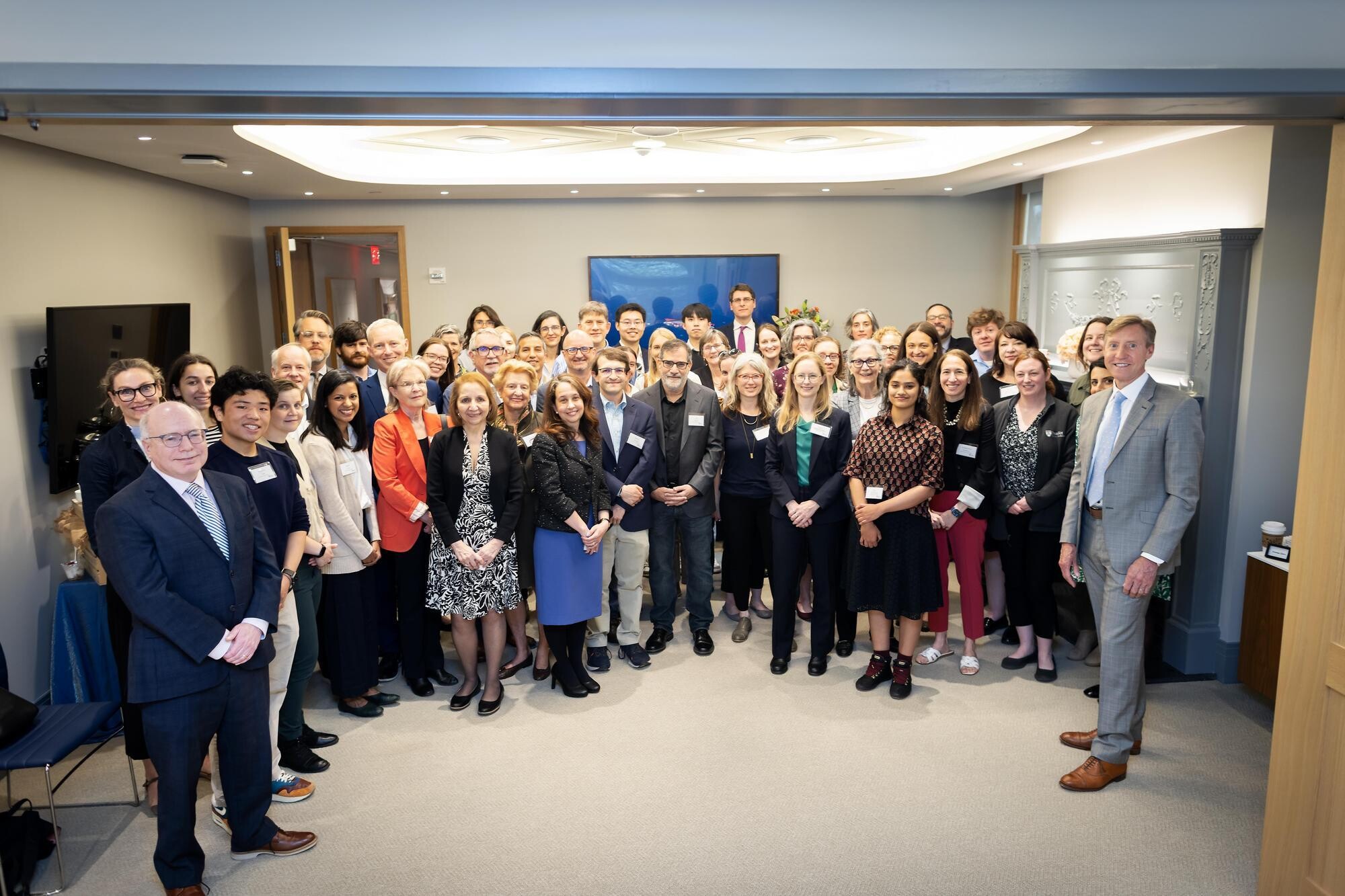
Winners of the inaugural Draw Down the Lightning grants with Penn President J. Larry Jameson and Senior Vice President for Strategic Initiatives David Asch.
The grants launched in the fall to advance the inventive and engaged spirit of In Principle and Practice, soliciting proposals for projects that address the great challenges of our time. Two hundred and thirty proposals were submitted, with winners consisting of a combination of faculty, students, postdoctoral scholars, and staff from eight schools and 10 academic and administrative centers.
In welcoming remarks, Penn President J. Larry Jameson recalled the enormity of Benjamin Franklin’s kite-and-key experiment, one that made Franklin “the talk of the world.” Jameson emphasized the importance of Franklin’s question that came after his discovery: “‘What am I going to do with this? What kind of useful purposes can this be put to?’” That service-minded line of thinking, he said, speaks directly to Penn’s values statement.
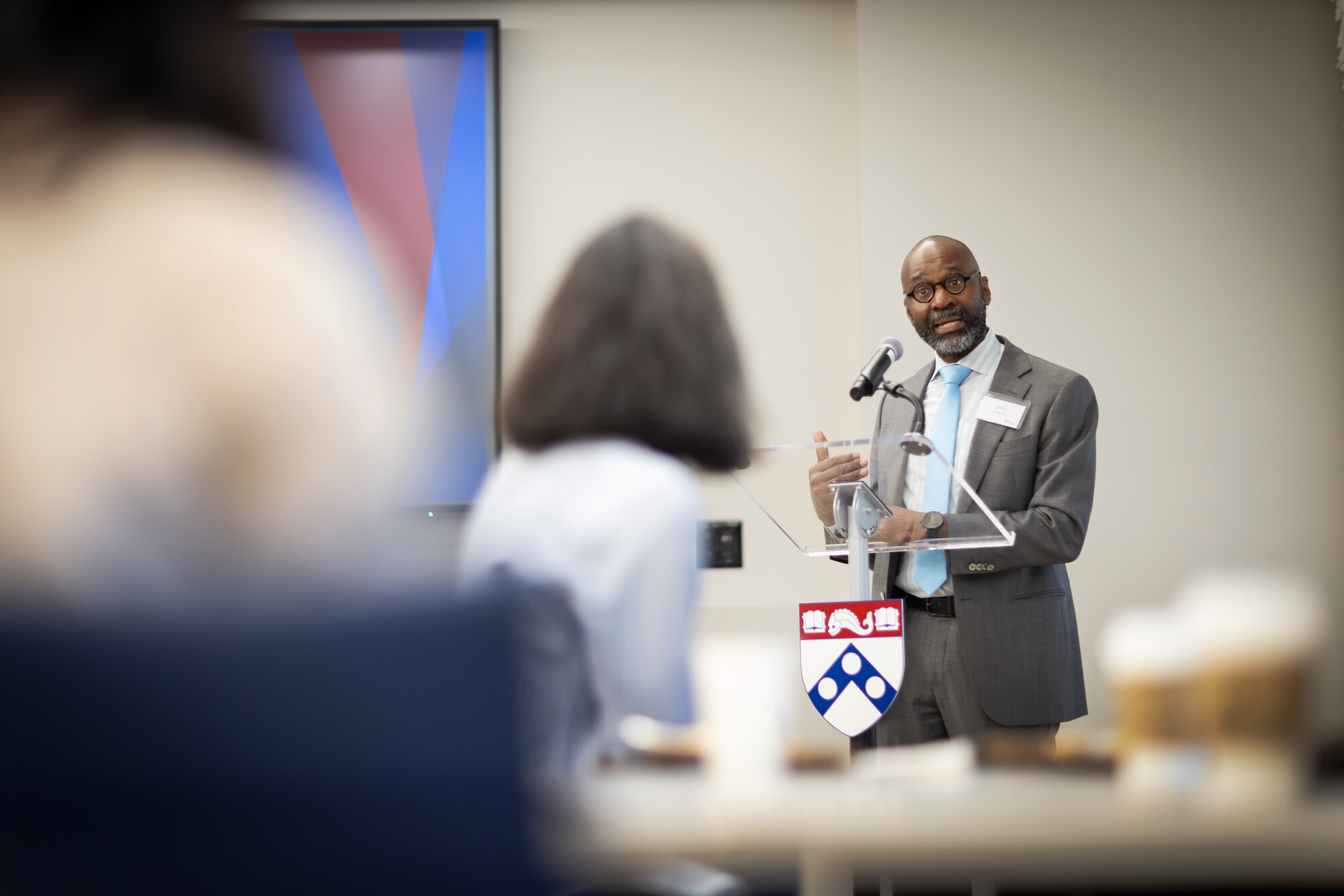
“This metaphor from Franklin, of drawing down the lightning, is really thinking seriously about how to harness power in service to the betterment of humanity,” added Provost John L. Jackson Jr. in remarks. “It’s thinking about what types of real, serious, imaginative work goes into making the world a better place. And I think the projects represented here do just that.”
Senior Vice President for Strategic Initiatives David Asch (left) and Provost John L. Jackson Jr. at the reception for the inaugural Draw Down the Lightning grants.
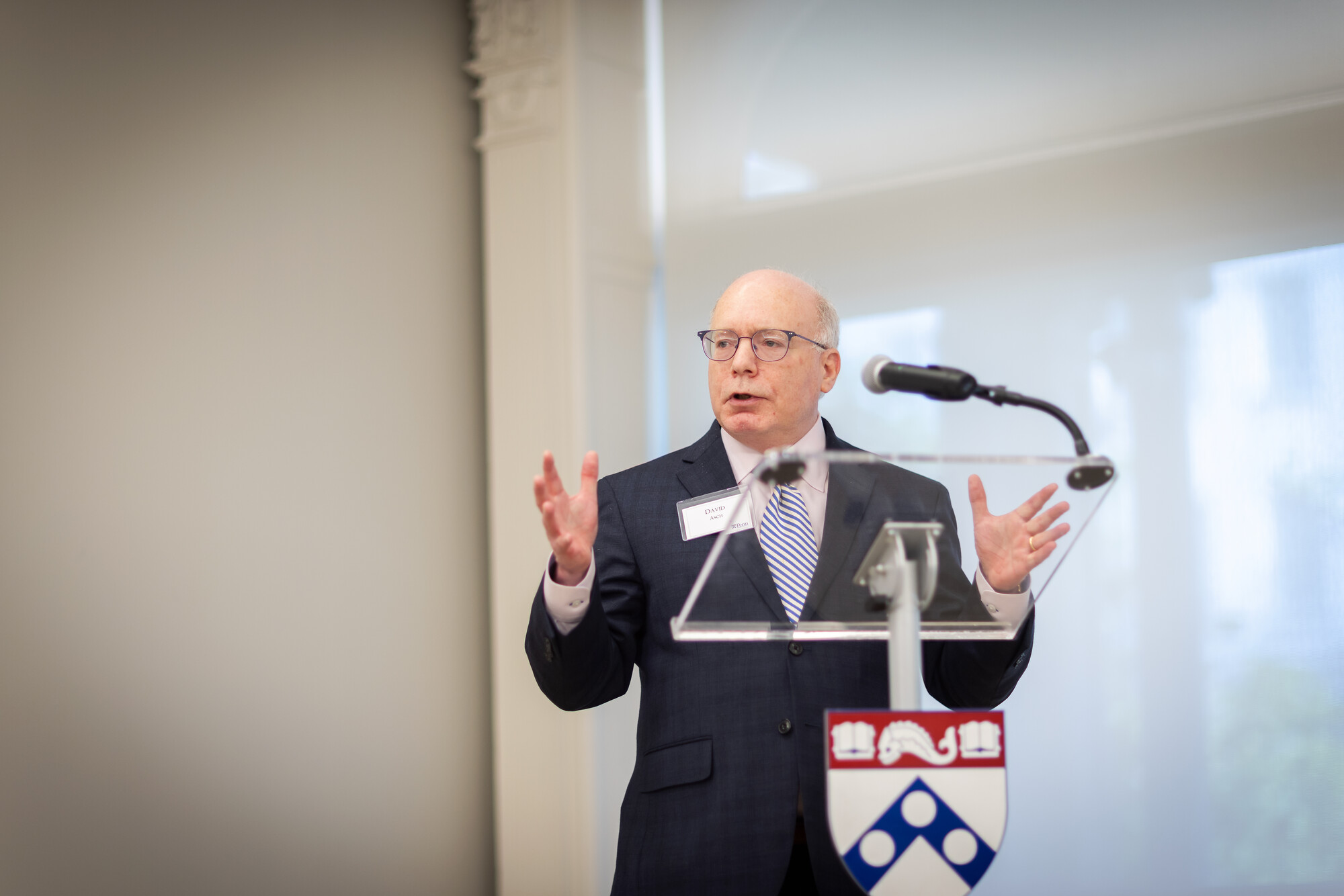
Rounding out the reception was David A. Asch, senior vice president for strategic initiatives, who organized the grants process. Asch remarked that “unfettered investigation” is what Penn does best and is how the University contributes to society. He spoke about reading all 230 applications and being impressed by the creativity of what the Penn community proposed.
“That reveals something about what a place like the University of Pennsylvania can contribute in a kind of principled and practical way to expand knowledge and advance Penn’s impact,” Asch said. “This is what we do so well; this is a microcosm of Penn’s future and the future of higher education for the nation.”
“I’m feeling so honored,” Lia Howard, Fellows Director at SNF Paideia, said of receiving the grant. “It feels like we got the blessing of Penn to go out and do something we’re excited about, so that feels good. Like a team is behind us saying, ‘Go!’”
The project, she said, speaks to Penn’s role as an anchored institution in the state, in addition to the nation and globe.
“In so many different ways, I think one of the questions our project asks is, ‘What can Penn do for Pennsylvania?’” Howard said.
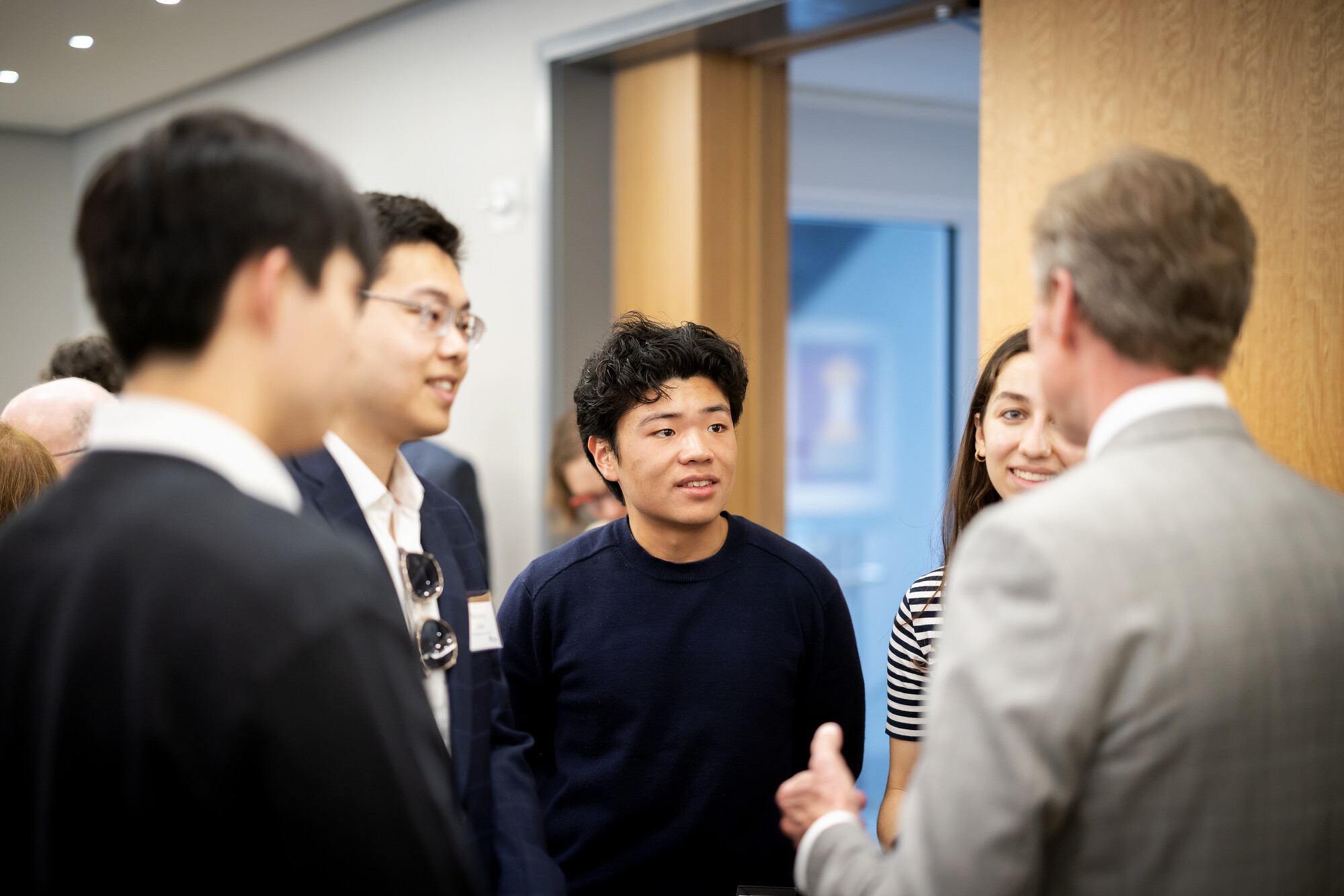
(Left) Daniel Dai, Junle Chen, Elliot Kim, and Aylin Ergin speak with Penn President J. Larry Jameson. (Right) Lia Howard, center, at the reception for the inaugural Draw Down the Lightning grants.
Another project, Kidney Health on a Plate, brings together fourth-years Daniel Dai and Junle Chen in the College of Arts and Sciences to spread awareness of kidney-friendly recipes through a “MasterChef”-inspired miniseries that educates about nutrition. The project is in collaboration with the Kidney Disease Screening and Prevention Program, a student-run volunteer club that conducts screenings for kidney disease in underserved communities in Philadelphia.
“The hope of the project is to broaden the audience to national, local, and global levels,” says Dai. “I’m excited to do work on the project and get this done.”
Truth and Disinformation in the Writing Arts, meanwhile, is a collaboration between Kelly Writers House and the Center for Programs in Contemporary Writing that will present publicly accessible programming exploring the relationship between creativity and telling the truth.
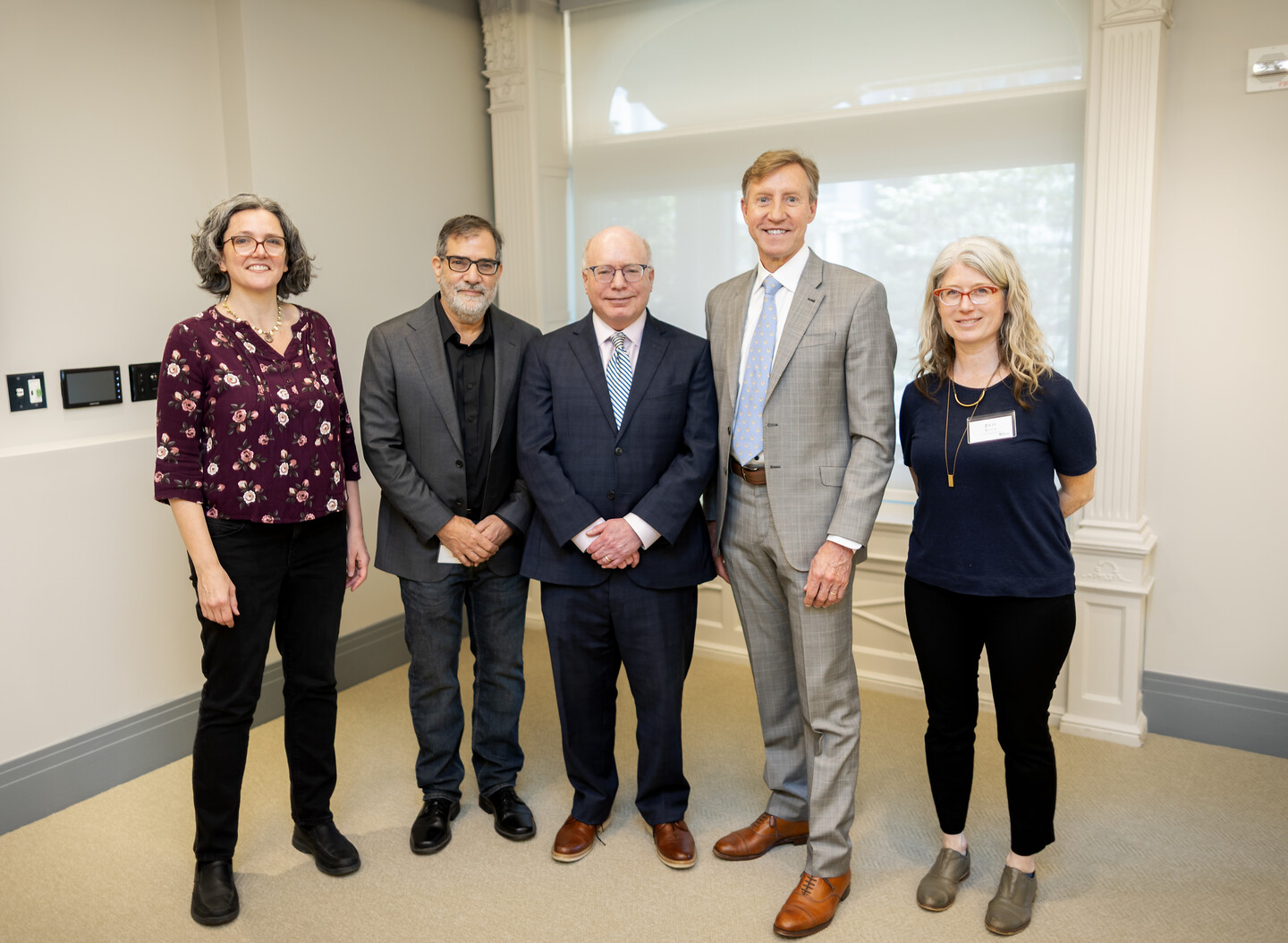
From left: Kelly Writers House director Jessica Lowenthal, professor of English Al Filreis, Senior Vice President for Strategic Initiatives David Asch, Penn President J. Larry Jameson, and director of the Creative Writing Program Julia Bloch.
“If you read a novel and say, ‘Moby Dick’ is fiction,’ if you respond by saying Melville is telling us the truth about human desires, about ambition, about religion, what does that mean to say this novel tells the truth?” said Al Filreis, a professor of English and faculty director of the Kelly Writers House. “Even though all the characters are invented, that is a fundamental question about not just art but human truth.”
Filreis offered a hearty “three cheers for the arts” and expressed gratitude for the support.
“It’s a big deal for us,” he said. “It keeps us going.”
Penn physicists led by Bo Zhen have created hybrid light-matter particles that interact strongly enough to compute, pointing toward ultrafast, low-energy optical AI hardware.
Penn’s newest supercomputer is transforming research
Penn’s first campus-wide HPC and AI cluster, “Betty,” is expanding access to powerful computing, enabling groundbreaking projects, and fostering new collaborations across disciplines.
A bioengineered bean gum from the lab of Penn Dental’s Henry Daniell is found to reduce the levels of three microbes associated with head and neck squamous cell cancer to almost zero, without affecting the beneficial bacteria normally found in the mouth.
Fighting oral cancer with bioengineered chewing gum
Research led by Penn Dental’s Henry Daniell shows that antiviral and antibacterial chewing gums reduce the levels of three microbes linked to worse outcomes in oral cancers, paving the way for more effective and affordable therapies.
The performing arts at Penn: Process, practice, and purpose
In the vivid tapestry of performing arts groups at Penn, students prepare for their performances while simultaneously enriching their college experience.