Novel tools for the treatment and diagnosis of epilepsy
Penn neurologist Brian Litt’s work on implantable devices for recording and altering brain activity has led to new ways to treat and diagnose epilepsy.
Throughout his career, Brian Litt has fabricated tools that support international collaboration, produced findings that have led to significant breakthroughs, and mentored the next generation of researchers tackling neurological disorders.
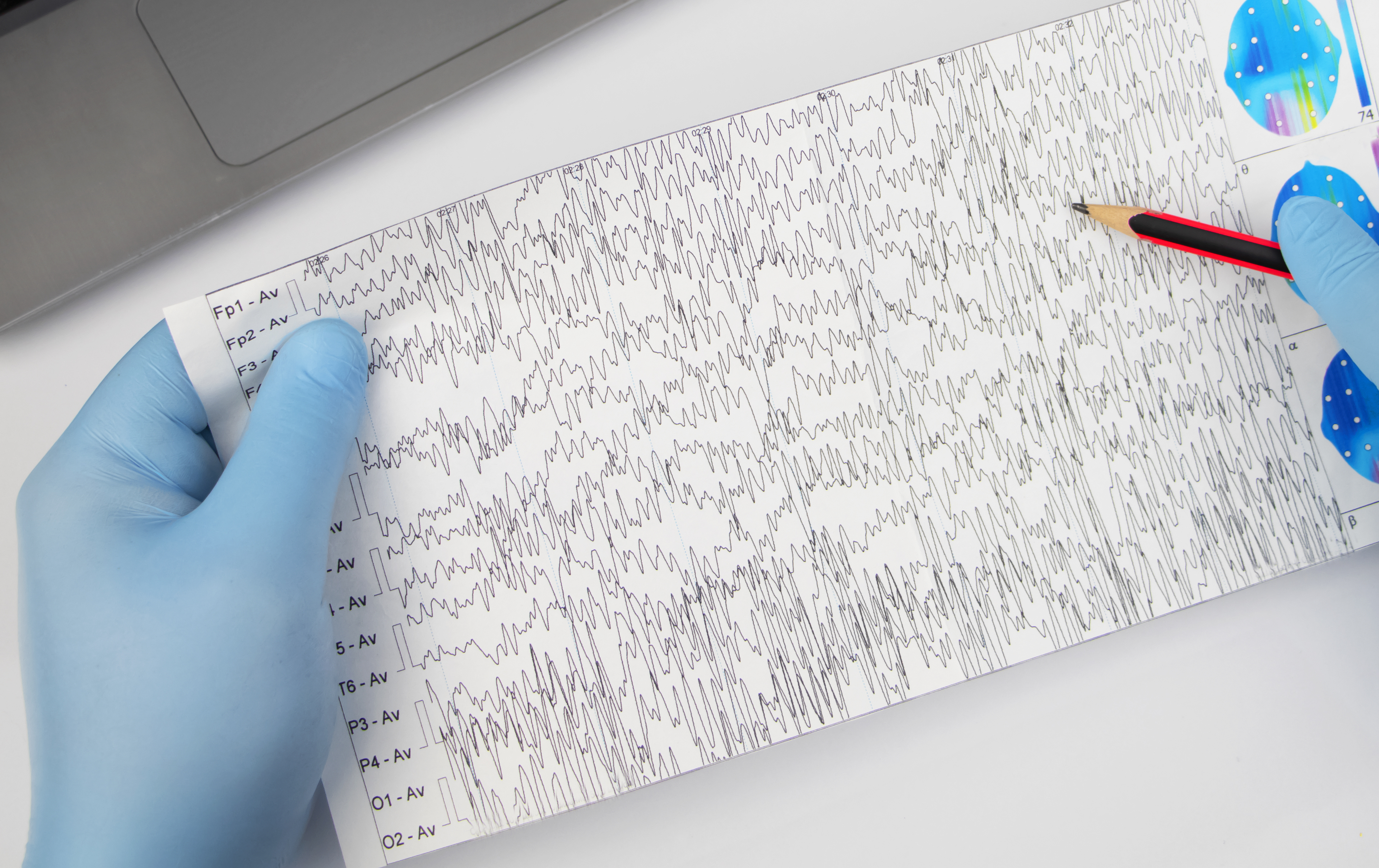
(Image: iStock Photo/Alona Siniehina)
When Brian Litt of the Perelman School of Medicine and School of Engineering and Applied Science began treating patients as a neurologist, he found that the therapies and treatments for epilepsy were mostly reliant on traditional pharmacological interventions, which had limited success in changing the course of the disease.
People with epilepsy are often prescribed anti-seizure medications, and, while they are effective for many, about 30% of patients still continue to experience seizures. Litt sought new ways to offer patients better treatment options by investigating a class of devices that electronically stimulate cells in the brain to modulate activity known as neurostimulation devices.
Litt’s research on implantable neurostimulation devices has led to significant breakthroughs in the technology and has broadened scientists’ understanding of the brain. This work started not long after he came to Penn in 2002 with licensing algorithms to help drive a groundbreaking device by NeuroPace, the first closed-loop, responsive neurostimulator to treat epilepsy.
Building on this work, Litt noted in 2011 how the implantable neurostimulation devices being used at the time had rigid wires that didn’t conform to the brain’s surface, and he received support from CURE Epilepsy to accelerate the development of newer, flexible wires to monitor and stimulate the brain.
“CURE is one of the epilepsy community’s most influential funding organizations,” Litt says. “Their support for my lab has been incredibly helpful in enabling the cutting-edge research that we hope will change epilepsy care for our patients.”
Probing at the probes
One of the most notable discoveries from Litt’s work is the use of high-resolution, active, flexible surface electrode arrays to discern seizure events from in-between seizure events, which resulted in higher-resolution recordings of brain activity and paves the way for opportunities to therapeutically intervene and stop epileptic seizures.
Another significant contribution to improving scientists’ understanding of seizures is through the Litt lab’s development of transparent electrodes that facilitate imaging with both high temporal and high spatial resolution, simultaneously. This first-of-its-kind technology allowed his team to monitor details of seizures and seizure-like events at the individual cellular level and provided new information on neural circuits.
This work on implantable devices for epilepsy has also culminated in a large amount of neuronal data shared with other researchers as part of a global effort to create cloud-based platforms for publicly accessible databases. Additionally, Litt has championed efforts to organize this “big neuro data” and developed tools for analyzing and repositories for housing it, such as IEEG.org and, more recently, Pennsieve, which is used by more than 6,000 investigators worldwide.
Impacting the next generation of scientific innovation
Litt notes how organizations like CURE that fund research have also been a huge benefit in helping launch the careers of many young faculty, including his trainees Flavia Vitale and Jon Viventi, who were awarded CURE Taking Flight Awards and are now well-established, independent principal investigators.
A former postdoc in the Litt lab, Vitale is now an assistant professor of neurology at Penn Medicine. She studied seizure onset zones—where seizures begin in the brain—and seeks to develop a way to map these networks to better understand which exact neurons are involved in generating seizures. And, in building on the transparent microelectrode research, she pioneered a technique to accurately map the spread of seizures. Her team currently works on the next generation of electrodes and techniques to safely and precisely insert them into the brain.
Litt, who was recently awarded the NIH’s Landis Award for Mentoring, says support for young investigators is important as it comes at a critical point in their careers. For example, he notes that the early career CURE awards helped Vitale and Viventi “start their laboratories and enabled them to do the high-risk, cutting-edge research that led to them obtaining independent NIH support.”
In Senegal, the ambitious Dakar Greenbelt project seeks to create an extensive network of ecological infrastructure in and around the city to sustainably address environmental concerns and enhance urban life. With support from David Gouverneur and Ellen Neises, Ph.D. candidate Rob Levinthal in the Weitzman School of Design led two courses that included a field trip to Dakar, that culminated in students presenting their visions for parts of the Greenbelt.
From a desert to an oasis: Penn engages in ambitious greening effort in the Sahel
Students from the Weitzman School of Design journeyed to Senegal to help with a massive ecological and infrastructural greening effort as part of their coursework. The Dakar Greenbelt aims to combat desertification and promote sustainable urban growth.
As part of an undergraduate course, Penn faculty and students curated an Arthur Ross Gallery exhibition of works from the Neumann family’s extensive collection of modern and contemporary art.
The University’s nexus for technology transfer supports researchers in their innovative efforts, from CAR T to mRNA advancements that have dramatically reshaped the world.