AI finds hundreds of potential antibiotics in snake and spider venom
Research from the lab of César de la Fuente on an AI-powered screen of global venom libraries uncovers dozens of promising drug candidates.
2 min. read
Snake, scorpion, and spider venom are best known for their sting. But with the help of artificial intelligence, they could also help fight antibiotic resistance, which contributes to more than one million deaths worldwide each year.
(From left) Sufen Li, César de la Fuente, and Marcelo Torres.
(Image: Jianing Bai)
In a study published in Nature Communications, researchers at Penn’s School of Engineering and Applied Science (SEAS) and Perelman School of Medicine have used a deep-learning system called APEX to sift through a database of more than 40 million venom-encrypted peptides, tiny proteins evolved by animals for attack or as a defense mechanism. In a matter of hours, the algorithm flagged 386 compounds with the molecular hallmarks of next-generation antibiotics.
“Venoms are evolutionary masterpieces, yet their antimicrobial potential has barely been explored,” says César de la Fuente, a Presidential Associate Professor of psychiatry, microbiology, bioengineering, chemical and biomolecular engineering, and chemistry in the school of Medicine, Engineering and Arts & Sciences. “APEX lets us scan an immense chemical space in just hours and identify molecules with exceptional potential to fight the world’s most stubborn pathogens.”
“By pairing computational triage with traditional lab experimentation, we delivered one of the most comprehensive investigations of venom derived antibiotics to date,” adds co-author Marcelo Der Torossian Torres, a research associate at Penn. Changge Guan, a postdoctoral researcher in the de la Fuente Lab and co-author, notes that the platform mapped more than 2,000 entirely new antibacterial motifs—short, specific sequences of amino acids within a protein or peptide responsible for their ability to kill or inhibit bacterial growth.
The team is now taking the top peptide candidates which could lead to new antibiotics and improving them through medicinal-chemistry tweaks—work that could, if successful, expand the antibiotic toolkit at a time when many drugs are losing their punch.
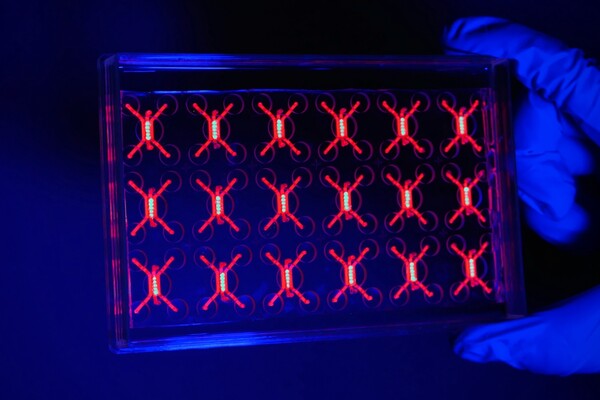
Penn engineers and collaborators have developed a transparent, micro-engineered device that houses a living, vascularized model of human lung cancer—a “tumor on a chip”—and show that the diabetes drug vildagliptin helps more CAR T cells break through the tumor’s defenses and attack it effectively.
Tumor-on-a-chip offers insight into cancer-fighting cells in immunotherapy
Penn engineers and collaborators have built a living tumor on a chip to expose how cancers block immune attacks, and how one existing drug could make immunotherapy like CAR T more effective against solid tumors.
Professor of city and regional planning Erick Guerra recently published a book exploring the economic and societal impacts of American highways. He explains some of the pitfalls associated with an ever-expansive highway system, arguing that spending more on highways might not be the solution to the country’s transportation issues.
Penn urban planner Erick Guerra’s new book, “Overbuilt,” argues that additional spending on building more highways might not be the solution to the country’s transportation issues. In a Q&A, Guerra shares his insights.
Xin Sun prepares samples collected from the Eastern Tropical North Pacific aboard a research vessel. By adding stable isotope tracers to these vials, Sun and her team can track how different microbial groups convert nitrogen compounds into nitrous oxide, revealing how subtle shifts in oxygen and organic matter change the ocean’s chemistry.
Can tiny ocean organisms offer the key to better climate modeling?
In the shadowy layers of the Pacific, microbes decide how much nitrous oxide—a potent greenhouse gas—rises skyward. New research from Penn’s Xin Sun offers an improved understanding of microbial ecology and geochemistry—key to forecasting global emissions in response to natural and man-made climate change.
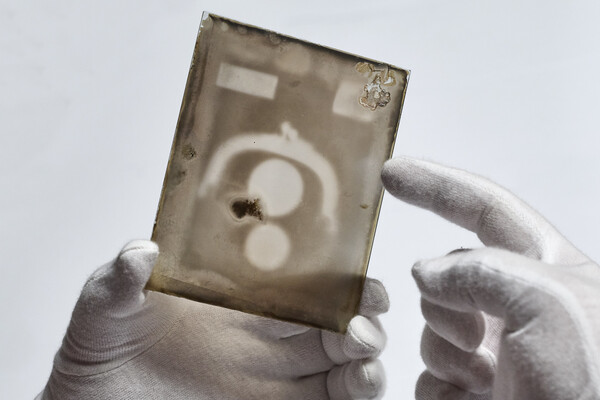
Two X-ray plates from Arthur Goodspeed, believed to have created the world’s first X-ray image, were donated by his family to Penn’s University Archives.