Rethinking resilience in the face of climate change
Hurricane Ida brought record-breaking rainfall and flooding, and stronger, more destructive storms will inevitably come. Being better prepared will require reconsidering how to protect people and their homes.
An image of Hurricane Ida taken aboard the International Space Station shortly before the Category 4 storm made landfall in Louisiana on Aug. 29, 2021. It marked the ninth named hurricane of the 2021 Atlantic season. As such storms increase in both frequency and intensity, Penn researchers argue that the resilience methods used in the past won’t work in the future.
(Image: European Space Agency)
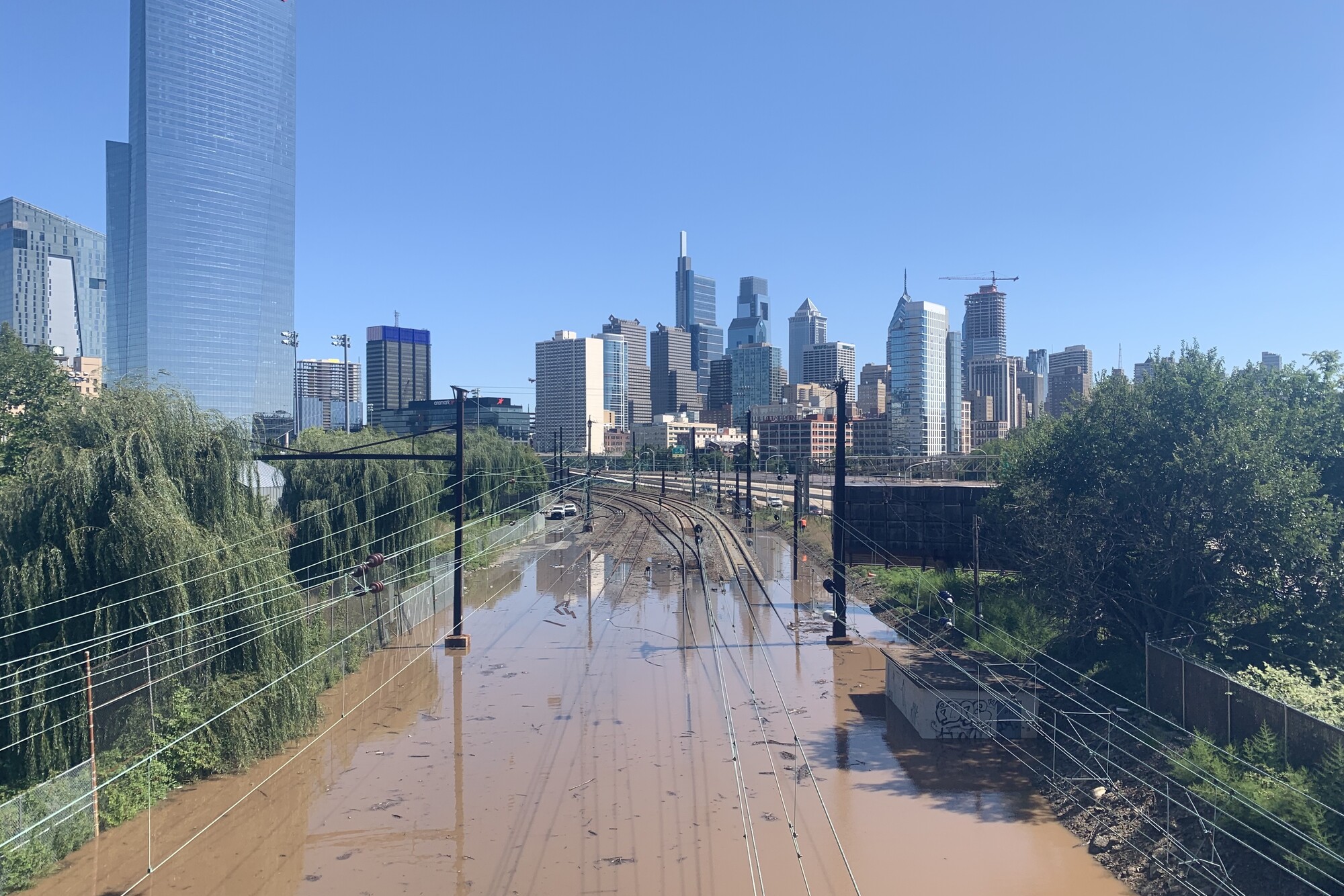
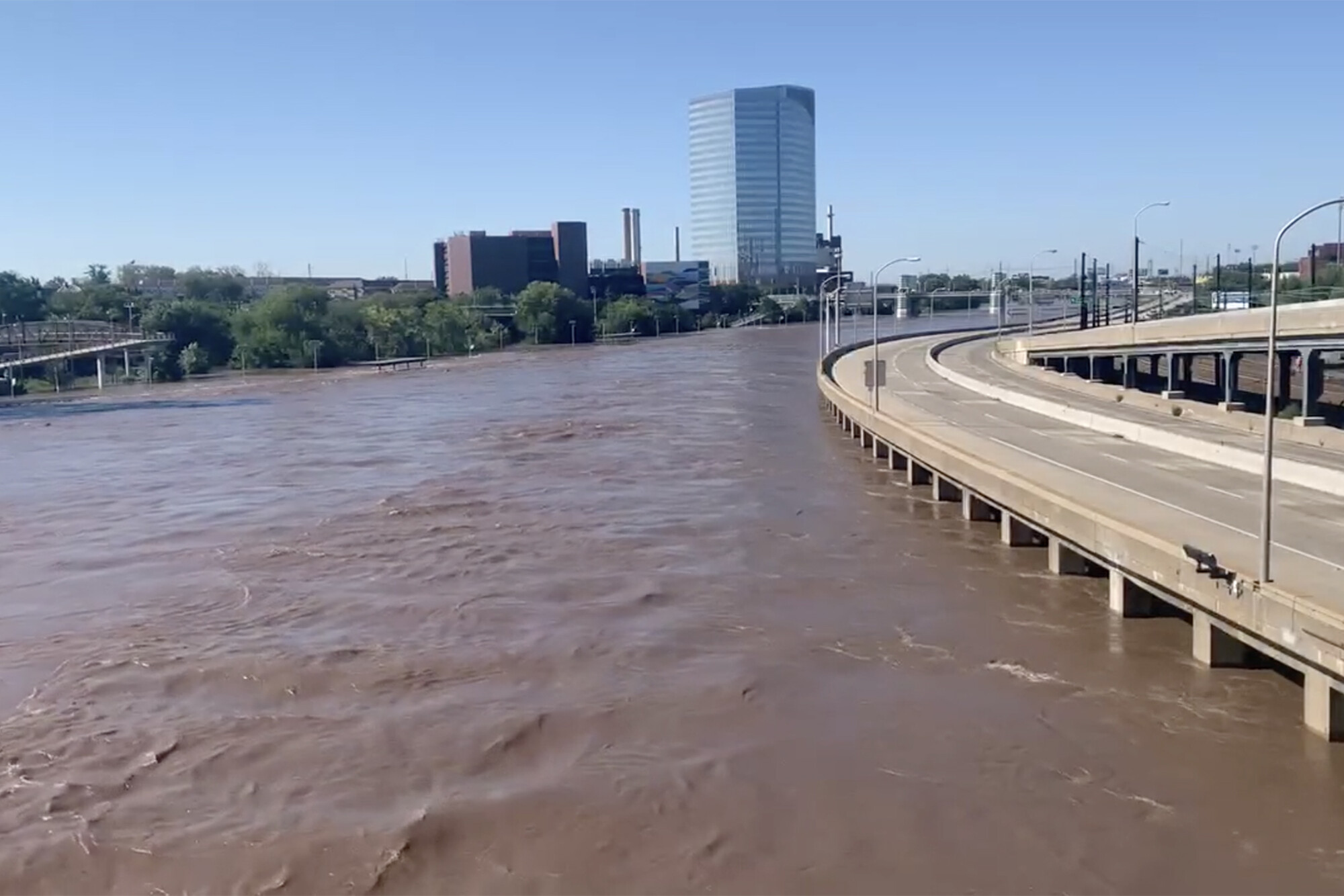
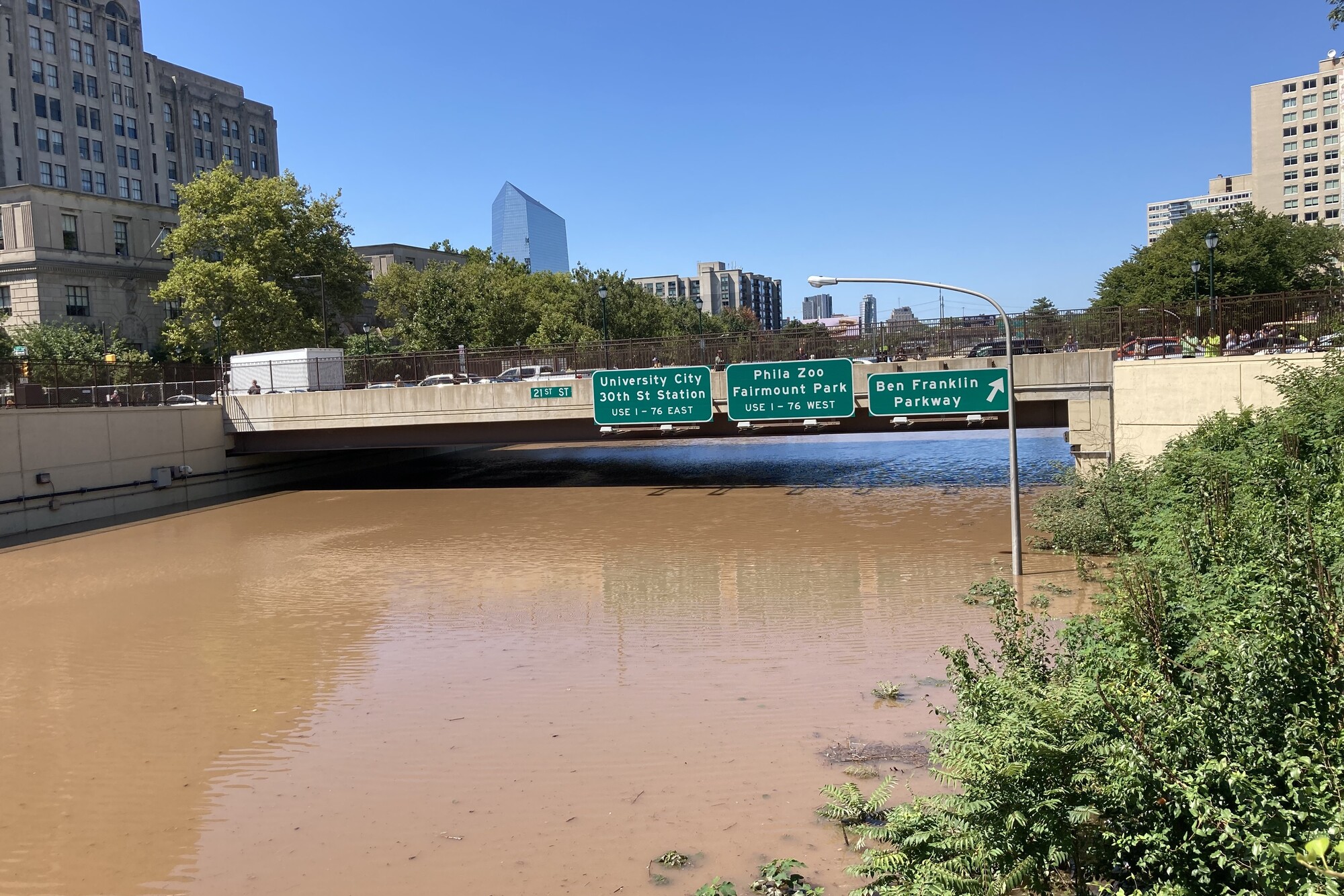
By the time Hurricane Ida hit Philadelphia in early September, it had already dropped massive rainfall on parts of the Gulf Coast. As the storm continued north, record-breaking downpours in New York City led to extensive flooding. Then images started to emerge of water rising so high it reached several Philly highway overpasses.
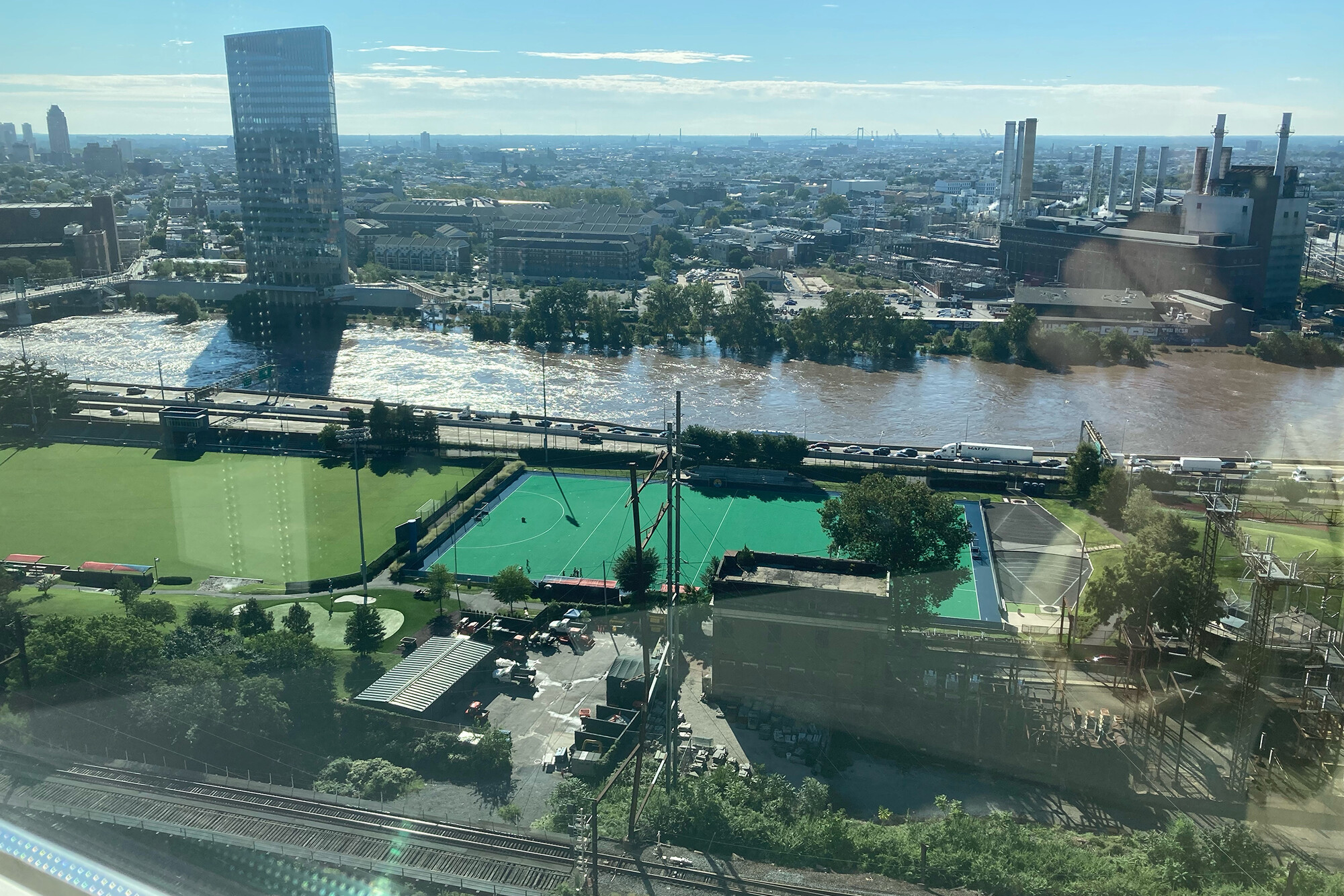
“We had up to eight inches of rainfall that happened with great speed and intensity,” says Howard Neukrug, executive director of The Water Center at the University of Pennsylvania. “The Schuylkill had nowhere to put the water. The Delaware River was also stressed because of the rain, the tides, and sea-level rise, so that water ran off to the only place it could go.”
That is, the Vine Street Expressway, a low-lying part of Interstate 676 originally built to link Interstates 95 and 76. It directly abuts the Schuylkill River.
Though Philly had previously never seen this level of flooding, its occurrence didn’t surprise Neukrug, who is the former commissioner and CEO of Philadelphia Water. “Rainwater is supposed to go into our rivers and streams. That’s nature’s way and that’s how we’ve designed systems in cities,” he says. “But bigger storms and higher sea levels, plus more impervious cover and more people are resulting in something bigger in magnitude than we’ve ever seen before.”
Resilience means thinking about what we can do to create the capacity to change. Part of that comes from designing intelligent solutions with multiple benefits. Part of that is reimagining how our institutions work.
Matthijs Bouw, associate professor of practice at the Stuart Weitzman School of Design
Thanks to climate change, how cities historically addressed such problems won’t work to tackle them in the future. Instead, the idea of urban resilience requires a reimagining, one that incorporates more green infrastructure and nature-based solutions, and accounts for the most vulnerable populations. “We have to start expecting and planning for catastrophic events,” says Eugenie Birch, co-director of the Penn Institute for Urban Research. “We need a big rethink about what it means to be resilient.”
Resilience, defined
In the face of an often-invisible foe like climate change, resilience can be a hard concept to pin down. At its most basic, it describes the ability of a community or business, a city or system to rebound from a difficult situation.
But what that means exactly depends on context, says Matthijs Bouw, an associate professor of practice at the Stuart Weitzman School of Design and co-founder of the design firm One Architecture. For example, bouncing back from the flooding Ida caused in Philadelphia looks very different from doing the same in Manhattan after Superstorm Sandy in 2012. So does protecting each city from future calamities.
RELATED
“Resilience means thinking about what we can do to create the capacity to change,” Bouw says. “Part of that comes from designing intelligent solutions with multiple benefits. Part of that is reimagining how our institutions work. We need more people at the table to better understand the problems and solutions we can build.”
Until recently, climate change sat mostly on the back burner of this conversation, a gargantuan elephant in the room that all but the most forward-thinking places could disregard. After all, the 100-year-floods and massive storms had materialized only rarely.
But an uptick in severe weather, extensive droughts, and other climate-related events is slowly starting to move the needle. An August 2021 Intergovernmental Panel on Climate Change report, the group’s most recent, used its strongest language ever, stating “unequivocally” that human influence caused the atmosphere, oceans, and land to warm and led to “widespread and rapid changes.”
“If climate change doesn’t touch you, it’s hard to grasp and to make the kinds of changes that need to be made,” says Birch, the Lawrence C. Nussdorf Professor of Urban Research & Education in the School of Design. “But in the past two years, we’ve experienced things that no one ever expected. It just shows you how unknown the future is and how important it is to think about being resilient in the broadest sense.”
Green, not gray infrastructure
In the past, that often entailed putting a Band-Aid on existing systems and infrastructure. A city that could no longer handle stormwater got more pumping stations with bigger pumps or bigger drains.
“But we can’t keep building bigger drains,” says Nikhil Anand, an associate professor of anthropology in the School of Arts & Sciences who studies urban water issues. “With the increasing frequency of 100-year-flood events, we don’t even know how big the drains need to be.”
In a city like Mumbai, where Anand has done extensive research, flooding happens regularly. Recently, the intensity and extent has increased, overburdening infrastructure that, at its best, couldn’t adequately drain water into the sea. Sea-level rise has amplified the problem. “Land-use planning has always assumed that a city can be dried, that land can be made dry for habitation,” Anand says. “But many places like Mumbai and New Orleans, they’re always wet.”
As Ida moved north, it drenched Philadelphia, causing unprecedented flooding. The Schuylkill River, which runs parallel to a low-lying part of Interstate 676, overflowed, causing water levels to rise as high as the bottom of some highway overpasses. It also sent water onto train tracks (top left) and submerged a pedestrian walkway (bottom right). (Images, clockwise from top left: Zach Maupin (2), Justin Berger, Katie Kindle)
He and the other Penn researchers suggest it’s time to move away from retrofitting grey infrastructure, and toward adding green infrastructure. It’s something the City of Philadelphia has already started. As Water Commissioner, Neukrug initiated the city’s Green City Clean Waters program, a 25-year effort that, since 2011, has added 2,800 rain gardens, tree trenches, and other green tools at 800 sites around the city, keeping nearly 3 billion gallons of polluted water from entering the riverways.
Such green tools have other benefits, too, including addressing urban heat and creating nicer streetscapes, Bouw says. “We now also understand the public health benefits, both in terms of physical and mental health,” he adds. “Greening our cities is where many issues—the pandemic and climate and the biodiversity crisis—come together.”
Protecting everyone
The challenge is that such mitigation efforts are expensive, and without community buy-in, they’ll inevitably fail. “People don’t initially understand the necessity of this kind of infrastructure to safeguarding a city,” Birch says. “We have a lot of work to do to convince the public that the infrastructure changes we need will look very different than in the past.”
If climate change doesn’t touch you, it’s hard to grasp and to make the kinds of changes that need to be made. But in the past two years, we’ve experienced things that no one ever expected.
Eugenie Birch, co-director of the Penn Institute for Urban Research
Bouw saw that firsthand in New York after Sandy. His design team won a competition that sought to better prepare the city for the next superstorm. The project—called The Big U, “basically a protection system around lower Manhattan,” as he describes it—is working closely with the community to ensure a result that’s beneficial, protective, and “attractive at those moments when there is no storm coming.”
“It’s not only resilience infrastructure,” Bouw explains, “but social infrastructure.”
Such community collaboration is a step toward what all four researchers say reimagined resilience efforts must do: protect everyone, including, or perhaps especially, those who are the most vulnerable.
An illustration of The Big U, a project co-led by Matthijs Bouw of the Weitzman School that will ultimately protect 10 continues miles of Manhattan’s edge, from West 57th Street south, around the bottom of the island, and up to East 42nd Street. The project came about in the aftermath of Superstorm Sandy in 2012. (Image: The Big Team courtesy One Architecture)
In the next three decades, hundreds of millions of people living in urban poverty will face more extreme temperatures, sea-level rise, water scarcity, and more, according to C40, an international network of cities addressing climate change at the local level. “The poor and marginalized shouldn’t have to bear the costs,” Anand says. “This is design work but it’s also political work. That’s what makes it hard.”
As the pandemic showed once again, the most vulnerable are often hit hardest even by something whose reach shouldn’t, in theory, discriminate. “We need to move forward in a way that’s equitable. It shouldn’t be just the fancy mansions along the waterfront that get rebuilt,” Neukrug says. “We need to look more closely at our communities.”
Easier said than done? Perhaps. But as the brown, sludgy water that reached the overpasses on Philly’s Vine Expressway revealed, there’s no time to waste. Birch believes conversations about green infrastructure and resilience have at last begun in earnest. “It’s an exciting time to be thinking about innovative solutions,” she says. “There’s finally a climate for it.” Pun intended.
The effect of climate change on hurricanes is becoming ever more visible, with stronger, wetter storms and greater surges due to sea-level rise. (Image: National Oceanic and Atmospheric Administration)
Novel plant-based approach to a better, cheaper GLP-1 delivery system
Research led by Penn Dental’s Henry Daniell investigates the use of a lettuce-based, plant-encapsulated delivery platform as a new oral delivery of two GLP-1 drugs previously approved by the FDA in injectable form.
No brain, no gain: Neuronal activity enhances benefits of exercise
Research led by Penn neuroscientist J. Nicholas Betley and collaborators finds that hypothalamic neurons are essential for translating physical exertion into endurance, potentially opening the door to exercise-mimicking therapies.
In honor of Valentine's Day, and as a way of fostering community in her Shakespeare in Love course, Becky Friedman took her students to the University Club for lunch one class period. They talked about the movie "Shakespeare in Love," as part of a broader conversation on how Shakespeare's works are adapted.
In Becky Friedman’s English course Shakespeare in Love, undergraduate students analyze language, genre, and adaptation in the Bard’s plays through the lens of love.
Beating the heat: Designing cooling for bodies in motion
Dorit Aviv, director of Weitzman’s Thermal Architecture Lab, studies how humans, technology, and design intersect, paving the way for the development of novel approaches to cooling people efficiently.