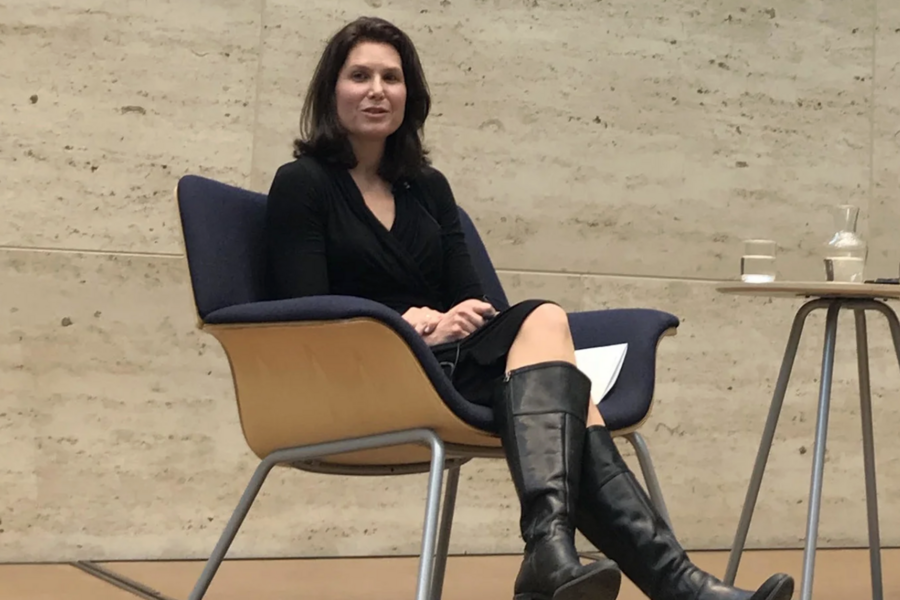
Jennifer J. Prah of the School of Social Policy & Practice discusses recommended reforms to address abuse that continues after women leave their abusive partners.
2 min. read
Violence against women and children continues to be a global public health challenge. Nearly one in three women report experiencing intimate partner violence or nonpartner sexual violence, and studies show that six in 10 children under five suffer psychological abuse and/or physical punishment from parents or caregivers.
A common misconception about domestic violence is that it ends when women leave abusive partners. For many, however, the abuse including isolating, discrediting, threatening, stalking, and harassing continues.
Penn Today spoke with Jennifer J. Prah, the Amartya Sen Professor of Health Equity, Economics, and Policy in the School of Social Policy & Practice, about post-separation abuse and strategies for addressing this preventable injustice. Prah and her co-author Lawrence O. Gostin of Georgetown University, recently published recommendations in The Lancet.
Health, safety, and well-being of children and protective mothers comes first
Post-separation abuse, explains Prah—also a professor of medical ethics and health policy in the Perelman School of Medicine—is marked by coercion, intimidation, intrusion, entrapment, omnipresence, power, and control, and often includes economic, legal, psychological, and cyber tactics.
“It’s a continuum,” she says, adding that post-separation abuse underscores another misconception: that leaving an abusive relationship is easy. “It’s not. And that is really important.”
This abuse often involves “weaponizing children and institutional systems.”
“Post-separation abuse should be a crime, with protection orders to address it, and laws to enforce against it,” write Prah and Gostin.
Legal and judicial system reform needed
Prah says current systems meant to protect women and children are often manipulated by abusers, further harming women and children and eroding trust in the judicial system.
“One improper legal tactic is false accusations of unscientific, discredited parental alienation syndrome or parental alienation,” notes Prah.
She and Gostin say abusers often co-opt these systems as tools of abuse, pointing to the findings of the 2023 United Nations Special Rapporteur on violence against women and girls that “unequivocally show that reforms are urgently needed” and citing the National Council of Juvenile and Family Court Judges finding that courts should not accept this type of testimony.
“Failure to uphold laws and ethics should have serious consequences,” write Prah and Gostin.
Health system reforms also needed
“Health professionals are uniquely positioned to identify and respond to post-separation abuse,” Prah says.
She and Gostin recommend that health professionals collaborate with child protection workers, judges, and lawyers to help design and enforce protection orders in addition to educating on post-separation abuse harms to the body.
“Implementing an evidence-based, collaborative approach can protect survivors from the devastating harms of abuse, while holding perpetrators accountable via collaborative efforts across clinical, public health, social, legal, and judicial systems,” says Prah.
Next steps
Prah has a number of collaborative projects designed to approach this crisis and injustice from different perspectives.
“This is the tip of the iceberg,” Prah says. “But the good news is that the science and established policy make clear this is abuse and women and children need to be protected from it. The scientific basis [for these reforms] and individual rights are clear. That’s the way out.”
Jennifer J. Prah is the Amartya Sen Professor of Health Equity, Economics, and Policy in the School of Social Policy & Practice and a professor of medical ethics and health policy in the Perelman School of Medicine. She is also the director of the Ortner Center on Violence and Abuse and the founder and director of the Health Equity and Policy Lab.
Lawrence O. Gostin is the Founding Linda D. & Timothy J. O’Neill Professor of Global Health Law at Georgetown University.
Novel plant-based approach to a better, cheaper GLP-1 delivery system
Research led by Penn Dental’s Henry Daniell investigates the use of a lettuce-based, plant-encapsulated delivery platform as a new oral delivery of two GLP-1 drugs previously approved by the FDA in injectable form.
No brain, no gain: Neuronal activity enhances benefits of exercise
Research led by Penn neuroscientist J. Nicholas Betley and collaborators finds that hypothalamic neurons are essential for translating physical exertion into endurance, potentially opening the door to exercise-mimicking therapies.
In honor of Valentine's Day, and as a way of fostering community in her Shakespeare in Love course, Becky Friedman took her students to the University Club for lunch one class period. They talked about the movie "Shakespeare in Love," as part of a broader conversation on how Shakespeare's works are adapted.
In Becky Friedman’s English course Shakespeare in Love, undergraduate students analyze language, genre, and adaptation in the Bard’s plays through the lens of love.
Beating the heat: Designing cooling for bodies in motion
Dorit Aviv, director of Weitzman’s Thermal Architecture Lab, studies how humans, technology, and design intersect, paving the way for the development of novel approaches to cooling people efficiently.