A wearable new technology moves brain monitoring from the lab to the real world
The portable EEG created by PIK Professor Michael Platt and postdoc Arjun Ramakrishnan has potential applications from health care to sports performance.
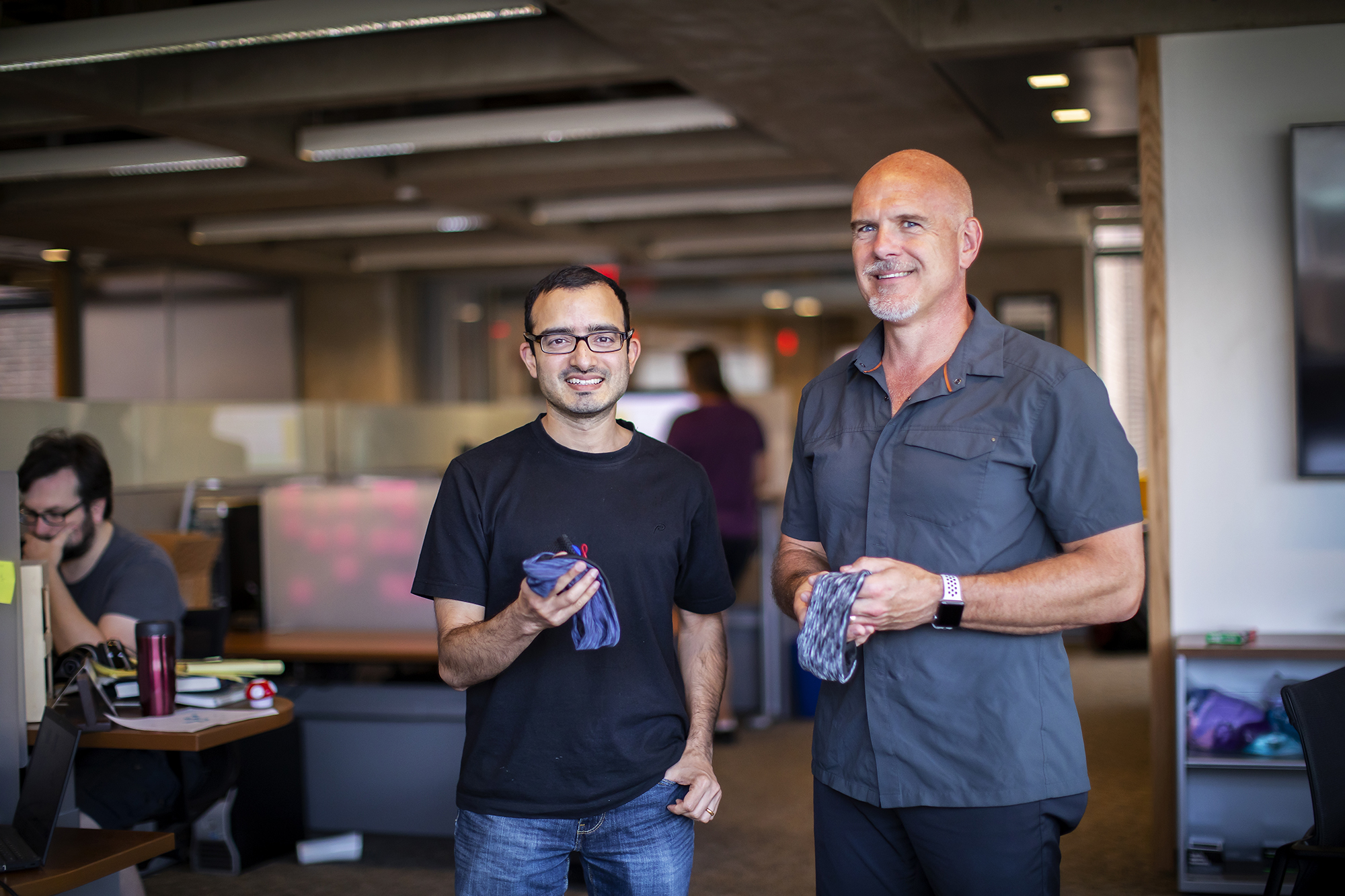
Postdoc Arjun Ramakrishnan (left) and Penn Integrates Knowledge professor Michael Platt created a wearable EEG akin to a Fitbit for the brain, with a set of silicon and silver nanowire sensors embedded into a head covering like the headband seen here. The new technology led to the formation of a company called Cogwear, LLC.
Imagine if a coach could know which moments of competition a certain player might peak, or if a truck driver had objective data telling him his body and mind were too tired to continue driving.
Traditionally, measuring alertness or mental fatigue requires interrupting a natural moment to intervene in an artificial setting. But Penn neuroscientist Michael Platt and postdoc Arjun Ramakrishnan have created a tool to use outside the lab, a wearable technology that monitors brain activity and sends back data without benching a player or asking a trucker to pull over.
For the work they wanted to do, Ramakrishnan (above) and Platt sought a high-quality, portable EEG that, once in place, didn’t disturb the user. When they weren’t satisfied with what was available commercially, they built one themselves.
The platform is akin to a Fitbit for the brain, with a set of silicon and silver nanowire sensors embedded into a head covering like a headband, helmet, or cap. The device, a portable electroencephalogram (EEG), is intentionally unobtrusive to allow for extended wear, and, on the backend, powerful algorithms decode the brain signals the sensors collect. Though it’s still in the early stages, the technology has potential applications from health care to sports performance and customer engagement.
Building a working prototype
“This all grew out of our desire as a group—and my strong conviction—to get neuroscience out of the lab and into the hands of people who could use it to reach their full potential,” says Platt, a Penn Integrates Knowledge Professor with appointments in the School of Arts and Sciences, Perelman School of Medicine, and Wharton School. “We naively thought that we could just take advantage of current market-ready solutions that were out there.”
But the more options the team tested, the more obvious it became that nothing was quite what they wanted. Most lacked high-quality sensors overall or had sensors whose quality dropped quickly once the wearer began moving. In early 2017, they decided to build their own portable EEG, getting a boost from a National Science Foundation-funded seed grant allocated by Penn’s Singh Center for Nanotechnology.
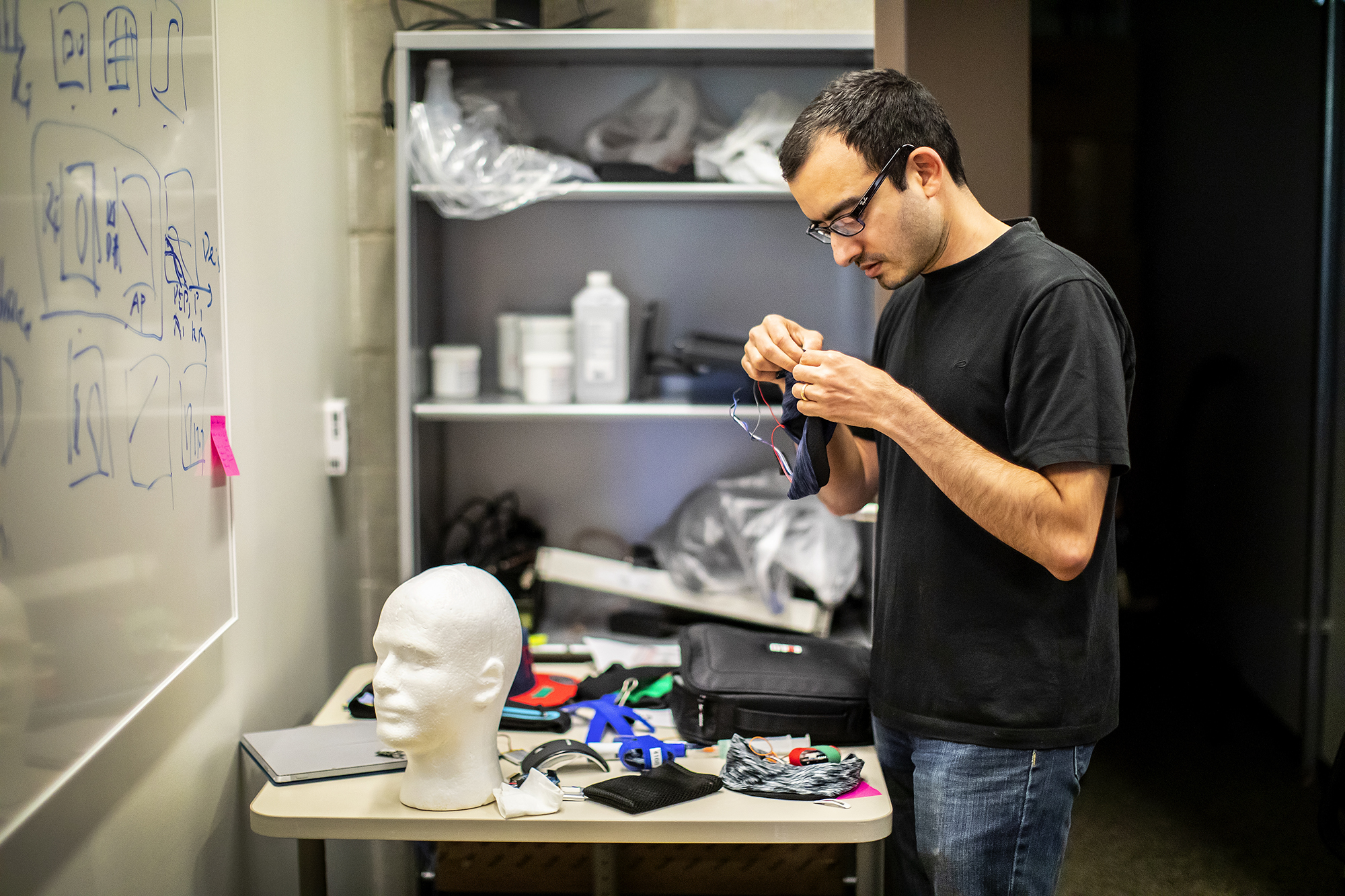
“We struggled for six or seven months to make a working sensor,” says Ramakrishnan, who has been part of the Platt Labs for three years. “We finally had our first working prototype in December 2017.”
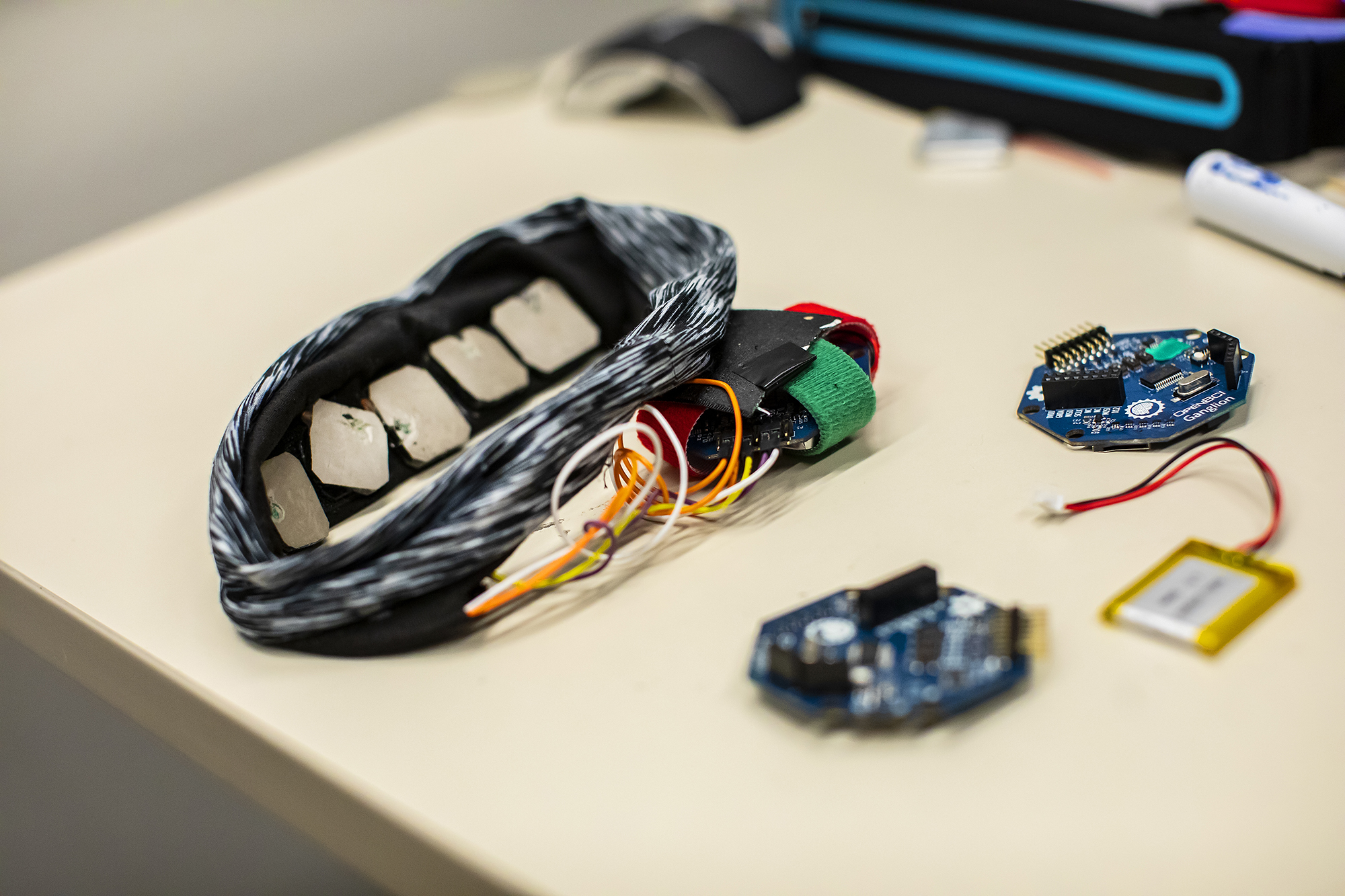
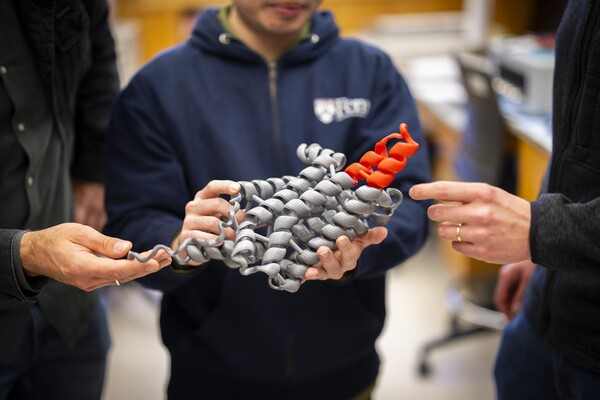
A prototype of the sensor technology (left), intended to be worn comfortably in most types of head coverings.
The successful version, designed in part by research engineer Naz Belkaya, was made of a combination of silver and a silicon-like material called polydimethylsiloxane (PDMS). Silver is flexible, sensitive, and conductive; PDMS is stretchy and can bend, properties similar to skin. Placing the PDMS on top of the silver nanowires made the product essentially antimicrobial and prevented the need to use gel to adhere it to the skin. This meant the sensors could comfortably stay in place for long periods of time.
With what they felt was a strong sensor technology in hand, Platt and Ramakrishnan began talking with PCI Ventures, a branch of the Penn Center for Innovation aimed at guiding University faculty through the process of starting a company. The licensing team at PCI helped them file a provisional patent for the product (originally called NanoNeuroScope), and Cogwear, LLC, was born in May 2018. In early 2019, the company hired a CEO, Patrick Wood, with the objective to figure out how to scale up production and which direction to aim first.
“There are huge numbers of potential applications,” Wood says. “That’s really a wonderful starting point for a company. We have great momentum.”
Sports performance and engagement
Platt and colleagues have already made strides testing their EEG technology in the sports arena. During the spring of 2019, a team led by Platt Labs postdoc Scott Rennie worked with Penn Rowing to study group chemistry, trust, communication, and brain synchrony—crucial for an activity that hinges on coordinated movement.
In a gym, the researchers put the sensors on the athletes, then analyzed them rowing on single, randomly selected machines; next to teammates but on unlinked machines; and on linked machines. EEG and heartrate readings showed that physiological syncing was unsurprisingly highest when teammates maneuvered on tethered machines and nearly as high when they trained next to each other untethered.
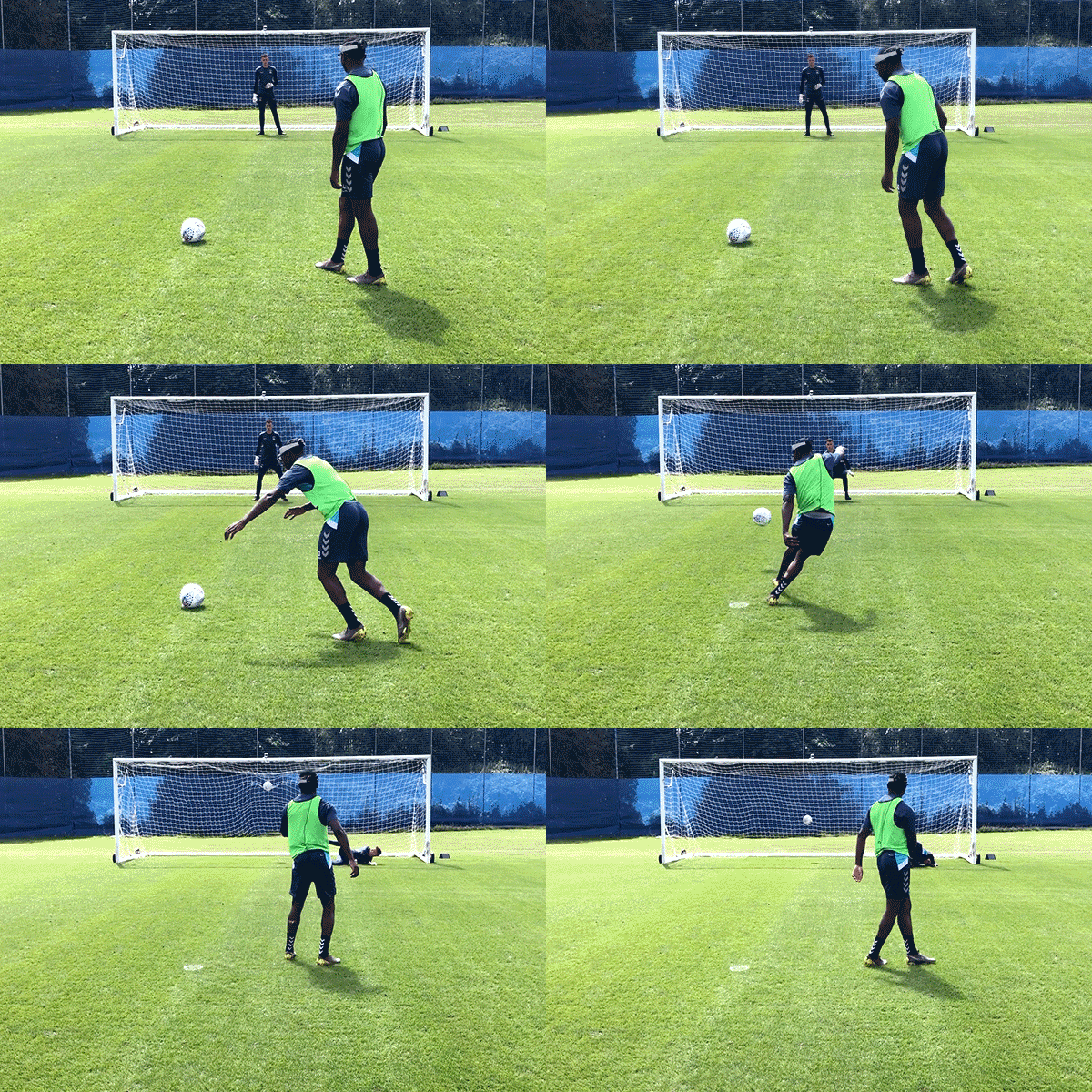
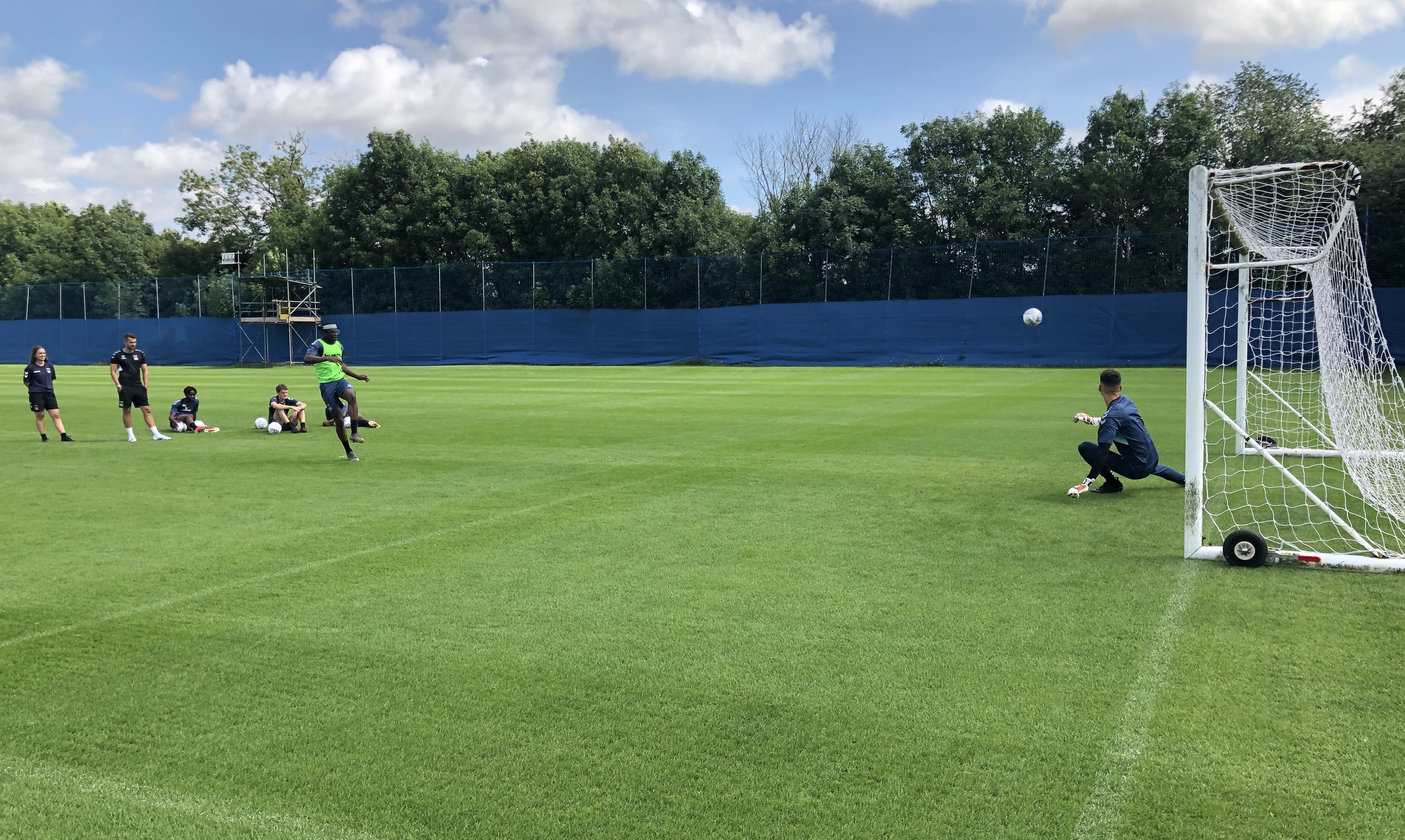
A professional soccer player from a team in the United Kingdom participates in a drill while wearing the sensors.
Rowing isn’t the only sport for which brain data may be useful. This summer, the researchers worked with a professional soccer team in the United Kingdom to evaluate the players’ focus during training drills, susceptibility to stress under pressure, and ability to predict and outwit opponents. An upcoming study with Penn Wrestling will measure fatigue’s influence on the neural signals underlying decision-making and on communication between wrestler and coach. Wood sees strong potential for a numbers-driven sport like baseball.
“You’ve got all players’ previous statistics, weight, dimension, all kinds of metrics, but you may need an additional data point about how mentally fit they are to withstand the pressure of standing at the plate about to hit the ball,” Wood says. “You may need to know more about each player before you can start comparing them.”
Beyond sports, Platt and team are testing the technology’s ability to determine engagement in group activities like a haunted house at Eastern State Penitentiary or a business conference put on by an enterprise solution company like SAP. “We did a brief pilot study in Las Vegas measuring brain activity and heart rate for people walking through an SAP trade show,” Platt says. “We found that heart rate didn’t vary at all; it didn’t move. But measures of engagement from EEG data showed really interesting peaks and troughs. For the most part, people were not very engaged, brain-wise, except when talking to other people.”
This past May, the researchers conducted a larger study with SAP. For a focus group attending a conference, Platt’s team found that brain data helped predict which booths and activities people would visit. Much like with the pilot, social interactions seemed to maximize engagement.
“The current gold standard is emailing attendees a survey after the conference, which is a poor measure of engagement,” he explains. “We already have exciting results showing social interactions move the needle more than nonsocial ones and that we can, perhaps, make other predictions based on brain activity.”
This summer, researchers from the Platt Labs worked with a professional soccer team in the United Kingdom to evaluate the players’ focus during training drills, susceptibility to stress under pressure, and ability to predict and outwit opponents.
A future in health care and beyond
Down the line, Platt and Ramakrishnan say they could see the health care industry employing this technology both for physical applications like in-home seizure monitoring for children and for mental health, to watch for changes in state of mind that might indicate anxiety or depression, for instance.
“About 40% of college-going students are anxious or depressed in the U.S. This is a staggering number,” Ramakrishnan says. The challenge is that people aren’t often self-aware regarding their own mental health situation, he adds. Backed by a Brain & Behavior Research Foundation grant, the Platt Labs team is working on a take-home kit that includes games and the portable EEG, which could objectively track several days of a person’s emotional peaks and valleys. An already-completed lab component showed that Platt’s team could identify participant levels of anxiety with about 84% accuracy using novel algorithms that combined EEG-based features with heart rate variability and skin conductance.
“This is the direction in which health care is going in general,” Ramakrishnan says. “There is a lot of promise for this sort of approach.”
All of the technology applications the research team has so far tested have focused on large-scale institutional use. But eventually any individual might be able to purchase an EEG product centered on the sensor technology, an addition to the ecosystem of individualized data-collection tools like smartwatches and sleep-monitoring apps already on the market.
“At its core, the advance we’re making here is the sensor technology, but in reality we leverage all the expertise we’ve developed over the last 25 years in terms of understanding and decoding brain signals,” Platt explains. “Then we can leverage those signals to make predictions about performance, user experience, customer engagement, all sorts of things. That’s the crux of actually monitoring the brain; it allows us insights into function or dysfunction that people can’t or won’t self-report.”
Penn Center for Innovation team members who participated in the development of Cogwear include Neal Lemon, who helped Platt’s team file provisional and non-provisional patents; Ryan Mendoza, who helped launch Cogwear; and Jordana Barmish, who acted as the company’s interim CEO for Cogwear’s first nine months.
Funding for the project came from National Science Foundation (NSF) Grant NNCI-1542153; the P&S Fund and the Brain and Behavior Research Foundation; FabNet™ award sponsored by Ben Franklin Technology Partners; Penn Health-Tech; and an NSF-funded Penn I-Corps grant.
In Senegal, the ambitious Dakar Greenbelt project seeks to create an extensive network of ecological infrastructure in and around the city to sustainably address environmental concerns and enhance urban life. With support from David Gouverneur and Ellen Neises, Ph.D. candidate Rob Levinthal in the Weitzman School of Design led two courses that included a field trip to Dakar, that culminated in students presenting their visions for parts of the Greenbelt.
From a desert to an oasis: Penn engages in ambitious greening effort in the Sahel
Students from the Weitzman School of Design journeyed to Senegal to help with a massive ecological and infrastructural greening effort as part of their coursework. The Dakar Greenbelt aims to combat desertification and promote sustainable urban growth.
As part of an undergraduate course, Penn faculty and students curated an Arthur Ross Gallery exhibition of works from the Neumann family’s extensive collection of modern and contemporary art.
The University’s nexus for technology transfer supports researchers in their innovative efforts, from CAR T to mRNA advancements that have dramatically reshaped the world.