President Jameson provides a ‘snapshot of Penn’s momentum’
‘In a time of constant change and renewal, what keeps us connected is our traditions,’ said Penn President J. Larry Jameson at an Alumni Weekend gathering.
5 min. read
“The faster things change,” Penn President J. Larry Jameson said in his University Update during Alumni Weekend on May 17, “the more important it is for us to revisit, refresh, and reinforce what makes our University truly excellent.”
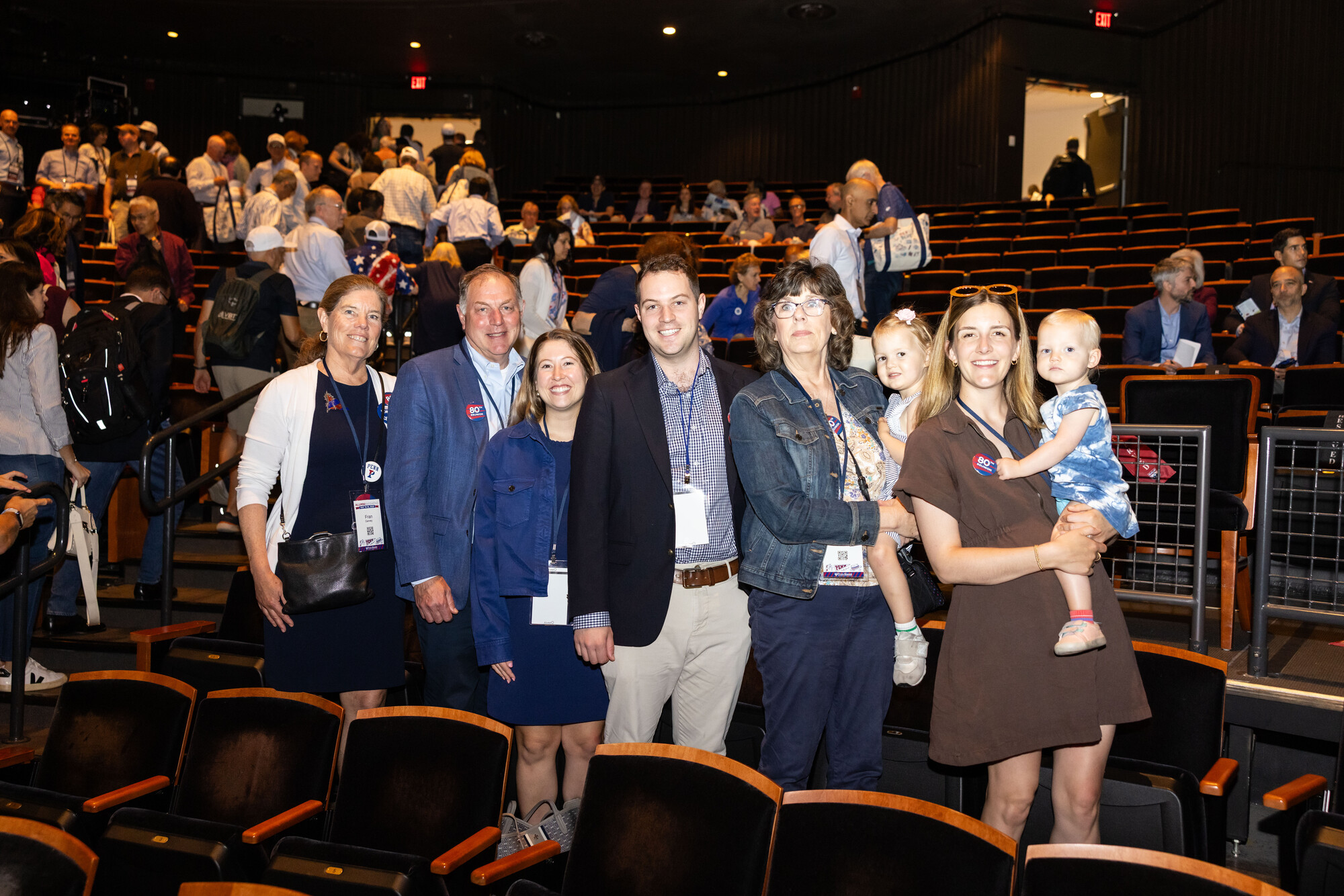
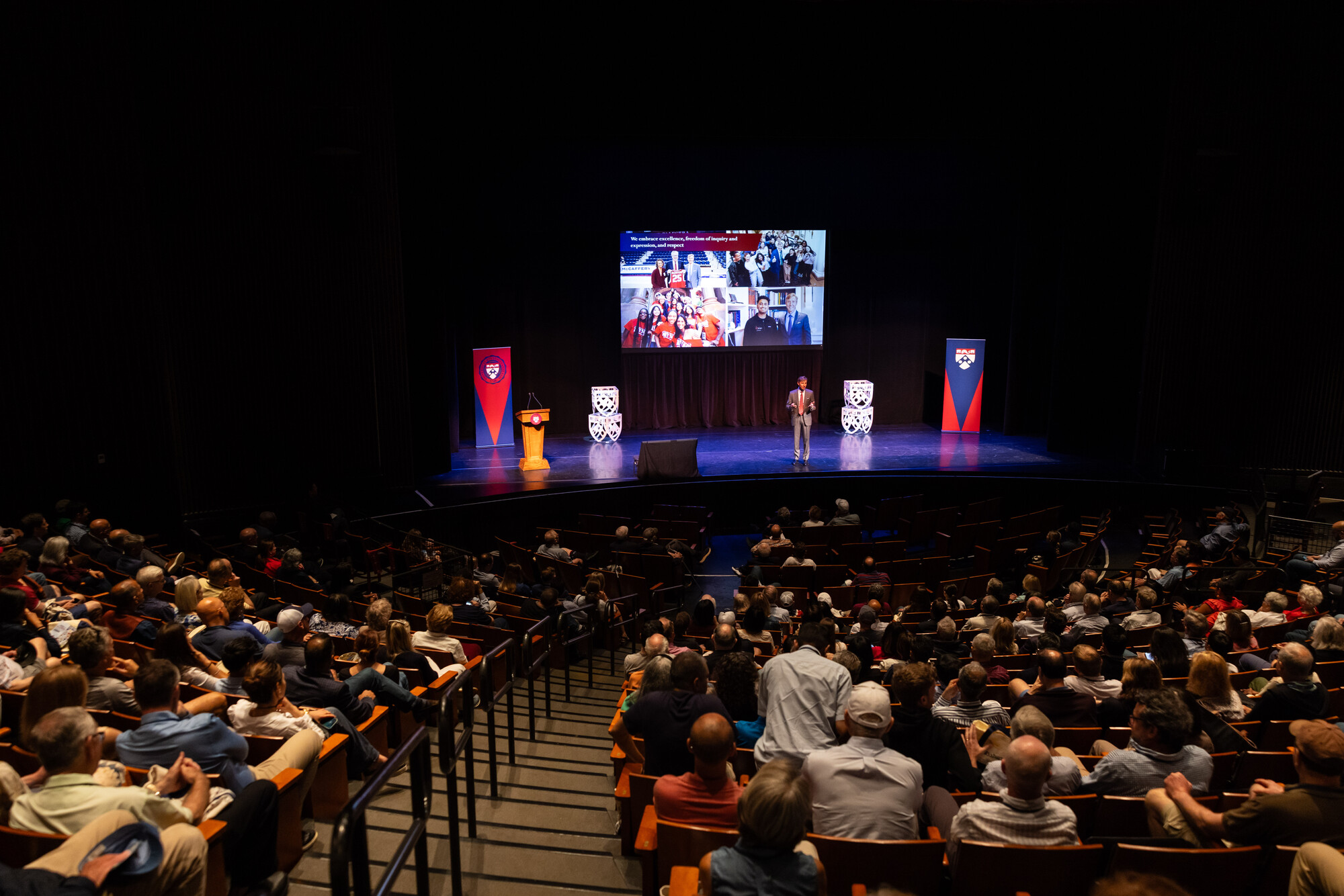
Inside the Zellerbach Theatre at the Annenberg Center for the Performing Arts on May 17, Penn President J. Larry Jameson delivered an annual “University Update” presentation to a crowd of alumni—some of whom gathered to celebrate their 75th reunion, and all of whom gathered to celebrate their shared Penn pride.
Jameson previewed “a snapshot of Penn’s momentum” in introductory remarks and touched on recent challenges to higher education and Penn’s response.
He acknowledged dramatic shifts in research funding policies that challenge the life-changing and -saving work of Penn’s community; visa disruptions for international students and scholars; and proposals to tax university endowments at a far greater rate, which would severely affect Penn’s ability to provide financial aid to students.
“There’s also a larger, long-running shift in public opinion about higher education,” he continued. “In the face of these headwinds, Penn is listening carefully to the critiques and adapting in ways that remain true to our mission and values.”
Following a video demonstrating Penn’s values in action, Jameson spoke of Penn’s recent articulation of a values statement, created in consultation with faculty, staff, students, alumni, and trustees, and talked about Penn’s momentum through that lens. He noted that he hopes the values are something everyone shares.
“The faster things change,” Jameson said, “the more important it is for us to revisit, refresh, and reinforce what makes our University truly excellent.”
Jameson went on to cite some of Penn’s accomplishments from the past year:
Penn had more than 72,000 applicants this year—a number that keeps rising and speaks to the fact that Penn is a place where students want to be.
The Quaker Commitment, which guarantees full tuition scholarships for families earning up to $200,000 per year. The net cost to attend Penn for an aided undergraduate today is 29% less than it was 20 years ago.
Penn’s role as a locus of important conversations on global issues, with the Silfen Forum as just one prominent example. In October, the event was open to the Penn community and welcomed former Israeli Ambassador to the U.S. Itamar Rabinovich and Salam Fayyad, former prime minister of the Palestinian Authority.NPR diplomatic correspondent and 1989 College graduate Michele Kelemen moderated the event.
A transformative gift from Anthony and Catherine Clifton to advance cutting-edge health care for all. The Pavilion at the Hospital of the University of Pennsylvania is now known as The Clifton Center for Medical Breakthroughs.
Jameson highlighted Penn & Philly, a place to learn about the stories and projects between Penn and Philadelphia. He spoke of Penn’s continued impact as an institution anchored in the city, creating 1 in 7 jobs in Philadelphia and 155,000 jobs in Pennsylvania. He also noted Penn’s continued engagement with alumni around the world, with Penn leadership traveling to five continents in the past year and meeting thousands of alumni.
Penn’s success is possible because of longstanding connections and relationships between Penn and alumni, Jameson said in closing, who are Penn’s best ambassadors and champions.
Novel plant-based approach to a better, cheaper GLP-1 delivery system
Research led by Penn Dental’s Henry Daniell investigates the use of a lettuce-based, plant-encapsulated delivery platform as a new oral delivery of two GLP-1 drugs previously approved by the FDA in injectable form.
No brain, no gain: Neuronal activity enhances benefits of exercise
Research led by Penn neuroscientist J. Nicholas Betley and collaborators finds that hypothalamic neurons are essential for translating physical exertion into endurance, potentially opening the door to exercise-mimicking therapies.
In honor of Valentine's Day, and as a way of fostering community in her Shakespeare in Love course, Becky Friedman took her students to the University Club for lunch one class period. They talked about the movie "Shakespeare in Love," as part of a broader conversation on how Shakespeare's works are adapted.
In Becky Friedman’s English course Shakespeare in Love, undergraduate students analyze language, genre, and adaptation in the Bard’s plays through the lens of love.
Beating the heat: Designing cooling for bodies in motion
Dorit Aviv, director of Weitzman’s Thermal Architecture Lab, studies how humans, technology, and design intersect, paving the way for the development of novel approaches to cooling people efficiently.